Geopolitical analysts love a good apocalypse. It sells newsletters. It keeps defense contractors in business. Right now, the echo chamber is screaming about an Iranian blockade of the Strait of Hormuz. The narrative is simple: Tehran flips a switch, global oil supplies vanish, and you start paying twenty dollars for a gallon of regular.
It is a terrifying bedtime story. It is also a fundamental misunderstanding of how modern energy markets and naval power actually function.
Most pundits are stuck in 1973. They treat the global oil market like a brittle glass sculpture. In reality, it has become a self-healing mesh network. If you are waiting for the "Great Blockade" to reset the world order, you aren't just wrong—you are missing the actual shift in power happening under your nose.
The Myth of the Unclosable Chokepoint
Every time tensions flare, the same map appears on cable news. A narrow strip of water, 21 miles wide at its narrowest point. The logic follows that if you sink a few tankers or pepper the water with mines, the world stops spinning.
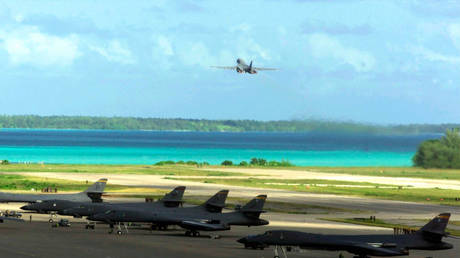
This assumes the U.S. Fifth Fleet and its allies are passive observers. I have spent years tracking maritime logistics and naval deployment patterns; the sheer volume of surveillance and rapid-response capability in that region makes a "stealth" blockade impossible. A blockade is an act of war, not a prank. The moment a single mine is dropped, the Iranian Navy ceases to exist as a functional entity.
Iran knows this. Their leaders are many things, but they are not suicidal. They use the threat of a blockade because the threat is free. It costs zero rials to make a general go on TV and talk about $200 oil. The moment they actually try it, they lose their only remaining leverage and their primary source of income.
Why Iran Cannot Afford to Close the Strait
The "lazy consensus" assumes that a blockade hurts the West more than it hurts the blockader. This ignores the basic math of the Iranian budget.
Who do you think uses that water? It isn’t just American tankers. In fact, very little of that oil goes to the United States anymore thanks to the Permian Basin and Canadian imports. The vast majority of that crude is headed to Asia—specifically China.
If Iran closes the Strait of Hormuz, they aren't just poking the "Great Satan." They are cutting off the energy supply of their only major economic lifeline. Beijing does not tolerate disruptions to its manufacturing engine. If Tehran shuts down the Strait, they aren't just fighting the U.S. Navy; they are committing economic suicide by alienating their only significant customer.
The Oil Market Has a Higher Pain Threshold Than You Think
We are told that a 20% drop in global supply would lead to a total collapse. This ignores the massive "dark inventory" and the rapid elasticity of the modern energy sector.
- Strategic Reserves are Not Just for Decoration: Between the U.S. SPR and similar reserves in Europe and Asia, there is enough buffered supply to bridge months of volatility.
- Spare Capacity Outside the Gulf: The UAE and Saudi Arabia have spent billions building pipelines that bypass the Strait of Hormuz entirely. The East-West Pipeline and the Abu Dhabi Crude Oil Pipeline can move millions of barrels per day directly to the Red Sea or the Gulf of Oman.
- The Shale Response: Unlike the 1970s, the U.S. is the world's swing producer. High prices trigger immediate, aggressive drilling in Texas and North Dakota. The lag time between a price spike and new domestic supply is shorter than it has ever been.
Stop Obsessing Over the Supply Side
The real reason gas prices won't stay "nostalgic" is not because of a blockade. It’s because of a secular shift in demand and refining.
While the media focuses on Iranian speedboats, they are ignoring the fact that global refining capacity is the real bottleneck. We don't have a "crude" problem; we have a "making gasoline" problem. Even if the Strait stayed open and oil dropped to $40, your prices at the pump would stay high because we haven't built a major new refinery in the West in decades.
The blockade talk is a distraction. It's a shiny object used by politicians to explain away inflation that is actually caused by domestic policy and currency debasement.
The Intelligence Gap
I have seen intelligence reports that get leaked to the press, and I’ve seen the raw data they are based on. There is a massive disconnect. The "nostalgia" comments from Tehran are psychological operations designed to trigger algorithmic trading bots.
Hedge funds have built "geopolitical risk" into their code. When a certain keyword—like "blockade"—hits the wires, the bots buy. This creates a self-fulfilling prophecy of higher prices that has nothing to do with a physical shortage of oil. We are living in a world where the fear of a shortage creates more market movement than the shortage itself ever could.
The Counter-Intuitive Play
If you want to actually protect your capital, stop buying the "World War III" oil spike narrative.
When the news cycle reaches peak hysteria about a blockade, that is usually the moment the trade is over. The "smart money" is already looking at the massive oversupply that will hit the market the moment the tension eases. The real risk isn't that oil goes to $200; it's that you buy at $120 on a headline and get wiped out when the "threat" predictably evaporates.
The Strait of Hormuz is the most watched piece of water on the planet. It is the site of a choreographed dance between two powers that both know the rules. Iran threatens to close it to get sanctions relief. The U.S. moves a carrier to show they can't. Everyone goes home.
The Brutal Reality of Naval Logistics
Imagine a scenario where Iran actually manages to sink a VLCC (Very Large Crude Carrier) in the shipping lane.
The Strait is deep. It is wide. Sinking one ship—even a massive one—does not "block" the path. It creates a navigational hazard. It raises insurance premiums. It does not stop the flow. To truly "close" the Strait, you would need to maintain a continuous, multi-week combat presence against the combined air and sea power of the Western world.
Iran lacks the sustained logistical tail to do this. Their navy is designed for asymmetric, "hit and run" tactics. You can't run a blockade with hit-and-run tactics. A blockade requires holding ground. Tehran cannot hold a square inch of water if the U.S. Air Force decides they shouldn't.
The Actual Threat No One Talks About
While everyone stares at the Strait of Hormuz, they are missing the cyber threat to pipeline infrastructure and the crumbling state of global shipping insurance.
A "digital blockade" is far more likely and far more effective than a physical one. If a state actor knocks out the software that manages the flow of the Colonial Pipeline or the loading systems at Ras Tanura, they achieve the same price spike without ever firing a shot or risking a single ship.
But "Software Glitch Causes Price Hike" doesn't get the same clicks as "Iranian Blockade Imminent."
Stop Asking if the Strait Will Close
The question is flawed. You are asking about a 20th-century solution to a 21st-century power struggle.
The real question is: How long can the global economy sustain the volatility caused by the mere mention of the Strait? We are addicted to the drama. We have priced "geopolitical risk" into everything from our groceries to our tech stocks.
The Iranian leadership knows they don't have to actually block anything to win. They just have to keep you convinced that they might. They are living rent-free in the heads of every commodity trader on Wall Street.
If you want to be "nostalgic" for anything, be nostalgic for a time when we looked at energy through the lens of supply and demand instead of through the lens of theatrical threats and naval posturing.
The blockade isn't coming. The price spike is already here, and it was invited in by our own hysteria.
Sell the fear. Buy the reality.