The global energy market is currently operating under a dangerous sedative. For months, the narrative from Washington, spearheaded by Treasury Secretary Scott Bessent, has focused on a singular, comforting message that the world is awash in oil and the United States is ready to reclaim absolute dominance over the Strait of Hormuz. It is a bold stance designed to calm inflationary fears and project a return to American energy hegemony. But behind the podiums and the polished Treasury reports lies a far more volatile reality. The assumption that the U.S. can simply toggle control over the world’s most sensitive maritime chokepoint while domestic production keeps prices indefinitely low ignores the structural decay of global spare capacity and the shifting naval doctrine of Middle Eastern adversaries.
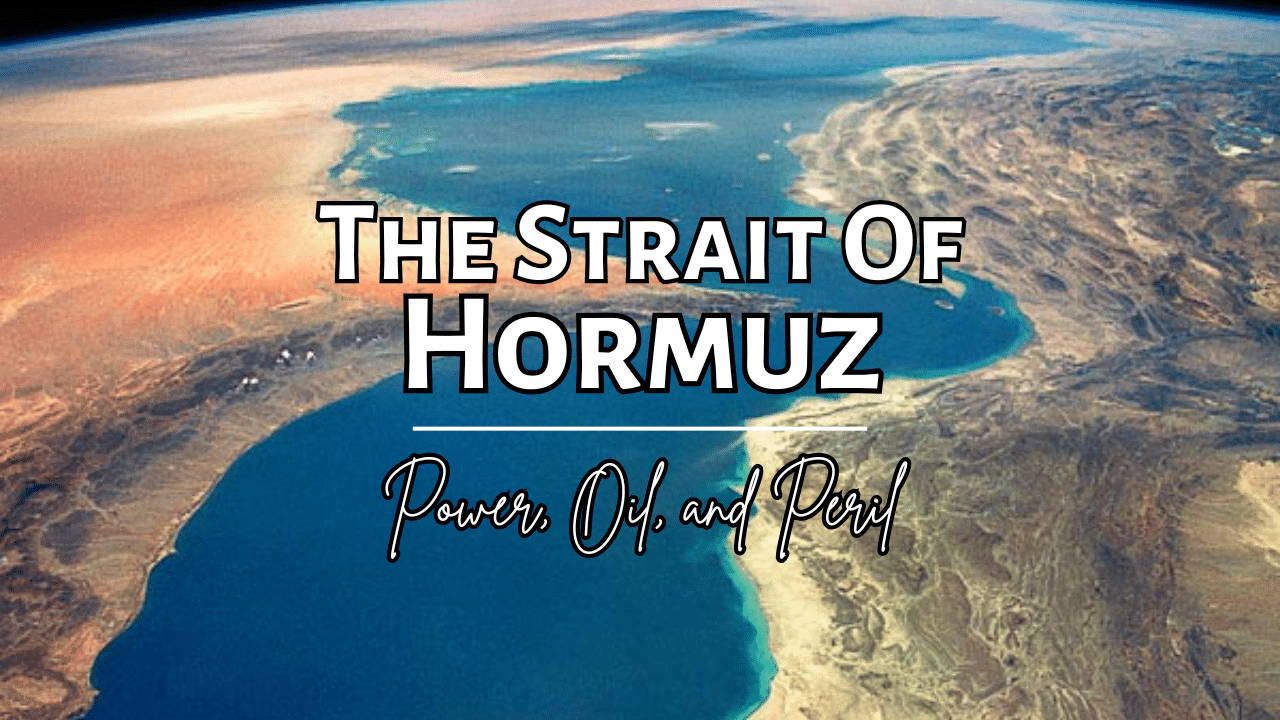
Control is never "retaken" in a vacuum. To understand the current friction, one must look at the 21 million barrels of oil that pass through the Strait of Hormuz every single day. This represents roughly 20% of global petroleum consumption. While the Treasury argues that the market is "well supplied," they are referencing a snapshot of current inventories rather than the long-term health of the supply chain. Shifting the geopolitical weight of the U.S. Navy back into a dominant posture in the Persian Gulf is not a mere policy shift; it is an escalation that the global economy may not be prepared to finance. Don't forget to check out our earlier article on this related article.
The Fragile Illusion of Oversupply
The Treasury’s confidence stems from record-breaking U.S. crude production, which has hovered around 13 million barrels per day. This surge has acted as a buffer against OPEC+ cuts and the ongoing chaos in Eastern Europe. However, production is not the same as security. The "well supplied" market Bessent describes is largely a result of Chinese economic cooling and a temporary lull in industrial demand. If those variables shift—if Beijing initiates a massive stimulus or if a colder-than-average winter hits the Northern Hemisphere—that perceived surplus evaporates in weeks.
Furthermore, the quality of supply matters. Much of the American growth is in light, sweet crude, while many global refineries are configured for the heavier grades that flow through the Strait. You cannot simply swap one for the other without significant efficiency losses. When the Treasury speaks of retaking control of the Strait, they are essentially promising to underwrite the security of a specific type of oil that the U.S. itself still relies on importing from the very region it seeks to discipline. If you want more about the background here, The Motley Fool provides an informative summary.
The Cost of Policing the Chokepoint
Reasserting dominance in the Strait of Hormuz is an expensive, high-stakes gambit that involves much more than just parking an aircraft carrier in the Gulf of Oman. It requires a permanent, high-readiness presence capable of countering "asymmetric" threats—specifically the swarm tactics and ballistic missile capabilities developed by regional actors over the last decade.
The tactical reality on the water has changed since the U.S. last claimed "control." Drone technology has democratized maritime disruption. A single $20,000 loitering munition can threaten a $200 million tanker, forcing insurance premiums to skyrocket even if the hull remains untouched. When the Treasury chief talks about taking control, he is signaling a willingness to absorb these insurance risks and military costs into the U.S. federal budget.
There is also the matter of the "shadow fleet." Thousands of aging tankers currently operate outside of Western oversight, moving sanctioned oil to various ports. Retaking control of the Strait implies a crackdown on these vessels. If the U.S. actually begins seizing or blocking these "ghost" ships, the immediate result won't be a well-supplied market; it will be a sudden, violent contraction in available global barrels. You cannot remove two million barrels of "gray market" oil and expect the price of Brent to remain stable.
The Strategic Petroleum Reserve Gamble
A central pillar of the current administration’s energy strategy has been the use of the Strategic Petroleum Reserve (SPR). The SPR was designed as a tool for extreme physical supply disruptions—wars, hurricanes, or total embargoes. Instead, it has been used as a price-control mechanism. While this has successfully kept a lid on domestic gasoline prices in the short term, it has left the U.S. with its lowest levels of emergency crude in decades.
This creates a massive credibility gap. If the U.S. moves to escalate its presence in the Strait of Hormuz, it does so with a depleted shield. Should a conflict break out that actually closes the Strait for even forty-eight hours, the U.S. no longer has the same volume of "buffer" oil to deploy to prevent a domestic price shock. The Treasury’s rhetoric assumes that the mere threat of U.S. intervention will keep the taps open, but the physical reality of the SPR tells a different story. We are essentially walking into a potential confrontation with an empty holster.
OPEC and the New Neutrality
While the U.S. talks about control, the traditional power players in the region—Saudi Arabia and the UAE—are no longer playing the same game. For decades, the deal was simple: the U.S. provides security, and the Gulf provides cheap, reliable oil. That social contract has expired.
The Gulf states are now pursuing a policy of "multi-alignment." They are as likely to coordinate with Moscow or Beijing as they are with Washington. If the U.S. attempts to aggressively "retake" control of the Strait, it may find that its regional "allies" are not particularly interested in a return to the old status quo. High oil prices fund the massive infrastructure projects in Riyadh and Dubai. A "well supplied" market that keeps prices at $60 a barrel is actually a direct threat to the internal stability of the very nations the U.S. claims to be protecting.
The Logistics of a Blockade
What does "losing control" of the Strait actually look like? It doesn't require a total blockade. It only requires a state of "contested transit." If a shipping company decides the risk to its crew and vessel is too high, it doesn't matter what the Treasury Secretary says about supply. The ships will stop moving.
The U.S. Navy’s current fleet architecture is built for blue-water conflict, yet the Strait is a narrow, shallow environment. To truly control it, the U.S. would need to maintain a constant "Convoy Era" level of protection for commercial shipping. This pulls assets away from the Indo-Pacific and other theaters. It is a massive reallocation of military capital to solve a problem that the Treasury claims doesn't exist because the market is "well supplied." There is a fundamental disconnect between the economic messaging and the military requirement.
The Shale Ceiling
We must also address the myth that U.S. shale can grow forever. The era of "drill, baby, drill" is hitting the wall of investor reality. Wall Street no longer funds growth at any cost; it demands dividends and share buybacks. Most of the Tier 1 acreage in the Permian Basin has already been tapped. While production is high, the rate of growth is slowing.
If the U.S. provokes a confrontation in the Middle East under the assumption that domestic producers will just "turn on the taps" to save the day, they are mistaken. It takes six to nine months for a new well to start contributing to the market. A crisis in the Strait of Hormuz happens in six to nine minutes. The timeline of finance and the timeline of geopolitics are out of sync.
The True Cost of Energy Independence
The phrase "energy independence" is often used as a political shield, but in a globalized commodity market, it is a fallacy. As long as oil is priced in dollars on a global exchange, a disruption in the Strait of Hormuz will raise prices in Houston just as surely as it does in London or Tokyo.
By signaling a more aggressive posture in the Gulf, the Treasury is attempting to preemptively strike against the perception of American weakness. But real power doesn't come from announcements; it comes from the ability to sustain a long-term presence and the capacity to absorb economic shocks. Currently, the U.S. is betting that its domestic production will scare off regional adversaries from testing its resolve in the Strait.
It is a high-stakes poker game where the stakes are the global economy. If the U.S. succeeds in "retaking" the Strait without firing a shot, it will be hailed as a masterclass in coercive diplomacy. If, however, the bluff is called, the "well supplied" market the Treasury is so proud of will vanish, replaced by a price spike that no amount of rhetoric can contain.
The focus should not be on the volume of oil currently in the tanks, but on the fragility of the lines that move it. Security in the Strait of Hormuz is not a permanent state of being; it is a daily, expensive, and increasingly dangerous maintenance project. Those who believe we can simply go back to the way things were are ignoring the last twenty years of technological and political evolution in the region. The map has changed, even if the Treasury's talking points haven't.
Every tanker that navigates those narrow waters is a reminder that "control" is an elusive, temporary thing. The market is only as well-supplied as the narrowest point in the supply chain allows it to be. If the U.S. wants to lead, it needs to stop treating the Strait of Hormuz as a solved problem and start treating it as the volatile frontier it has become.
The real test won't be in the production numbers released next Tuesday. It will be in the first moment an adversary decides to see if the U.S. is actually willing to sink a ship to keep the price of gas at three dollars a gallon. That is the hard reality behind the diplomatic curtain.
Stop looking at the supply charts and start looking at the naval charts. The disparity between the two is where the next global crisis is currently being written.