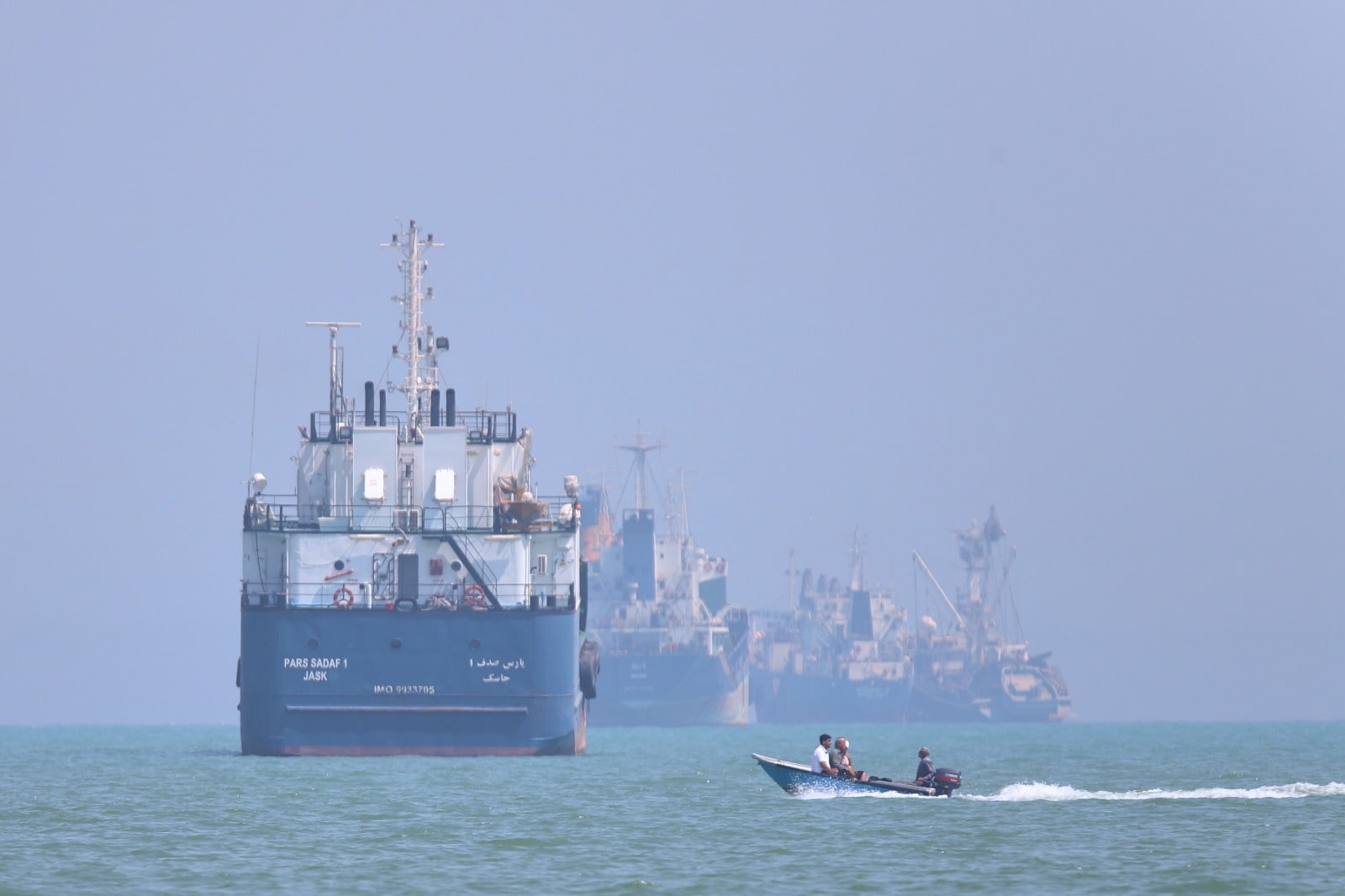
The ocean is supposed to be a neutral highway for commerce. Right now, it is a shooting gallery.
On July 14, 2026, the fragile peace of global maritime shipping shattered once again. Iranian cruise missiles slammed into two UAE-flagged oil tankers transiting the southern passage of the Strait of Hormuz. It was not just steel and machinery that broke under the impact. A family in India is now mourning a loved one. Six other Indian sailors and two Ukrainians are fighting for their lives in hospitals, some with severe burns and shrapnel wounds.
This is what happens when geopolitical posturing meets the cold reality of merchant shipping. The people who keep the world's lights on by transporting fuel across treacherous channels do not wear military uniforms. They do not sign up to be target practice for state-sponsored missile batteries. Yet, they are the ones paying the ultimate price.
If you think this is just another minor skirmish in a distant waterway, you are dead wrong. This escalation is a direct threat to the global economy, and the fallout will reach your wallet sooner than you think.
The Chaos in Omani Waters
The attack was precise, swift, and devastating.
The two vessels targeted were the Mombasa and the Al Bahiyah (also referred to as the Bahia). Both are UAE-flagged national tankers. They were carrying petroleum products, moving through what should have been a relatively safe shipping corridor. Specifically, they were navigating within Omani territorial waters when the strikes occurred.
The UAE Ministry of Defence confirmed that two Iranian cruise missiles struck the ships, immediately sparking intense fires on both decks.
Attack Specifics:
- Target Vessels: Mombasa & Al Bahiyah (UAE-flagged)
- Weaponry Used: Iranian Cruise Missiles
- Location: Southern Shipping Lane, Strait of Hormuz (Omani Territorial Waters)
- Fatality: 1 Indian Crew Member (aboard the Mombasa)
- Injured: 8 Crew Members (6 Indians, 2 Ukrainians; 4 in critical condition)
The crew on board did not panic. They fought the blazes, eventually bringing the fires under control. But they could not save everyone. The sailor who died was stationed on the Mombasa. He was an Indian national doing his job thousands of miles from home.
Let that sink in. A merchant sailor from India, earning a living to support his family back home, was vaporized or burned to death because two regional powers decided to turn a vital trading channel into a war zone.
Iran Blames the Victims and Warns of a Minefield
Tehran did not wait long to issue a response. It was exactly what you would expect.
Iran's Islamic Revolutionary Guard Corps (IRGC) released a statement attempting to shift the blame entirely onto the victims. According to the Iranian military, the two "offending" tankers had ignored repeated warnings, switched off their Automatic Identification System (AIS) tracking, and steered directly into a hazardous, mined route.
The IRGC claimed the tankers were acting under the instruction of the United States. They warned other commercial vessels that cooperating with the American "aggressor" would lead to "regret, damage, and delays". They went as far as telling shipping companies that there is "no benefit to passing through the minefield".
This is a classic gaslighting tactic. Under international maritime law, civilian commercial vessels have the right of transit passage through international straits. Navigating through Omani territorial waters is standard practice to avoid congested lanes. By claiming the tankers turned off their transponders, Iran is trying to create a legal gray area to justify an act of unprovoked aggression.
Even if the vessels had turned off their AIS—a common practice among ships trying to avoid being targeted by hostile regional actors—it does not give any state the right to fire cruise missiles at civilian crews.
How Geopolitics Put a Target on Merchant Crews
This missile strike did not happen in a vacuum. It is the direct consequence of a rapidly spiraling cycle of violence between Washington and Tehran.
Just hours before the missiles hit the Mombasa and the Al Bahiyah, the United States carried out its third consecutive night of military strikes inside Iranian territory. US Central Command (Centcom) targeted Iranian drone infrastructure, coastal surveillance systems, and missile launch sites. The goal, according to Washington, was to degrade Iran’s ability to harass commercial shipping.
Instead, it provoked an immediate, asymmetric response. Since Iran cannot match the US Navy in a direct, conventional confrontation, it strikes where it hurts most: vulnerable civilian tankers owned by US allies like the UAE.
Adding fuel to the fire is a shift in American maritime policy. US President Donald Trump recently announced the reinstatement of a strict blockade on Iranian shipping. He also declared that the US would charge a 20% "protection fee" on all eligible cargo transiting the Strait of Hormuz to compensate for American military security costs. Trump claimed the US was acting as the "Guardian of the Hormuz Strait," arguing that countries using the corridor should pay for their own defense.
Tehran rejected this security tax and blockade. Iran's top military command stated plainly that the United States has no right to dictate who uses the waterway. By attacking UAE tankers, Iran is sending a bloody message to Washington: if you try to blockade our oil and charge fees on our neighbors, we will make the entire strait impassable.
The Economic Toll of a Closed Strait
Before this flare-up, roughly 20% of the world's daily petroleum consumption flowed through the Strait of Hormuz. It is the single most vital energy chokepoint on earth.
When cruise missiles start hitting tankers in broad daylight, the global insurance market panics. "War Risk" insurance premiums for ships transiting the Persian Gulf are skyrocketing. Shipping companies are faced with an impossible choice. They can pay exorbitant insurance rates and risk the lives of their crews, or they can reroute their vessels around the Cape of Good Hope.
Rerouting around the southern tip of Africa adds up to two weeks to a standard journey from the Middle East to Europe or North America. It burns millions of gallons of extra fuel, delays supply chains, and drives up the price of oil.
If this corridor shuts down permanently, or if the threat of missile strikes makes it uninsurable, global energy markets will experience a shockwave. You will see the effects at your local gas station and on your utility bills within days.
Real Protection for Seafarers
We need to stop treating merchant sailors like collateral damage in a game of geopolitical chess. These men and women are civilians. They are not combatants.
If the international community is serious about securing global trade, it must look beyond military retaliation. A strategy of "strike and counter-strike" is clearly not working. Every time the US bombs a launchpad, Iran fires a missile at a civilian vessel. It is a loop of escalation that only ends when a tanker explodes, spilling millions of gallons of crude oil and killing dozens of innocent workers.
Nations that supply the majority of the world's maritime labor—like India, the Philippines, and Ukraine—need to demand better security guarantees.
India, in particular, must take a hard stance. With one of its citizens dead and six others wounded in this single incident, New Delhi cannot afford to sit on the sidelines. The Indian government must use its diplomatic leverage with both Iran and the US to establish safe transit corridors.
If you work in the shipping industry, or if you manage supply chains that rely on Middle Eastern energy, you need to prepare for prolonged instability.
- Diversify your shipping routes where possible. Do not rely solely on the Persian Gulf.
- Ensure your crews have updated crisis training and that emergency evacuation protocols are active.
- Review your maritime insurance policies immediately to account for sudden spikes in war risk surcharges.
The era of cheap, safe, and unbothered shipping through the Middle East is over for now. Unless the international community finds a diplomatic off-ramp, more civilian sailors will die in the crossfire of a war they did not start.