The air inside a radio studio smells of old coffee, ozone from heavy amplifiers, and the invisible residue of words that can never be unspoken.
For eight years, the boundary between Donald Trump and Michael Cohen was written in concrete and barbed wire. It was a chasm filled with federal prison time, grand juries, midnight subpoenas, and televised congressional hearings where old loyalties were smashed into dust. When Cohen called the man he once served a "Cheeto-dusted cartoon villain", it felt like the final, bitter punctuation mark on an era of political warfare.
Then came the opening notes of a 1975 War song, echoing across the airwaves of 77WABC: Why can't we be friends?
History is rarely a straight line. Often, it is a loop that doubles back to strangle or save the people caught inside it.
Consider the sudden detente that brought the former president onto his former fixer's radio microphone. To understand the shock of this audio, one must remember the sheer weight of what came before. This was not a routine media appearance. This was the public collision of two men whose lives had become inextricably bound by secrets, loyalty, betrayal, and courtroom battles that riveted a nation.
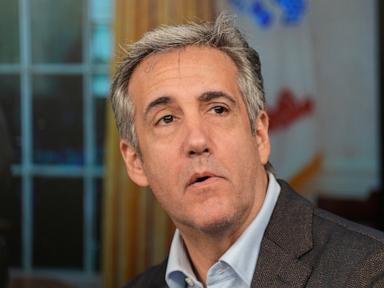
"Boss," Cohen said, his voice dropping into a familiar register that belonged to a different decade.
The word hung in the room. It was a linguistic artifact from the days when Cohen operated as the fiercely protective shield for Trump’s real estate empire and political ambitions. Back then, he famously boasted that he would take a bullet for the man in the Oval Office. That fierce devotion eventually curdled into a devastating public break, a guilty plea for campaign finance violations and lying to Congress, and a prison sentence that Cohen served while his former mentor watched from the highest office in the land.
Yet power dynamics shift like sand dunes in a gale.
When Trump dialed into the broadcast, the tone was not one of lingering vengeance, but of a strange, pragmatic amnesty. "They weaponized you like nobody's ever been weaponized," Trump told his former lawyer, validating the narrative Cohen had begun pushing in recent months as he sought a presidential pardon. Trump praised him for recanting his previous accusations, marking a stunning pivot from adversaries to allies in a political ecosystem where permanent enemies are an inefficiency.
The human heart resists simple categorization. We prefer our villains and heroes neatly separated by courtroom verdicts and cable news chyrons. We want our stories to end when the credits roll. But real life bleeds past the margins. Fifteen years of close proximity, shared anxieties, midnight phone calls, and high-stakes crisis management leave an imprint that a prison sentence or a viral podcast cannot entirely erase. As Cohen noted in his reflections on the reunion, the bad times do not necessarily erase the existence of the good ones.
The microphones clicked off. The broadcast went out to millions of listeners trying to make sense of a political landscape where yesterday's mortal enemy is today's interview guest. The music faded. What remained was the quiet realization that in the theatre of modern power, the script is never truly finished, and the most bitter rivalries can dissolve the moment a mutual convenience presents itself.
Trump phone conversation with Michael Cohen played at "hush money" trial
This archival recording provides a direct window into the high-stakes phone calls and behind-the-scenes dynamics that originally defined the volatile relationship between Donald Trump and Michael Cohen.
http://googleusercontent.com/youtube_content/1