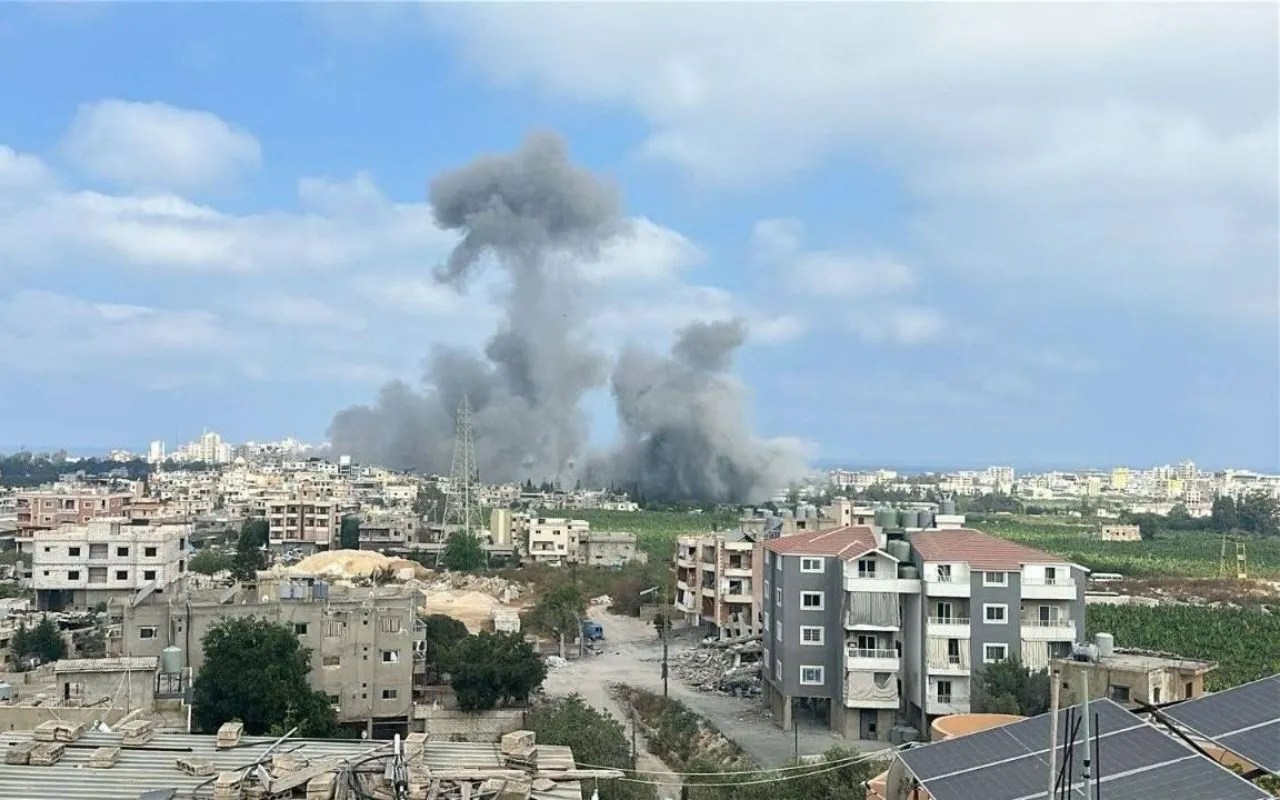
Military escalation operates on a precise calculus of deterrence, capacity degradation, and political signaling. The recent intensification of Israeli airstrikes in Lebanon, resulting in 12 reported fatalities following explicit warnings from Defense Minister Israel Katz, represents a deliberate shift in tactical execution rather than a random spike in violence. To understand the trajectory of this conflict, observers must look past the immediate casualty counts and analyze the structural mechanics driving both state and non-state actors.
This conflict behaves according to a predictable friction loop where rhetorical escalation precedes kinetic expansion. When a defense establishment publicizes a warning, it serves a dual purpose: establishing legal cover regarding intent and signaling a shift in the acceptable threshold of engagement.
The Triad of Kinetic Objectives
Israeli military operations in Lebanon are governed by three distinct, measurable pillars. Each pillar addresses a specific operational vulnerability presented by Hezbollah's entrenched infrastructure.
- Command Structure Attrition: Targeting high-value human assets to break the chain of command. This forces the adversary to rely on decentralized, uncoordinated field units, reducing their ability to launch synchronized counter-offensives.
- Logistical Interdiction: Neutralizing supply lines, weapons caches, and cross-border transport corridors. By cutting off the flow of precision-guided munitions, the military aims to deplete the adversary's sustained firing capacity.
- Subterranean and Launch Site Demolition: Systematic destruction of fixed firing positions, rocket pods, and tunnel networks. This directly reduces the volume of daily rocket fire directed at Israeli civilian centers.
The reported 12 fatalities must be analyzed through this framework. In conventional reporting, casualties are treated as a flat metric. In military analysis, these figures are assessed by their composition: whether they represent tactical commanders, specialized technicians, or collateral presence. The removal of specialized personnel creates an operational bottleneck for non-state media units and rocket crews, as technical expertise is harder to replace than raw manpower.
The Friction Loop of Rhetoric and Kinetic Action
A common analytical failure is treating political statements and military strikes as independent events. Defense Minister Katz’s warnings act as a leading indicator within a tight operational timeline.
[Political/Defense Warning Issued]
               │
               ▼
[Intelligence Validation & Target Selection]
               │
               ▼
[Kinetic Execution (Airstrikes)]
               │
               ▼
[Adversary Response / Asymmetric Retaliation]
               │
               ▲
               └───────────────┘
When the political leadership publicizes an impending shift in strategy, the military apparatus matches that rhetoric with an increased volume of sorties. This serves to validate state deterrence. If a state issues a public warning and fails to scale its kinetic output, it suffers a loss in credible deterrence, which invites deeper cross-border incursions from the adversary. Therefore, the spike in bombardment is a structural necessity to maintain the credibility of state ultimatums.
Hezbollahs Defensive Contradiction
Hezbollah operates as a hybrid actor—combining the guerrilla tactics of a non-state militia with the heavy weaponry of a conventional army. This creates a fundamental vulnerability in their defensive posture.
To pose a strategic threat to Israel, Hezbollah must maintain large, static stockpiles of long-range rockets and missiles. However, these fixed assets require specialized logistics and storage, making them highly visible to modern signals intelligence (SIGINT) and aerial surveillance. The moment Israel shifts from localized containment to active degradation, these static positions become high-priority targets. Hezbollah is then forced into a dilemma: utilize the assets rapidly before they are destroyed, or disperse them into civilian infrastructure, risking the alienation of the local populace and inviting wider urban destruction.
The Friction of Asymmetric Warfare
Evaluating this conflict requires acknowledging the asymmetric variables that limit the efficacy of standard military power. While state-level air superiority can systematically dismantle visible infrastructure, it faces diminishing returns against a deeply embedded adversary.
- The Information Void: Accurately assessing battle damage against an adversary that does not publish real-time inventory losses is inherently flawed. Claims of degradation must be verified against the long-term volume and precision of outward rocket fire.
- The Recruitment Pipeline: Kinetic actions that inflict civilian casualties, regardless of intent or operational justification, frequently serve as a recruitment mechanism for non-state factions, replenishing low-level combat units.
- The Decentralization Factor: Total elimination of command nodes does not guarantee a cessation of hostilities. Highly decentralized cells often continue independent operations, leading to unpredictable, uncoordinated rocket launches that bypass centralized cease-fire or de-escalation agreements.
Tactical Realities of Urban Interdiction
The execution of high-intensity airstrikes in densely populated regions introduces severe friction points. Air superiority allows for precise targeting, but the intelligence driving these strikes relies on a melting pot of human intelligence (HUMINT), electronic surveillance, and real-time drone reconnaissance.
When targets are embedded within civilian sectors, the probability of collateral damage rises exponentially. This outcome carries heavy diplomatic costs that can cut short the timeline allowed for military operations. State actors must constantly balance the immediate tactical value of destroying a target against the long-term strategic cost of international isolation or forced diplomatic intervention by global powers.
Strategic Forecast and Operational Drift
The current operational trajectory indicates a transition from localized border containment to a systemic campaign of attrition. Israel's military posture suggests it will not settle for a return to the pre-war status quo along the Blue Line. Instead, the objective has shifted toward forcing a structural realignment of southern Lebanon's security architecture.
Hezbollah will likely attempt to absorb the current wave of airstrikes while conserving its long-range precision assets for a sustained war of attrition. Their objective is to make the economic and psychological cost of continuous conflict unsustainable for the Israeli home front.
Given these strategic positions, expect a further expansion of the target matrix deeper into Lebanese territory, targeting financial nodes and logistics hubs rather than just active launch sites. The conflict will not yield to a clean military resolution; instead, it will persist in a high-intensity equilibrium until one side faces critical resource depletion or external diplomatic pressures enforce a hard buffer zone. Operational planners must prepare for a prolonged campaign where success is measured by the sustained reduction of cross-border launch volumes rather than the total capitulation of the adversary.