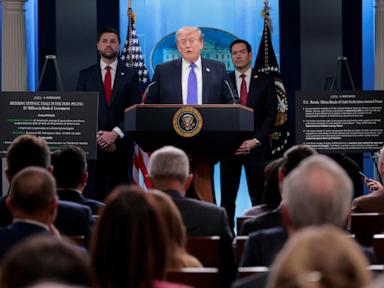
Presidential news conferences concluding major diplomatic tours to Asia operate as high-stakes signaling mechanisms rather than simple press briefings. When Donald Trump addresses the press corps on a Friday following an Asia itinerary, the event functions to consolidate bilateral concessions, manage domestic market expectations, and establish deterrence postures toward regional adversaries. Understanding these appearances requires stripping away the performative rhetoric of the podium to examine the underlying geopolitical mechanics, trade leverage, and domestic political calculus that dictate every remark.
The Structural Anatomy of Post-Summit Briefings
A post-trip news conference serves a distinct operational purpose compared to formal joint communiqués. Joint statements are negotiated word-for-word by diplomatic bureaucracies weeks in advance, resulting in sanitized language designed to minimize friction. Conversely, an unscripted solo news conference allows the executive to reframe outcomes unilaterally for a domestic audience while sending calibrated, asymmetric signals to foreign capitals.
The timing of a Friday announcement is rarely accidental. In financial and diplomatic markets, Friday afternoon remarks occur after Asian trading weeks have closed and near the end of Western market sessions. This timing absorbs immediate volatility, giving sovereign wealth funds, institutional investors, and foreign ministries forty-eight hours to digest policy shifts before Monday morning openings.
Three Primary Functions of the Podium
- Bilateral Audit and Recalibration: The executive uses the press room to publicly score allies and competitors on burden-sharing and market access. By stating expectations aloud, the administration converts private diplomatic friction into public accountability, forcing foreign leaders to respond to domestic constituencies who witness the critique.
- Domestic Constituency Signaling: Foreign policy in the Indo-Pacific directly impacts American manufacturing, agricultural exports, and supply chain costs. Remarks regarding tariffs, currency valuation, or defense commitments are structured to reassure specific electoral blocs—such as industrial swing-state voters or agricultural producers—that overseas travel yielded tangible economic protection.
- Strategic Ambiguity Maintenance: On security flashpoints, such as maritime freedom of navigation or peninsula denuclearization, the briefing allows the president to alternate between conciliatory personal praise for foreign leaders and hardline warnings regarding military readiness. This duality complicates adversary threat modeling.
Deconstructing the Indo-Pacific Leverage Matrix
Any executive appearance summarizing an Asia trip rests on the interplay between security guarantees and trade deficits. Historically, Washington separated economic disputes from security alliances, insulating defense pacts from commercial friction. Modern executive strategy merges these tracks into a single transactional ledger.
When evaluating statements made at these briefings, analysts must separate rhetorical framing from structural reality. Praise for a foreign counterpart's leadership rarely indicates a softening of tariff schedules; rather, it serves as a diplomatic lubricant to extract concessions on market access or defense cost-sharing without causing the foreign leader to lose domestic face.
The Mechanics of Trade and Tariff Signaling
In the absence of finalized, ratified free trade agreements, executive remarks function as forward guidance for regulatory action. When a president references ongoing negotiations or potential duties during a press conference, the mechanism at work is anticipatory compliance. Multinational corporations and foreign trade ministries adjust supply chains and purchasing commitments merely to hedge against the probability of executive action.
- Asymmetric Tariff Threats: Mentioning specific sectors—such as automotive manufacturing, semiconductors, or steel—targets the export engines of major Asian economies. The threat relies on the structural reality that the United States remains the consumer of last resort, giving Washington higher pain tolerance in initial trade friction than export-dependent nations.
- Purchase Commitments vs. Structural Reform: Press briefings frequently highlight immediate purchasing pledges (e.g., agricultural commodities, energy, or aerospace equipment) because they generate easily communicable metrics. Structural reforms—such as intellectual property enforcement or state-owned enterprise subsidies—require years of verification and lack immediate political utility at a podium.
- Currency Manipulation Framing: References to exchange rates signal the Treasury Department's posture. Even without formal designation, verbal pressure from the podium discourages central banks from aggressive devaluation to offset tariff costs.
Security Commitments and Burden-Sharing Calculus
The second pillar of any Asia tour briefing involves the hub-and-spoke alliance system. For decades, the United States provided a security umbrella across the Western Pacific in exchange for forward-basing rights and strategic alignment. Contemporary executive briefings routinely challenge the baseline assumptions of this arrangement.
When the president addresses alliance dynamics on a Friday following regional meetings, the underlying framework is cost-function redistribution. The administration views forward-deployed troops and naval assets not as fixed sunk costs of global leadership, but as variable expenses that host nations must subsidize at higher rates.
Deterrence Through Unpredictability
Standard diplomatic theory favors predictability to prevent miscalculation among nuclear-armed states. However, the operational doctrine visible in modern executive press conferences employs calculated unpredictability—often termed the madman theory in international relations literature—to force regional actors into proactive stabilization.
By questioning the automaticity of defense commitments or expressing openness to unconventional bilateral talks with adversaries, the executive shifts the burden of anxiety onto regional allies and neighbors. This compels regional powers to increase their own defense spending, acquire American defense hardware, and take greater diplomatic initiative in managing local crises.
The limitation of this approach lies in alliance erosion. If allies conclude that American security guarantees are purely contingent on annual financial negotiations, they face long-term incentives to hedge—either by accommodating regional hegemons or by pursuing independent nuclear deterrent capabilities. The press conference must therefore walk a narrow line: extracting financial concessions while reaffirming enough treaty credibility to prevent regional proliferation.
Information Asymmetry and Media Dynamics
A critical error in mainstream coverage of these briefings is treating the exchange between the press corps and the executive as a literal debate over facts. In reality, the news conference is a clash of competing incentives.
Journalists operate under an incentive structure that prioritizes immediate conflict, deviations from bureaucratic orthodoxy, and domestic political fallout. Consequently, questions heavily skew toward domestic controversies, personnel turnover, or specific rhetorical provocations.
The executive operates under an incentive structure designed to dominate the weekend news cycle, bypass editorial filtering, and project strength. By taking extended questions on a Friday, the president ensures that broadcast networks and digital platforms carry unedited video clips directly to voters, rendering traditional journalistic framing secondary to the primary visual of the commander-in-chief commanding the room.
Evaluating Verifiable Outcomes vs. Tactical Rhetoric
To extract signal from noise during a post-Asia press conference, decision-makers must categorize executive statements into three distinct tiers of reliability:
- Executed Executive Actions: Announcements backed by signed presidential memoranda, Treasury designations, or formal notices to Congress under existing trade statutes (such as Section 301 or Section 232). These represent immediate, binding shifts in the operating environment.
- Framework Agreements: Memoranda of Understanding (MOUs) or joint declarations announced at the podium. These carry low institutional friction to reverse and depend entirely on subsequent bureaucratic follow-through. Historically, a high percentage of headline MOUs fail to materialize at their stated valuation.
- Trial Balloons and Bargaining Chips: Off-the-cuff remarks regarding future summits, potential exemptions, or hypothetical penalties. These are non-binding probes designed to gauge market reaction and foreign ministry pushback before committing bureaucratic capital.
The Geopolitical Feedback Loop
Every statement delivered in Washington or at a final overseas stop reverberates immediately through Beijing, Tokyo, Seoul, and Canberra. Foreign ministries maintain dedicated analytical units tasked solely with parsing the syntax of unscripted presidential remarks to detect shifts in American grand strategy.
When the president emphasizes bilateral deals over multilateral frameworks, regional actors adjust their diplomatic bandwidth accordingly. Multilateral forums lose operational relevance, and capitals reallocate top negotiators to direct, bilateral channels with the White House. This centralization of diplomacy increases the speed of decision-making at the top while simultaneously creating bottlenecks across lower-tier diplomatic channels, where technical disputes over customs, standards, and regulatory harmonization typically get resolved.
Furthermore, the emphasis on personal rapport with foreign leaders creates a key-person dependency in international relations. When bilateral stability rests on executive-to-executive chemistry rather than institutionalized treaty mechanisms, the relationship becomes vulnerable to sudden disruption whenever domestic political pressures force either leader to adopt a nationalist posture.
Operationalizing the Analysis
Monitoring executive briefings after major diplomatic engagements requires a disciplined filtering protocol rather than reactive news consumption. Organizations with supply chain exposure, capital allocation, or policy interests in the Indo-Pacific must ignore rhetorical superlatives and track three concrete indicators in the seventy-two hours following the press conference:
- Federal Register Filings: Verify whether verbal threats regarding tariffs or export controls translate into formal rulemaking notices from the Department of Commerce or the Office of the United States Trade Representative. Without bureaucratic codification, podium rhetoric remains purely psychological leverage.
- Defense Authorization Alignment: Cross-reference executive remarks on troop levels or host-nation support with pending appropriations bills in Congress. Statutory restrictions frequently prevent the executive branch from executing unilateral drawdowns suggested during press briefings.
- Counterparty Central Bank Actions: Observe Monday morning currency interventions and sovereign bond yields in the target Asian economies. Financial markets price in the actual probability of policy implementation far more accurately than political commentary.
Treat the Friday news conference not as the conclusion of a diplomatic mission, but as the opening bid in the next phase of bilateral negotiation. Allocate capital and adjust supply chain contingencies only when verbal framing converts into regulatory enforcement.