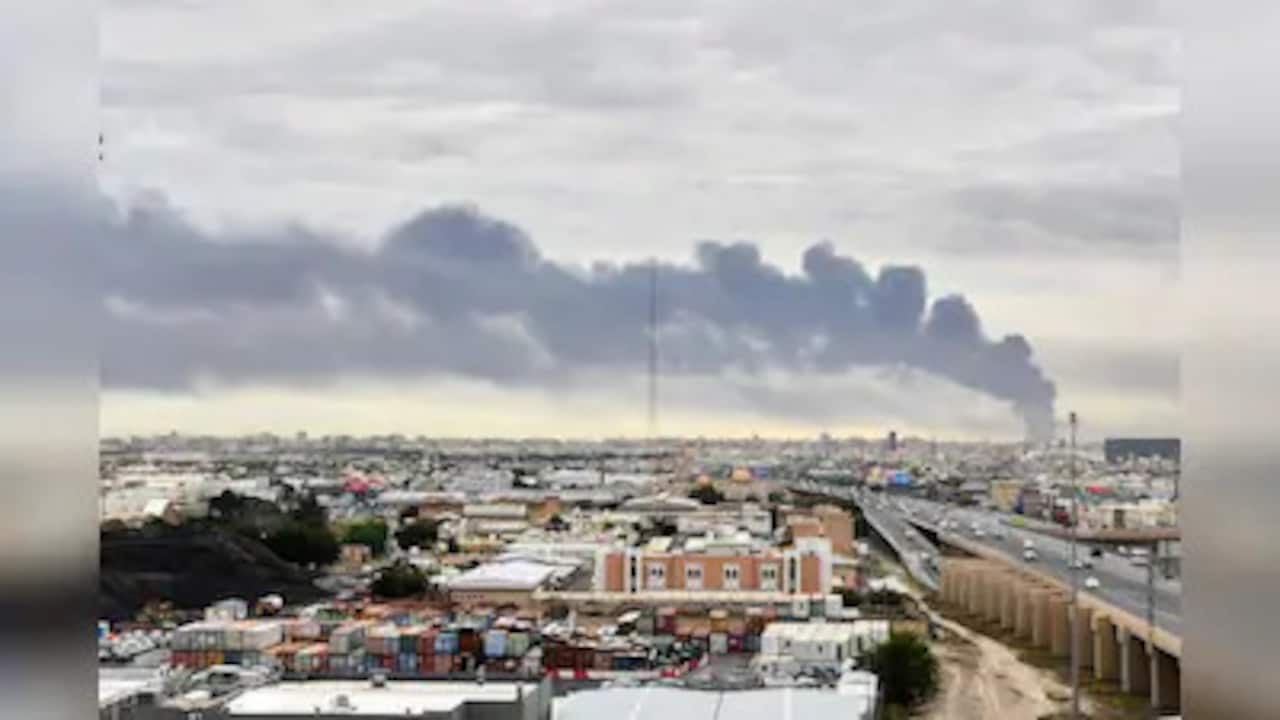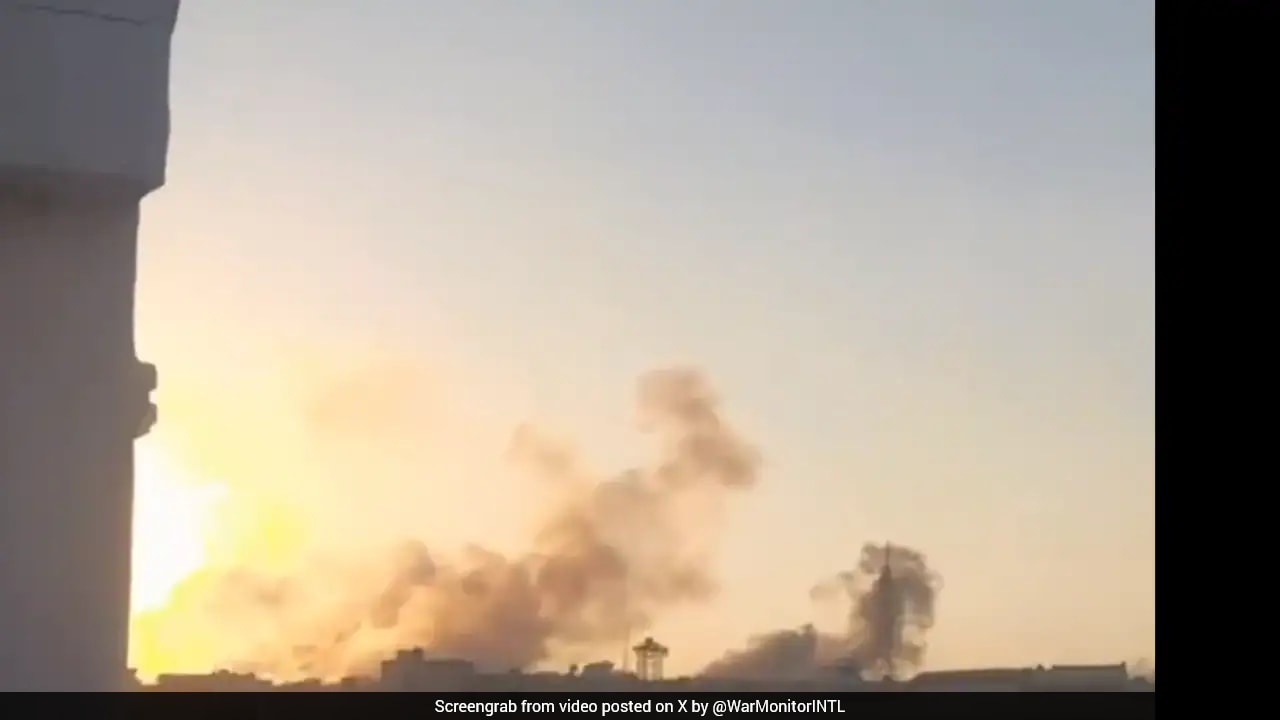
Military kinetic action against Qeshm Island represents a direct alteration of maritime risk calculus in the Strait of Hormuz, shifting the operational environment from localized naval harassment to structural chokepoint disruption. Located roughly 22 kilometers off the southern coast of Iran at the narrowest point of the Persian Gulf transit corridor, Qeshm serves as a forward-operating logistics hub, a sensor network anchor, and a multi-domain launch platform for the Islamic Revolutionary Guard Corps Navy (IRGCN). Analyzing a strike on this specific landmass requires separating immediate tactical degradation from second-order macroeconomic shocks across global energy markets and maritime supply chains.
Standard reporting on Persian Gulf military engagements typically relies on binary escalation models, framing strikes as isolated retaliatory events. That approach misses the geographic and operational mechanics that make Qeshm Island distinct from mainland Iranian targets such as Bandar Abbas or Chabahar. To understand the true impact of targeting Qeshm, analysts must evaluate the island across three functional dimensions: anti-access/area denial (A2/AD) infrastructure, maritime traffic control, and asymmetric retaliatory capacity.
Geographic Leverage and the Chokepoint Equation
The Strait of Hormuz is not a uniform waterway; commercial transit is constrained by bathymetry and international Traffic Separation Schemes (TSS). Deep-draft vessels—specifically Very Large Crude Carriers (VLCCs) and Liquefied Natural Gas (LNG) tankers—must navigate two narrow two-mile-wide channels separated by a two-mile buffer zone. Qeshm Island sits directly adjacent to the northern boundary of these shipping lanes.
Control over Qeshm provides three distinct operational advantages to Iranian forces:
- Radar and Electro-Optical Horizon: Elevated terrain along the island's spine extends the line-of-sight horizon for coastal surveillance radars, eliminating blind spots created by the curvature of the earth for mainland-based sensors.
- Sub-Surface and Littoral Concealment: The island's 130-kilometer coastline features complex mangrove forests (the Hara Marine Forest) and shallow tidal flats along the Clarence Strait separating Qeshm from the mainland. These features conceal fast-attack craft, unmanned surface vessels (USVs), and mobile coastal defense cruise missile (CDCM) batteries from overhead optical and synthetic aperture radar (SAR) reconnaissance.
- Logistics Redundancy: Qeshm hosts port facilities at Bahman and Kaveh, alongside an international airport capable of handling heavy transport aircraft. This infrastructure allows the IRGCN to sustain dispersed operations without relying exclusively on the heavily monitored naval base at Bandar Abbas.
A strike targeting Qeshm Island is designed to sever these exact operational advantages. Rather than attempting to occupy territory—an operationally prohibitive endeavor—kinetic strikes on Qeshm focus on neutralizing fixed sensor arrays, hardened ammunition storage sites, and fuel depots supporting fast-attack flotillas.
Deconstructing Kinetic Objectives on Qeshm
When evaluating military strikes against coastal chokepoint infrastructure, target selection dictates the strategic outcome. A strike package directed at Qeshm Island falls into three primary target categories, each producing different operational delays for the defender.
1. Command, Control, Communications, Computers, Intelligence, Surveillance, and Reconnaissance (C4ISR)
Neutralizing radar installations and communications relays on Qeshm blinds the targeting loop for anti-ship ballistic missiles (ASBMs) and CDCMs stationed further inland. Without real-time target discrimination from Qeshm's forward sensors, mainland batteries cannot effectively separate high-value naval combatants from neutral commercial shipping. Replacing fixed, high-power phased-array radar systems requires specialized components that cannot be rapidly reconstituted under sanctions, creating a multi-month capability gap.
2. Coastal Defense and Unmanned Systems Depots
Qeshm functions as a staging ground for mobile missile launchers and unmanned aerial vehicle (UAV) catapults. Strikes against underground or hardened storage facilities—known in Iranian military doctrine as "missile cities"—aim to destroy munitions before they reach dispersed firing positions. However, the effectiveness of these strikes depends entirely on intelligence penetration. Because mobile launchers operate on a shoot-and-scoot doctrine, cratering empty storage tunnels yields minimal tactical value while expending high-cost standoff munitions.
3. Port and Fuel Infrastructure
Disrupting fuel bladders, pier cranes, and dry-dock facilities on Qeshm directly degrades the sortie generation rate of IRGCN fast-inshore attack craft (FIAC). These vessels have limited range and high fuel consumption profiles. Without localized refueling points on Qeshm, fast-attack boats must transit back across the Clarence Strait to mainland ports, reducing their loiter time in the shipping lanes by up to 60 percent.
The Economics of Chokepoint Disruption
The immediate consequence of kinetic action in the Strait of Hormuz is not a physical blockade, which requires sustained naval superiority, but a market-driven suspension of transit via insurance pricing. Commercial shipping operates on thin margins and strict risk-compliance mandates dictated by maritime underwriters.
The transmission mechanism from military strike to global supply shock follows a predictable sequence:
- War Risk Premium Re-Rating: Within hours of confirmed strikes on Qeshm, the Joint War Committee (JWC) in London reassesses the Persian Gulf's listed area status. Underwriters immediately revoke standard hull and machinery coverage, forcing shipowners to purchase spot war-risk policies. During previous periods of elevated tension in the Gulf, war-risk premiums have surged from 0.025 percent of a vessel's value to over 0.5 percent per transit. For a modern VLCC valued at $120 million, that single adjustment adds $600,000 in direct transit costs per voyage.
- Charterer Force Majeure and Rerouting: Energy majors and commodity traders face strict liability clauses regarding crew safety and cargo loss. Even if the physical shipping lanes remain open, charterers routinely pause bookings until naval escort protocols are established.
- Pipeline Bypass Bottlenecks: When maritime transit slows, exporters attempt to shift crude volumes to overland pipelines, primarily Saudi Aramco's East-West Pipeline (Petroline) to the Red Sea and the UAE's Habshan-Fujairah pipeline to the Gulf of Oman. However, these conduits possess a combined spare capacity of roughly 3.5 to 4.5 million barrels per day (bpd), leaving over 15 million bpd of Gulf crude and nearly 100 percent of Qatari LNG exports stranded behind the strait.
This economic reality creates an asymmetric dynamic. A kinetic strike intended to restore deterrence by degrading Iranian military hardware simultaneously triggers the exact economic disruption that Iranian asymmetric doctrine seeks to exploit.
Distinguishing Verified Mechanics from Analytical Hypotheses
In the immediate aftermath of military strikes in contested maritime zones, information environments become saturated with unverified claims regarding damage assessments and casualty figures. Rigorous analysis requires separating established operational realities from speculative outcomes.
Established Operational Facts:
- Roughly 20 to 21 percent of global petroleum liquids consumption transits the Strait of Hormuz daily.
- Qeshm Island's geography places its southern coast within 15 nautical miles of the primary inbound and outbound international shipping lanes, well within the range of unguided artillery rockets, mortar systems, and shoulder-fired anti-tank guided missiles (ATGMs).
- The U.S. Fifth Fleet and allied coalition forces maintain continuous airborne intelligence, surveillance, and reconnaissance (ISR) coverage over the Strait, allowing for rapid battle damage assessment (BDA) of above-ground structures.
Analytical Hypotheses Requiring Verification:
- Complete Neutralization of Launch Capacity: Analysts cannot assume that strikes on Qeshm eliminate the threat to shipping. Because the IRGCN utilizes decentralized command structures, local commanders on Qeshm retain pre-delegated authority to deploy naval mines or conduct small-boat swarms even if communications with Tehran are severed.
- Containment of Escalation: A strike confined to Qeshm Island may be calibrated to signal limited intent by avoiding mainland population centers or major oil export terminals like Kharg Island. However, whether Tehran interprets a strike on Qeshm as a limited warning or an existential threat to its regime security cannot be predicted through purely military metrics.
Asymmetric Counter-Responses and Limitations of Kinetic Deterrence
The primary limitation of using standoff airstrikes or naval missile salvos against Qeshm Island is the mismatch between offensive munitions costs and defensive reconstitution costs. Precision-guided munitions—such as Tomahawk Land Attack Missiles (TLAMs) or Joint Air-to-Surface Standoff Missiles (JASSMs)—cost between $1.5 million and $2 million per unit. In contrast, the IRGCN relies heavily on low-cost naval mines (such as the SADAF-02 contact mine), commercial-grade drones, and fiberglass hulls.
Furthermore, kinetic strikes cannot neutralize the threat of naval mining. A single clandestine deployment of 50 to 100 bottom-influence mines in the narrow TSS channels requires weeks of dedicated mine-countermeasure (MCM) operations using specialized vessels and airborne mine-hunting systems. During that clearance window, commercial tanker traffic halts entirely.
If Qeshm's fixed infrastructure is degraded, Iranian forces typically pivot to three non-linear response vectors:
- Sub-Threshold Seizures: Boarding and diverting commercial vessels flagged to nations not directly protected by U.S. naval escorts, creating diplomatic friction between Washington and its European or Asian trading partners.
- Horizontal Escalation via Proxies: Activating allied networks in the Red Sea (the Houthis) or Iraq and Syria to strike commercial shipping or coalition bases simultaneously, stretching U.S. naval air-defense interceptor stockpiles (such as SM-2 and SM-6 missiles) across multiple theaters.
- Electronic Warfare Interference: Increasing high-power GPS spoofing and Automatic Identification System (AIS) manipulation from surviving mobile transmitters along the Makran coast, forcing commercial vessels to navigate using dead reckoning and visual bearings in congested waters.
Strategic Execution Framework for Maritime and Energy Stakeholders
Organizations with exposure to Persian Gulf transit—including energy traders, maritime insurers, and sovereign reserve managers—cannot rely on diplomatic de-escalation timelines following strikes on Qeshm Island. Operational planning must shift immediately from standard transit protocols to contingency execution:
- Re-index Freight and Inventory Models: Immediately price in a 14-to-21-day transit delay window for all cargoes originating inside the Persian Gulf. Spot crude and LNG buyers in East Asia (China, India, Japan, South Korea) must secure alternative Atlantic Basin or West African grades before freight rates for non-Gulf routes spike due to vessel displacement.
- Enforce AIS Dark-Transit Protocols with Caution: Commercial operators must weigh the benefit of disabling AIS transponders to evade targeting against the heightened risk of collision in the narrow Hormuz channels during active GPS jamming. Maintain continuous bridge-to-bridge VHF monitoring on Channel 16 and establish direct reporting links with the UK Maritime Trade Operations (UKMTO) and the International Maritime Security Construct (IMSC).
- Audit Force Majeure Clauses: Legal and procurement teams must review active charters to determine whether strikes on Qeshm trigger automatic deviation rights to ports outside the Gulf, such as Fujairah or Sohar, and clarify which party absorbs the capital cost of war-risk insurance surcharges.
- Monitor Mine-Countermeasure Deployments: Track the movement of coalition MCM vessels and MH-53E Sea Dragon helicopters into the Gulf of Oman. Their deployment serves as the primary leading indicator that intelligence agencies assess a high probability of subsurface mining, signaling that commercial transit suspensions will persist for weeks rather than days.