Military operations classified as "limited strikes" in the Strait of Hormuz rarely aim for comprehensive infrastructure destruction; instead, they function as calibrated coercive signaling designed to alter an adversary’s risk calculus without triggering full-scale theater escalation. When US forces execute targeted kinetic actions against assets on Qeshm Island, the operational objective centers on degrading specific asymmetric capabilities—such as coastal defense radar, fast-attack craft staging facilities, or unmanned aerial vehicle launch nodes—while establishing a clear boundary for deterrence. Understanding this maneuver requires dissecting the geography of the Strait, the mechanics of escalation dominance, and the structural constraints facing both Washington and Tehran.
The Geostrategic Architecture of Qeshm Island
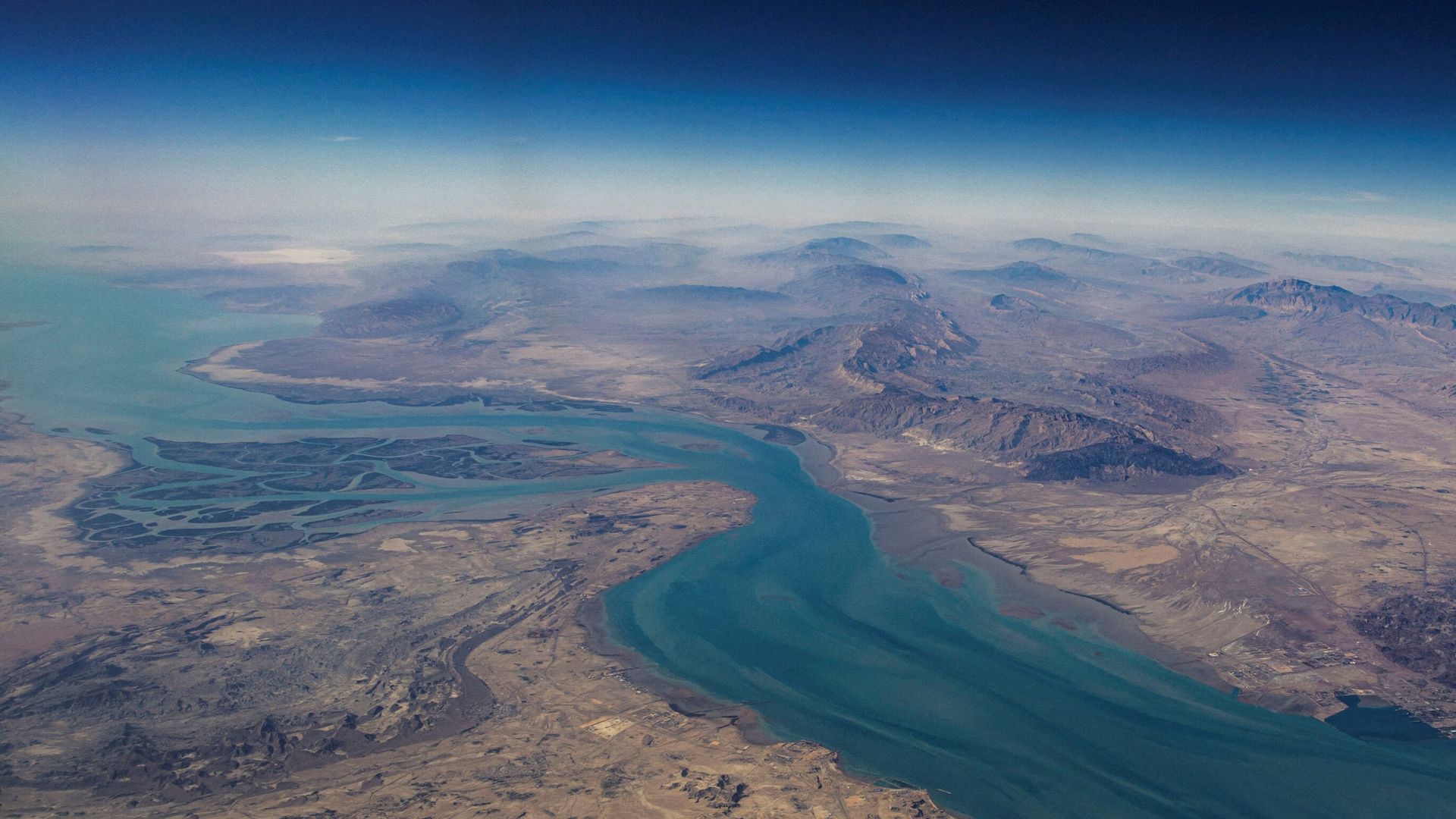
Qeshm Island is not merely a dot of land in the Persian Gulf; it is the primary terrain feature governing the northern littoral of the Strait of Hormuz. Stretching roughly 135 kilometers parallel to the Iranian coastline, Qeshm forms the northern boundary of the Clarence Strait and sits directly adjacent to Bandar Abbas, the headquarters of the Islamic Republic of Iran Navy (IRIN) and a major hub for the Islamic Revolutionary Guard Corps Navy (IRGCN). Also making waves in this space: Stop Blaming The Military Justice System When The Real Problem Is How We Process Campus Crime.
The island’s physical geometry creates three distinct operational advantages for Iranian forces:
- Acoustic and Radar Shadowing: The rugged, elevated terrain of Qeshm’s interior masks low-altitude flight paths and coastal radar emissions, complicating allied Intelligence, Surveillance, and Reconnaissance (ISR) tracking from airborne and naval platforms operating in the Gulf of Oman.
- Distributed Logistics and Hardened Storage: Unlike exposed naval piers on the mainland, Qeshm features extensive natural caves, subterranean storage complexes, and decentralized civilian-adjacent ports. This allows the IRGCN to disperse fast inshore attack craft (FIAC), sea mines, and anti-ship cruise missiles (ASCMs) across dozens of micro-locations, drastically increasing the target-acquisition burden for strike planners.
- Chokepoint Proximity: At its narrowest point, the Strait of Hormuz is approximately 33 kilometers wide, with inbound and outbound shipping lanes compressed into two 3-kilometer-wide channels separated by a 3-kilometer buffer zone. Assets staged on Qeshm sit within minutes of transit time to the northern shipping lane, compressing defensive reaction windows for commercial vessels and naval escorts to near zero.
Executing strikes on Qeshm directly targets the forward-most node of Iran's anti-access/area denial (A2/AD) network. Rather than striking deep inside the Iranian mainland—which crosses existential red lines and compels a massive retaliatory response—targeting an offshore island exploits a geographical buffer. It signals reach and precision while maintaining a psychological and political distinction between peripheral maritime assets and the sovereign core. More details into this topic are explored by TIME.
Deconstructing the "Limited Strike" Doctrine
In modern military strategy, the term "limited strike" is frequently misunderstood as a hesitant or half-hearted measure. In practice, it represents a high-precision application of Thomas Schelling’s theory of coercive diplomacy: the use of force not to physically disarm an opponent entirely, but to demonstrate the capacity and willingness to inflict unacceptable future costs if specific behaviors continue.
A limited kinetic operation on Qeshm operates through four sequential mechanisms:
- Target Isolation: Strike packages—typically utilizing standoff precision-guided munitions (PGMs) launched from naval surface combatants, submarines, or stealth aircraft—are restricted to military-exclusive nodes. Common targets include mobile coastal defense missile batteries (such as the Noor or Qader systems), localized command-and-control (C2) relays, and fuel or munition depots supporting maritime interdiction operations.
- Collateral Minimization: Because Qeshm hosts a significant civilian population, a free-trade zone, and critical desalination infrastructure, target selection undergoes strict collateral damage estimation (CDE). Avoiding civilian casualties and economic infrastructure is essential to prevent the strike from unifying domestic Iranian public opinion or alienating regional Gulf Cooperation Council (GCC) states that rely on shared maritime stability.
- Signal Clarity: The timing and weapon-to-target matching are engineered to communicate specific intelligence capabilities. Destroying a concealed mobile launcher or an underground facility entrance demonstrates real-time ISR penetration, forcing the adversary to question the security of their operational communications and physical concealment protocols.
- Off-Ramp Preservation: By keeping the strike geographically bounded to an island and limited in duration, the attacking force leaves the adversary with a viable political off-ramp. Tehran can absorb the tactical loss, frame the event domestically as minor or successfully repelled, and recalibrate its maritime posture without suffering catastrophic regime humiliation.
The primary limitation of this doctrine lies in the asymmetry of perception. What Washington defines as a measured, stabilizing restoration of deterrence, Tehran may interpret as an intolerable encroachment on territorial sovereignty, creating a mismatch in escalation thresholds.
The Cost Function of Asymmetric Maritime Attrition
To evaluate the efficacy of striking Qeshm, analysts must examine the underlying economic and operational cost function driving conflict in the Persian Gulf. For years, Iran has optimized its naval doctrine around cost-imposing strategies. A single swarm of FIACs, a moored naval mine, or a commercially derived one-way attack drone costs a fraction of the multi-million-dollar interceptor missiles and multi-billion-dollar naval vessels deployed by the United States and its coalition partners.
When US forces conduct limited strikes against Qeshm, they attempt to invert this cost curve through three operational shifts:
- Moving Left of Launch: Intercepting drones and missiles in flight drains magazine depth and forces defenders to expend expensive kinetic interceptors. Striking storage bunkers, assembly workshops, and launch rails on Qeshm destroys multiple threats simultaneously before they enter the operational battlespace, shifting the exchange ratio back in favor of the strike force.
- Disrupting the Kill Chain: Modern anti-ship warfare relies on a connected kill chain: detection, tracking, targeting, and engagement. Even if Iran retains hundreds of missiles, degrading the coastal radar arrays and maritime surveillance nodes on Qeshm blinds the shooters. Without over-the-horizon targeting data, long-range coastal batteries lose their accuracy against moving maritime targets.
- Imposing Maintenance and Dispersal Friction: Following a precision strike, surviving IRGCN units must abandon established logistics hubs, relocate into improvised hide sites, and operate under strict emissions control (EMCON). This friction degrades readiness, slows operational tempo, and increases the logistical burden of sustaining prolonged harassment campaigns against international shipping.
Despite these tactical gains, kinetic strikes alone cannot permanently eliminate asymmetric capacity. The industrial base producing small boats, mines, and short-range rockets is distributed across the Iranian mainland. Supplies destroyed on Qeshm can be replenished across the narrow Clarence Strait within weeks unless the strikes are paired with sustained maritime interdiction or persistent diplomatic pressure.
Escalation Dynamics and Regional Contagion
Every kinetic action in the Strait of Hormuz triggers immediate second- and third-order effects across global energy markets and regional security architectures. The central risk of striking Qeshm is horizontal escalation—the expansion of hostilities beyond the immediate maritime domain into adjacent theaters or economic sectors.
Tehran possesses multiple non-linear response vectors that avoid a direct, symmetrical clash with US naval firepower:
- Commercial Shipping Harassment: Rather than engaging US destroyers, IRGCN forces can escalate seizures, limpet mine attacks, or drone strikes against unescorted commercial tankers transiting the Gulf of Oman or the southern Persian Gulf. This spikes maritime war-risk insurance premiums and disrupts global supply chains without crossing the threshold of killing US military personnel.
- Proxy Activation: Iran frequently distributes its retaliatory response geographically. Following direct strikes on Iranian assets, allied militias in Iraq, Syria, or Yemen frequently increase rocket, ballistic missile, or drone attacks against US bases or international shipping in the Red Sea, stretching coalition air-defense assets across multiple simultaneous theaters.
- Sub-Threshold Cyber and Electronic Warfare: GPS spoofing, Automatic Identification System (AIS) manipulation, and targeted cyber operations against regional port infrastructure allow Tehran to impose economic friction while maintaining plausible deniability.
Regional states—particularly the United Arab Emirates, Saudi Arabia, Oman, and Qatar—occupy a precarious position during these exchanges. While these nations benefit from the security umbrella provided by US deterrence, their desalination plants, oil export terminals, and urban centers sit within minutes of Iranian ballistic missile flight times. Consequently, regional governments consistently pressure Washington to calibrate strikes tightly enough to deter Iranian aggression without provoking retaliatory strikes against Arab Gulf infrastructure.
Distinguishing Verified Operational Mechanics from Analytical Hypotheses
In fast-moving military engagements involving sensitive intelligence and classified battle damage assessments (BDA), separating established operational facts from analytical projection is vital for accurate strategic forecasting.
Established Operational Realities:
- Qeshm Island serves as a fortified node within Iran's integrated coastal defense and maritime interdiction network, hosting IRGCN facilities, missile storage, and radar installations.
- US strike doctrine in the Central Command (CENTCOM) area of responsibility relies on standoff precision munitions, strict collateral damage mitigation, and intelligence-driven target packages designed to degrade specific capabilities rather than occupy territory.
- The Strait of Hormuz remains a critical global energy chokepoint where localized military friction immediately impacts maritime insurance rates and crude oil volatility.
Analytical Hypotheses and Variables:
- Battle Damage Efficacy: Without independent, high-resolution commercial satellite imagery or post-strike reconnaissance disclosures, the exact percentage of degraded Iranian launch capacity remains an estimate. Subterranean facilities on Qeshm are specifically engineered to survive conventional blast overpressure, meaning strikes often seal tunnel entrances rather than destroy internal inventories.
- Deterrence Durability: Whether a limited strike restores deterrence or merely resets the clock for a new cycle of provocation depends entirely on internal decision-making within Iran’s Supreme National Security Council. Historical precedent from previous Gulf tank wars and maritime standoffs suggests that limited kinetic strikes typically yield a temporary pause in direct provocations—ranging from weeks to several months—while Tehran recalibrates its tactics.
- Rules of Engagement Shifts: A limited strike often accompanies an unannounced adjustment in defensive Rules of Engagement (ROE), granting theater commanders broader authority to engage hostile radar locks or approaching fast-attack craft preemptively.
Strategic Imperatives for Deterrence Sustainment
Treating a limited strike on Qeshm Island as a standalone solution guarantees strategic failure. Coercive signaling degrades rapidly if the adversary perceives the action as a one-off political gesture rather than the opening phase of a sustained enforcement regime.
To convert a tactical strike on Qeshm into durable maritime deterrence, defense planners and policymakers must execute three concurrent follow-on measures:
- Enforce a Persistent ISR and Interdiction Cordon: Immediately following kinetic strikes, naval and aerial ISR assets must maintain continuous coverage over the Clarence Strait. Identifying and interdicting resupply barges attempting to replenish destroyed munitions on Qeshm denies Iran the ability to regenerate its forward A2/AD posture.
- Integrate Coalition Air and Missile Defense: Expand real-time sensor sharing between US naval assets and GCC air defense networks. Closing radar gaps along the southern Persian Gulf coast neutralizes Iran’s ability to retaliate against regional economic targets, removing Tehran’s primary tool of coercive leverage over Washington’s regional partners.
- Establish Explicit, Graded Escalation Thresholds: Pair the kinetic action with unambiguous diplomatic messaging transmitted through established backchannels. The message must specify that any retaliatory harassment of commercial shipping or regional energy infrastructure will trigger a pre-planned, progressively broader target set—moving from offshore island nodes to mainland naval logistics hubs—removing any ambiguity regarding the cost of continued escalation.