The stability of the Persian Gulf does not rest on diplomatic intent but on the precise calibration of kinetic pressure and economic survival. The current "shadow" ceasefire between the United States and Iran functions as a high-stakes equilibrium where both parties calculate the marginal cost of escalation against the diminishing returns of total conflict. This is not a peace treaty; it is a resource-allocation strategy. To understand why this balance persists—and where it will likely fracture—requires a deconstruction of the three structural pillars holding the ceiling in place: the Proxy Threshold, the Nuclear Latency Hedge, and the Energy Transit Veto.
The Proxy Threshold and the Logic of Deniability
The primary mechanism for conflict management between these two powers is the outsourced kinetic engagement. For Iran, the "Axis of Resistance" serves as a strategic depth buffer. By utilizing non-state actors in Iraq, Syria, Lebanon, and Yemen, Tehran exerts pressure on U.S. regional assets without triggering a direct state-to-state retaliatory cycle that would endanger its domestic infrastructure. Learn more on a related subject: this related article.
The U.S. counter-strategy relies on "Proportional Response" math. When a proxy strike occurs, the U.S. evaluates the damage across a specific matrix:
- Target Nationality: Casualties involving U.S. service members trigger a mandatory kinetic escalation.
- Infrastructure Criticality: Attacks on logistical hubs receive higher-tier responses than attacks on remote outposts.
- Attribution Speed: The time required to link a specific munition or command signal to Tehran dictates the diplomatic cooling-off period.
This equilibrium holds only as long as the proxies remain within the "Grey Zone"—the space between peace and overt war. The risk of collapse originates from a loss of command and control. As decentralized militias gain autonomous technical capabilities, such as indigenous drone manufacturing, the central authority in Tehran may lose the ability to "dial down" the heat, leading to an accidental breach of the U.S. red line. Additional reporting by BBC News delves into comparable perspectives on the subject.
The Nuclear Latency Hedge as a Negotiating Lever
Iran’s nuclear program is no longer a goal of immediate weaponization but a tool of permanent leverage. By maintaining a high degree of enrichment—specifically at the 60% threshold—Tehran stays within a technical "breakout" window of weeks rather than months. This creates a functional ceiling on U.S. and Israeli military options.
The logic here follows the principles of game theory:
- Sunk Cost of Sanctions: Having already endured "maximum pressure," Iran views its centrifuge arrays as the only remaining assets with enough value to trade for sanctions relief.
- The Deterrence Paradox: If Iran crosses the 90% enrichment threshold (weapons-grade), it likely triggers a preemptive strike. If it rolls back enrichment too far, it loses its seat at the bargaining table.
Consequently, the current status quo is a deliberate "managed crisis." The International Atomic Energy Agency (IAEA) serves as the pressure gauge. Fluctuations in cooperation levels are rarely about technical inspections; they are signals sent to Washington regarding Iran's satisfaction with the current flow of unofficial oil revenues.
The Energy Transit Veto and Global Economic Interdependence
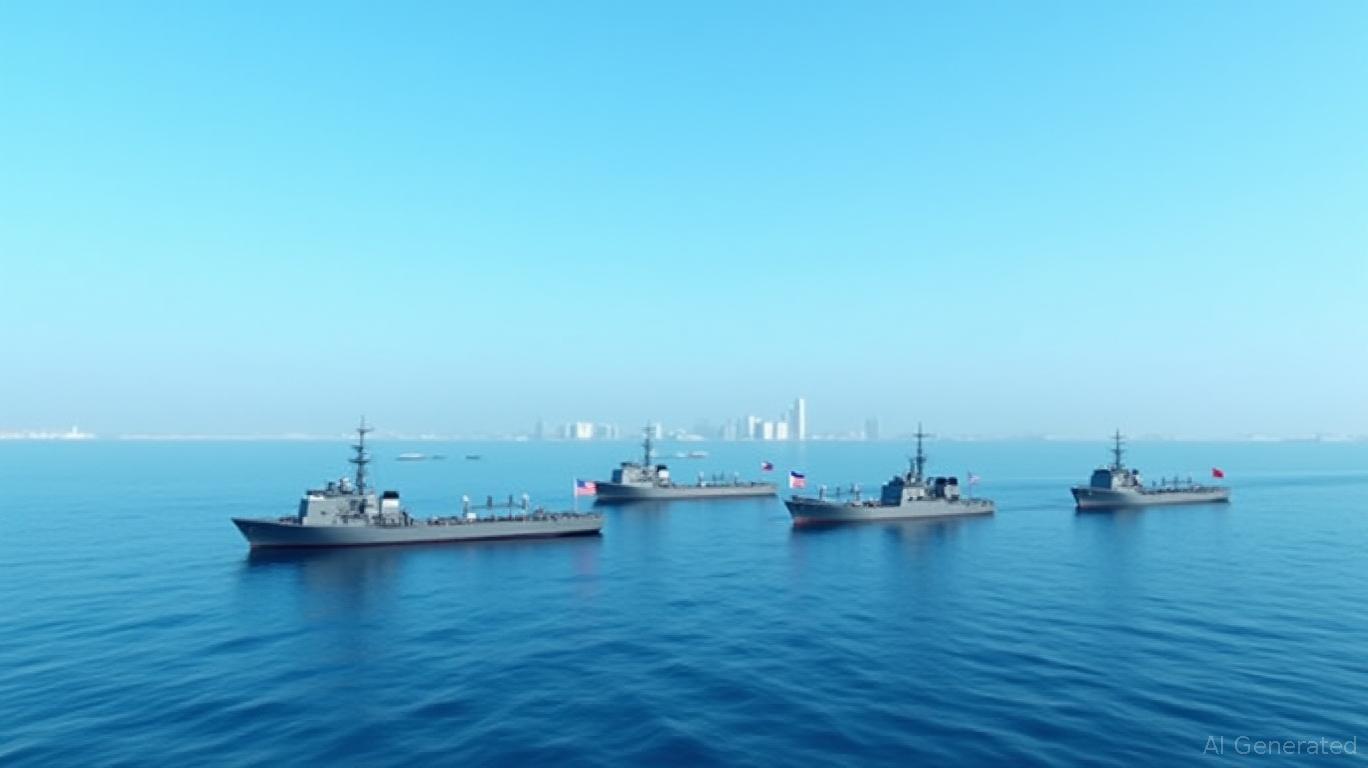
The Strait of Hormuz remains the ultimate kill-switch in this strategic standoff. Roughly 20% of the world’s liquid petroleum gas and oil passes through this 21-mile-wide chink in the global supply chain. Iran’s naval doctrine has shifted from traditional fleet engagement to asymmetric swarm tactics and "smart" mining.
The Cost Function of a Blockade:
A total closure of the Strait would theoretically send oil prices north of $150 per barrel, triggering a global recession. However, this is a "Suicide Option." Iran relies on the same waterway for its own exports to China, its primary economic lifeline. Therefore, the strategic play is not a blockade, but "frictional interference." By seizing tankers or conducting "safety inspections" on Western-linked vessels, Iran creates a risk premium in maritime insurance markets. This increases the operational cost for the U.S. and its allies without requiring a single shot.
The U.S. response involves the deployment of unmanned surface vessels (USVs) and AI-driven maritime domain awareness. By automating the monitoring of the Persian Gulf, the U.S. Navy reduces the "human cost" of potential skirmishes, effectively lowering the barrier for a kinetic response to Iranian harassment.
Internal Political Constraints and the Succession Variable
The stability of any ceasefire is also tethered to the internal durability of the regimes. In Washington, the electoral cycle dictates the risk tolerance for Middle Eastern entanglement. Any administration facing an upcoming election is statistically less likely to initiate a new regional war, but more likely to respond forcefully to perceived weakness.
In Tehran, the looming succession of the Supreme Leader creates a "Hawkish Bias." Potential successors and the Islamic Revolutionary Guard Corps (IRGC) must demonstrate ideological purity and strength. This internal competition often manifests as aggressive foreign policy maneuvers. If the domestic economy reaches a breaking point due to currency devaluation, the regime faces a binary choice: internal reform (unlikely) or external diversion (highly likely).
The Bottleneck of Digital Warfare
Cyber operations have replaced traditional sabotage as the preferred method of "sub-kinetic" signaling. The infrastructure of both nations is under constant probe. Unlike a missile strike, a cyberattack on a power grid or a port facility provides "Strategic Ambiguity." It allows one side to inflict significant economic damage while providing the victim a face-saving way to avoid a full-scale military mobilization.
This creates a new escalation ladder:
- Tier 1: Information operations and website defacement (Low impact).
- Tier 2: Data exfiltration and espionage (Medium impact).
- Tier 3: Industrial Control System (ICS) disruption, such as targeting centrifuges or oil refineries (High impact/Act of War).
The current "quiet" is largely due to both sides being locked in a Tier 2 stalemate. Neither side is confident that their defense can withstand a Tier 3 retaliatory strike, leading to a digital version of Mutually Assured Destruction.
Strategic Forecast: The Pivot to China
The most significant shift in the Iran-U.S. dynamic is the entry of Beijing as a third-party stabilizer. China’s 25-year strategic pact with Iran provides Tehran with an economic "floor" that prevents total collapse under U.S. sanctions. For the U.S., this complicates the pressure strategy. Sanctioning Iran now effectively means friction with China—the world’s second-largest economy.
The ceasefire will likely hold in its current fragmented state because no player has a "Dominant Strategy" that results in a better outcome than the status quo. The U.S. cannot afford another ground war while pivoting to the Indo-Pacific; Iran cannot afford a direct strike that decapitates its leadership; and China cannot afford an energy price shock.
The strategic play for the next 18 months is a "Frozen Conflict" model. Expect continued proxy skirmishes in the Levant and Yemen, calibrated to stay exactly 10% below the threshold of total war. Success for Western planners lies not in seeking a grand bargain—which is currently a geopolitical impossibility—but in hardening the technical systems (cyber defense, USV patrols) that reduce the impact of Iranian "frictional interference." The objective is to make the cost of Iranian provocation higher than the value of the leverage it generates.
Moving forward, the focus must shift from diplomatic sentiment to "Infrastructure Hardening." By diversifying energy transit routes (such as pipelines through Saudi Arabia to the Red Sea) and increasing the autonomy of regional partners, the U.S. can effectively devalue the "Hormuz Veto." Once Iran's primary leverage points are neutralized through engineering and logistics rather than just sanctions, the fundamental calculus of the region will shift from a balance of terror to a balance of irrelevance.