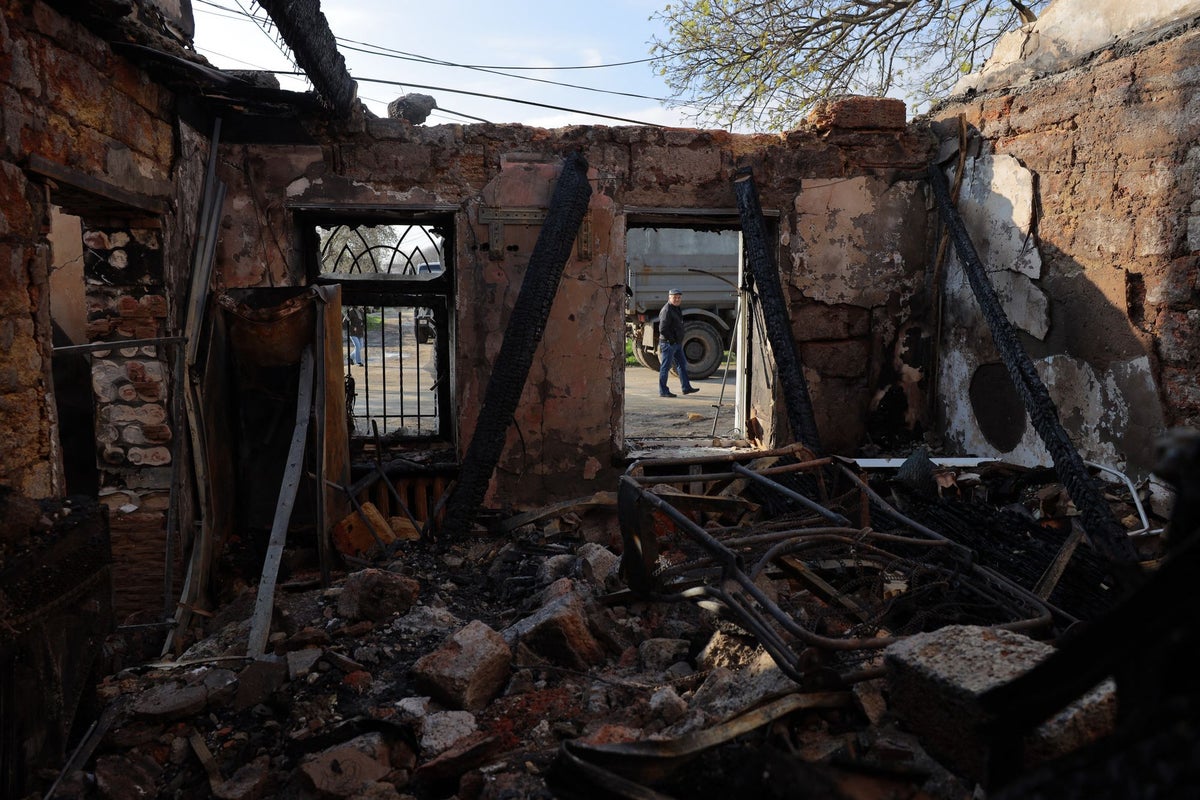
The declaration of a unilateral 36-hour ceasefire by the Russian Federation, timed to coincide with the Orthodox Christmas, functions less as a humanitarian pause and more as a specific instrument of psychological and operational positioning. When kinetic activity continues despite a publicized cessation of hostilities, the resulting casualties are not merely collateral damage; they are data points in a broader strategy of narrative dominance and front-line stabilization. The friction between a high-level political order and the tactical reality of artillery duels reveals the fundamental instability of temporary, non-negotiated truces in high-intensity peer-to-peer warfare.
The Structural Architecture of Unilateral Pauses
A unilateral ceasefire differs fundamentally from a bilateral truce because it lacks a verification mechanism. In the absence of third-party monitoring or mutual agreement on "no-fire" zones, the party declaring the ceasefire retains the initiative to define "defensive responses." This creates a tactical paradox: If you liked this article, you might want to look at: this related article.
- The Provocation-Response Loop: By declaring a pause, Russia shifts the burden of escalation onto Ukraine. Any defensive fire or counter-battery operation conducted by Ukrainian forces is framed as a violation of a "sacred" holiday pause.
- Operational Refitting: High-intensity conflict consumes materiel and exhausts personnel at rates that necessitate periodic lulls. A 36-hour window, while insufficient for deep strategic reserves to reach the front, allows for the redistribution of short-range munitions and the rotation of exhausted platoons at the zero line without the immediate pressure of offensive maneuvers.
- Information Warfare Utility: The primary audience for such a ceasefire is often domestic or neutral third-party observers. It serves to project an image of moral high ground, regardless of the kinetic reality on the ground.
Casualty Metrics as a Function of Front-Line Inertia
The reported deaths in Kherson and the Donbas during the lead-up to and start of the ceasefire period illustrate the impossibility of "switching off" a modern front line. Artillery systems, particularly Soviet-era and NATO-standard 155mm batteries, operate on targeting cycles that extend beyond political announcements.
The mechanism of these strikes usually follows a three-stage sequence: For another perspective on this story, check out the recent update from NPR.
- Intelligence Collection: UAVs or signals intelligence (SIGINT) identify a concentration of personnel or a supply depot.
- Targeting Fix: Fire coordinates are relayed to battery commanders.
- Kinetic Release: The shells are fired, often hours after the target was identified.
When a strike occurs minutes or hours after a ceasefire is supposed to begin, it often represents the clearing of the "firing queue." However, in the context of the recent strikes in Ukraine, the continued use of S-300 missiles in a ground-attack role and heavy thermobaric rocket launchers suggests a deliberate maintenance of pressure rather than accidental overlap.
The Logistics of the 36-Hour Window
From a military logistics perspective, 36 hours is the "Goldilocks zone" for tactical reorganization. It is too short to allow the enemy to build significant new fortifications, but long enough to:
- Recover damaged light armor that was stuck in the "grey zone" between trenches.
- Conduct localized reconnaissance using low-altitude drones that would normally be prioritized for destruction.
- Fortify secondary lines of defense without the constant threat of indirect fire disrupting the concrete curing or trench digging.
Ukraine’s refusal to acknowledge the ceasefire as anything other than a "hypocritical trap" is a recognition of these logistical advantages. From a strategic standpoint, accepting the ceasefire would have granted Russian forces a friction-less period to shore up vulnerabilities in the Svatove-Kreminna line or around the Bakhmut salient.
Psychological Attrition and the Religious Variable
The timing of the ceasefire during the Orthodox Christmas introduces a variable of cultural friction. In decentralized warfare, the morale of the individual soldier is a critical resource. By framing the conflict through a religious lens, the Kremlin attempts to consolidate its domestic "defender of values" narrative.
The failure of the ceasefire to hold—evidenced by the strikes that killed civilians and military personnel—serves a secondary psychological purpose: it reinforces the "existential threat" narrative. When the ceasefire is "broken" (regardless of who fired first), it provides the declaring party with a pretext for intensified future operations, claiming that "peaceful overtures" were met with aggression.
The Geometry of Indirect Fire in Urban Corridors
The strikes in Kherson represent a specific type of kinetic engagement. Unlike the open fields of the Zaporizhzhia region, urban artillery strikes rely on high-angle fire to clear building heights. This necessitates high-precision targeting or, in the absence of that, saturation fire.
The cost function of these strikes is high. For Russia, using expensive precision munitions during a self-imposed ceasefire indicates a high-value target acquisition that superseded the political value of the pause. For Ukraine, the continued shelling of Russian positions during this window is a tactical necessity to prevent the "free" movement of Russian reinforcements.
Analyzing the Verification Gap
In professional conflict resolution, a ceasefire requires four pillars to be functional:
- Defined Geographic Limits: Precise GPS coordinates of where the fire must stop.
- Definition of Prohibited Acts: Does "fire" include drone surveillance, electronic warfare, or logistical movement?
- Monitoring Bodies: Neutral observers (e.g., OSCE) with the right of movement.
- Enforcement Mechanisms: Pre-agreed consequences for violations.
The Russian proposal contained none of these. It was a verbal declaration without a technical framework. Consequently, the "ceasefire" existed only in the realm of rhetoric. On the ground, the kinetic exchange rate remained consistent with the previous 72-hour average.
Strategic Implications for Spring Maneuvers
The volatility of this short-term pause suggests that neither side is currently willing to cede the initiative. The "frozen conflict" hypothesis is contradicted by the intensity of these strikes. We are seeing a "warm-up" phase for spring offensives.
The strikes occurring during the Christmas period act as a stress test for the Ukrainian air defense network, which has been recently bolstered by Western systems. For Russia, these engagements provide a baseline for how much "political capital" they can spend on the international stage while maintaining a maximalist military stance.
The persistence of kinetic activity during a publicized lull confirms that the operational command on both sides views the current phase as "zero-sum." There is no room for a "frozen" front when the logistical hubs in the rear remain within striking distance of high-mobility artillery.
The most probable outcome of this failed pause is an immediate escalation in strike frequency. Both sides will now move to "reset" the narrative, likely through increased long-range missile salvos or localized ground assaults to prove that the 36-hour window did not result in a loss of combat effectiveness. Commanders should anticipate that any future "humanitarian" offers will be treated as high-probability indicators of imminent offensive movement, requiring an increase in counter-battery readiness rather than a stand-down.