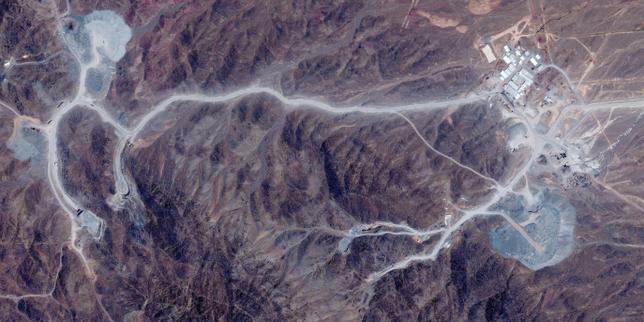
Geopolitical conflict between regional powers and global hegemonies often manifests through asymmetric signaling long before formal kinetic escalation occurs. Iran's public denunciations of United States military threats against its nuclear infrastructure serve a calculated, dual function: establishing an official paper trail for international legal accountability while calibrating domestic political alignment. By framing attacks on nuclear facilities not merely as military aggressions but as violations of global non-proliferation norms, Tehran shifts the conflict matrix from tactical vulnerability to diplomatic friction.
The Triad of Asymmetric Geopolitical Signaling
States operating under military asymmetric disadvantage rely on three strategic pillars when responding to explicit threats against critical infrastructure.
1. Diplomatic Preemption and Legal Framing
By explicitly citing international conventions governing nuclear installations, such as International Atomic Energy Agency (IAEA) statutes and UN Security Council resolutions, state rhetoric converts a regional defense dispute into a global governance issue. The legal argument rests on two premises:
- Environmental and civilian hazards: Characterizing attacks on enrichment or power facilities as potential ecological disasters forces international bodies to evaluate the collateral risk of targeted strikes.
- Breach of sovereignty under international law: Utilizing formal complaints to the UN establishes a documentation baseline necessary for downstream diplomatic isolation tactics against aggressors.
2. Deterrence Through Escalation Risk
Accusations directed at foreign powers carry an implicit warning: targeting nuclear infrastructure alters the threshold of conflict. Escalation management functions on a scale of calculated ambiguity:
- Operational retaliatory signaling: Publicizing perceived threats allows a state to signal to its domestic base and regional allies that responses are defensive, establishing a rationale for asymmetric counter-measures.
- Non-linear response vectors: Direct military containment strategies frequently trigger non-linear counter-responses, including cyber operations, maritime traffic disruptions, or indirect proxy maneuvers across regional trade corridors.
3. Domestic Consolidation and Sovereignty Defense
External threats act as a primary mechanism for internal political stabilization. When foreign actions target national projects—specifically nuclear programs framed domestically as civil achievements—political factions align against external pressure, insulating leadership from internal dissent.
Operational Dynamics of Targeted Infrastructure Deterrence
The security architecture surrounding nuclear sites involves physical hardening, redundant systems, and strategic dispersion. Threat rhetoric directly impacts the operational posture of these assets.
External Threat Signals -> Tactical Dispersion & Hardening -> International Legal Complaints -> Asymmetric Counter-Signaling
When a nation faces sustained external threats against hardened assets, the defensive doctrine reorganizes around three structural priorities:
- System Redundancy: Distributing centrifuge networks and refining operations across geographically diverse, deep-underground sites to mitigate single-point kinetic failure.
- Defensive Anti-Air Integration: Deploying layered air defense systems to increase the marginal cost of kinetic strikes for opposing air forces.
- Rapid Breakout Capabilities: Retaining intermediate enrichment capabilities acts as an active security buffer, signaling that kinetic actions may accelerate, rather than halt, weaponization timelines.
Mechanics of International Pressure and Response
The friction between diplomatic denunciations and military deterrence highlights a structural flaw in modern non-proliferation frameworks. While international treaties restrict state action regarding nuclear technology, they lack enforceable mechanisms to prevent preemptive strikes by non-signatories or uncooperative states.
The friction manifests in two primary operational bottlenecks:
- Enforcement Asymmetry: UN bodies can record and condemn threats, yet lack rapid-deployment enforcement tools to protect civilian infrastructure during active military tensions.
- Verification Degradation: Tensions between target nations and international monitoring bodies frequently result in restricted inspector access, reducing visibility precisely when tactical clarity is required.
Defense planners evaluating regional stability must anticipate that rhetoric surrounding nuclear facilities is rarely mere political theatre. It constitutes an active defense posture designed to raise the diplomatic, environmental, and military costs of intervention to unsustainable levels. Future strategic postures will depend on whether international institutions can restore credible verification channels before asymmetric threat cycles trigger kinetic escalation.