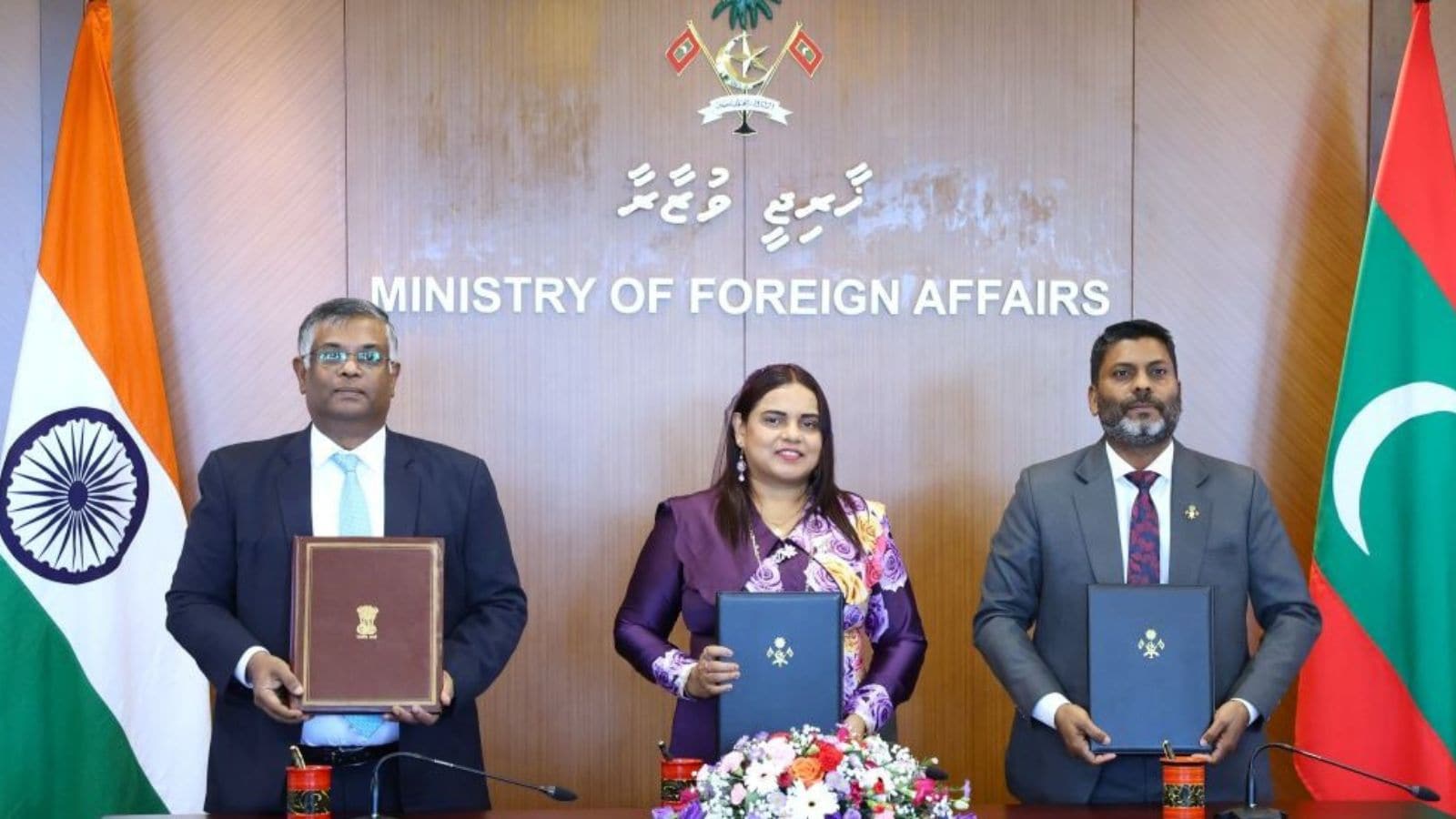
India has extended grant assistance to the Maldives to establish outdoor fitness centers across 42 islands, an initiative designed to build grassroots goodwill and solidify bilateral ties in the Indian Ocean. While megaprojects like ports and bridges dominate headlines, this high-impact, low-cost aid targets local communities directly across dispersed atolls. The deal reflects a tactical shift in regional diplomacy, using community infrastructure to strengthen ties at a time when influence over the archipelago remains fiercely contested among Indian Ocean powers.
Diplomacy often wears the uniform of heavy machinery. Dredgers, steel girders, and multi-million-dollar deep-sea berths dominate strategic briefings in New Delhi and Male. Yet, the physical reality of the Maldivian archipelago demands a different playbook. Scattered across nearly 1,200 coral islands, the country's population does not live on asphalt bridges alone. Most citizens reside on small outer islands where civic amenities are thin and youth engagement options are scarce.
By funding fitness equipment and outdoor gymnasium facilities across 42 distinct islands, New Delhi is deploying a micro-infrastructure campaign. It is cheap. It is visible. Most importantly, it touches the daily routine of island voters in ways that distant commercial harbor developments never can.
The Strategy Behind Micro Infrastructure Grants
Large infrastructure initiatives bring immense political prestige, but they carry heavy burdens. They suffer from protracted timeline delays, environmental clearance hurdles, and accusations of debt accumulation. When a foreign power finances a giant port, the political benefits accrue almost exclusively to the ruling central elites in the capital city of Male. The fisherman on a distant southern atoll sees little immediate change in his day-to-day existence.
Small grant projects bypass these structural bottlenecks. Installing open-air exercise machinery, community centers, or coastal protection buffers on isolated islands requires minimal capital expenditure. The turnaround time is measured in months, not decades.
Each completed facility carries a plaque acknowledging foreign assistance. Every young person working out on a island park interacts directly with an asset gifted by a neighboring government. This creates a localized footprint. When national political tides shift in Male, local island councils retain a tangible record of who delivered immediate, functional utility to their communities.
Balancing Strategic Realities in the Indian Ocean
The Maldives occupies a vital geographic position along primary sea lines of communication. Millions of barrels of crude oil and vital cargo transit through the maritime channels surrounding the archipelago every day. Control over or access to these waters is a central objective for major regional powers.
For years, the political dynamic in Male has swung between pro-India and pro-China alignments. Shifts in administration frequently result in dramatic policy reversals, cancelled contracts, and rewritten maritime agreements.
+-----------------------------------------------------------------------+
|                 MODELS OF REGIONAL DEVELOPMENT ASSISTANCE             |
+-----------------------------------------------------------------------+
| Feature             | Micro-Infrastructure     | Major Megaprojects   |
+---------------------+--------------------------+----------------------+
| Target Audience     | Island residents, Youth  | Central elites, Port |
| Implementation Time | 3 to 12 months           | 5 to 10 years        |
| Political Burden    | Low debt risk            | High debt scrutiny   |
| Visibility          | High local utility       | High economic scale  |
+-----------------------------------------------------------------------+
High-stakes diplomatic gambits are fragile. A multi-billion-dollar port project can be frozen overnight by a newly elected president seeking to demonstrate independence from foreign patrons. Micro-grants for island fitness centers operate below this threshold of geopolitical friction. They are politically difficult for any incoming administration to reject or dismantle without angering local island councilors and citizens who benefit directly from the amenities.
Execution and Maintenance Challenges in Outer Atolls
Building a gym on a remote island is simple on paper. Keeping it operational in a marine environment is a different challenge entirely.
Salt air eats steel. High humidity degrades moving mechanical parts within months if materials are not marine-grade or consistently maintained. In past development schemes across the South Pacific and Indian Ocean, foreign-gifted community infrastructure has frequently fallen into disrepair due to a lack of supply chains for replacement parts and absent local maintenance budgets.
If these 42 fitness centers rust into jagged iron skeletons within two years, the diplomatic goodwill generated by the initial ribbon-cutting ceremony will evaporate. Success depends on several unglamorous mechanics:
- Material selection: Utilizing corrosion-resistant alloys and heavy-duty polymers suited for equatorial ocean conditions.
- Local ownership: Transferring maintenance responsibility directly to island councils with dedicated operational budgets.
- Spare parts pipelines: Establishing clear supply channels so a broken cable or rusted bearing does not render an entire facility useless.
Aid that fails in the field quickly becomes a monument to foreign neglect. The long-term value of this grant hinges entirely on operational continuity rather than the initial photo opportunity.
Community Health as a Political Mechanism
The decision to focus on physical fitness centers targets a growing social and economic pressure point within the Maldives. Non-communicable diseases, including cardiovascular conditions and diabetes, have surged across the nation due to rapid urbanization, changing diets, and sedentary lifestyles on densely populated islands.
Public health budgets in Male are stretched thin. Medical evacuations from outer atolls to central hospitals or foreign medical centers cost the state millions annually. Providing physical activity facilities addresses a clear social need identified by local island councils.
Aligning diplomatic aid with local public health priorities shifts the narrative away from military alignment and maritime surveillance. It allows foreign donors to project benevolence while addressing real human security concerns. When a grant improves daily life on an isolated island, it creates a defensive wall of public opinion that high-level diplomatic posturing cannot easily dismantle.
The Long Game of Regional Influence
Diplomatic supremacy in the Indian Ocean will not be decided solely by warships or mega-ports. It will be decided by who remains a reliable, permanent partner for the everyday needs of the island populations that inhabit these maritime crossroads.
Small grants for 42 island fitness centers represent a deliberate, tactical play in a long-term strategy. By embedding development assistance directly into the fabric of daily life on the outer atolls, foreign donors build resilient networks of goodwill that survive political turbulence in the capital. The real measure of this initiative will not be found in press releases, but in whether those outdoor gyms are still standing, rust-free and packed with local youth, five years down the line.