Sirens. That is the first sound you learn to translate when a march turns. Not the distant wail of a routine patrol car gliding down a wide boulevard, nor the crisp alarm of a fire truck rushing to a kitchen blaze, but the ragged, metallic shriek that cuts through shouting, shuffling boots, and the sudden clatter of metal shutters being pulled down an hour before dusk.
I have stood on enough corners where a peaceful grievance began to curdle in the afternoon heat to know the exact moment the air shifts. You feel it on the back of your neck before your eyes catch a single stone in flight. Voices tighten. Chants lose their rhythm and sharpen into demands. Shopkeepers who spent the morning sweeping dust from their thresholds begin moving plastic crates inside, their eyes darting between the crowd and the nearest alley.
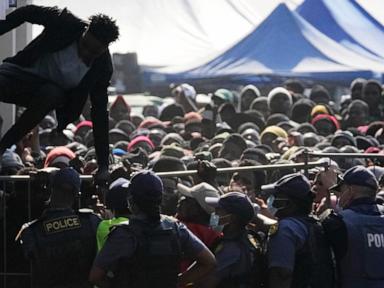
Somewhere inside that press of bodies—caught between banners carried by people who feel cheated by a stagnant economy and bystanders who simply walked out to buy bread, sim cards, or a pair of shoes—a foreign citizen lost their life during a march in South Africa as anti-immigrant tensions flared.
A headline reduces a human being to a category. Foreign citizen. Two words that sound clean on a wire feed and hollow in a family room three thousand miles away. Yet behind that phrase sits a person with a favorite mug, a voice note saved on a relative's phone, a route they took every Tuesday because the lighting felt safer near the corner bakery, and a set of dreams packed into a bag long before anyone imagined they would become a symbol in someone else's anger.
When anti-immigrant tensions flare during a protest march, the tragedy is rarely just one death on one afternoon. It is the collapse of trust across an entire neighborhood, the quiet terror that settles into rented rooms, and the bitter irony of people hurting one another while the deeper roots of their hardship remain untouched.
What a March Reveals When Anger Searches for a Target
Walk through almost any working-class commercial strip in a major South African city on a weekday morning and you see hustle in its rawest form. Barbershops buzz with clippers and soccer debates. Tire repairers kneel beside dented rims on cracked asphalt. Women balance woven bags and toddlers while negotiating the price of tomatoes and mealie meal.
To understand how a march can tip into fatal violence, you have to look at the pressure cooker sitting underneath that daily routine. High unemployment, unreliable electricity, strained municipal clinics, and rising living costs wear people down day after day. When jobs feel scarce and public services stall, frustration looks for a face it can blame.
That is a recognized behavioral pattern in moments of economic strain. Sociologists call it scapegoating, though in plain human terms it works like a misaimed flashlight in a dark room: instead of illuminating the wiring behind the wall, it blinds the person standing closest to you. Political slogans, viral rumors on messaging apps, and grievances over competition for informal work or low-wage jobs can turn a crowd's legitimate anger at economic neglect into hostility against foreign nationals.
Let us use a hypothetical scenario to make the mechanics clear. Picture a hypothetical shopkeeper named Thabo who has watched two neighboring storefronts close over eighteen months while his own electricity bills climbed and customers bought smaller portions. Let us also picture a hypothetical newcomer named Samuel, a carpenter from across the border who sends half his meager earnings home to pay for his younger sister's school uniform and rents a small room two streets over. Neither man wrote the national economic policy. Neither man fixed the municipal budget. Yet when a march passes down the main road chanting about jobs being stolen and neighborhoods being overrun, Samuel's accent, his identity document, or his mere presence on the pavement can suddenly make him a target in a crowd that feels powerless everywhere else.
This is a hypothetical illustration meant to show how ordinary lives collide during volatile protests, not a claim about any specific individual at the scene of this latest killing. Still, versions of that collision have played out repeatedly across South Africa whenever economic despair meets street mobilization.
Why does a march that starts with grievances escalate so fast? Crowds carry their own momentum. A speaker on a megaphone stokes fear; a rumor spreads that someone inside a shop or at the edge of the procession threw an object; a few hotheads surge forward; panic ripples outward. People who came to demand jobs or safety find themselves swept into chaos, while vulnerable foreign residents—street traders, delivery workers, migrants, and passersby—have nowhere to disappear when a street suddenly narrows into a trap.
The Invisible Stakes Behind a Two-Word Label
People outside the affected street often ask a simple question: Why don't foreign citizens just leave or stay indoors when tensions rise?
It is a fair question if you picture life as a chess board where pieces can simply be lifted off a square. In reality, leaving is rarely simple, and staying indoors does not always guarantee safety.
Many foreign nationals living in South Africa came seeking stability, safety, or a modest livelihood that was out of reach at home. Some have lived in the country for years, paying rent, buying groceries, attending local churches or mosques, and building friendships with neighbors who treat them decently. Packing up means abandoning whatever fragile footing they have managed to build—a stall, a tool kit, a lease, a child's school routine. And even when someone wants to leave, travel costs money, borders have rules, and going back might mean returning to poverty or instability just as harsh.
Staying indoors has its own heavy cost. If you earn daily wages by washing cars, repairing phones, or selling fruit on the corner, a day of hiding is a day without food money. Fear also changes the texture of ordinary life. You start checking the street before stepping out for milk. You keep your voice low on the phone when speaking your home language in public. You memorise which side streets have open gates and which alleys dead-end against high walls.
There is another stake that rarely makes the evening bulletin: what happens to the community's soul after the tear gas clears and the cameras pack up. When a foreign citizen is killed during a march, neighbors who share a pavement are forced to live with the aftermath. Some feel shame and anger that a peaceful protest was hijacked by violence. Others grow guarded, suspicious, or numb. Trust, once cracked on a tarred road, takes years of quiet, unglamorous repair to mend.
I admit something candidly here: writing about recurring anti-immigrant violence can leave even a seasoned observer feeling heavy and uncertain. When you have seen warnings ignored before, it is tempting to fall into cynicism—to assume the cycle will repeat no matter how many speeches leaders give or how many statements police release. Yet cynicism is a luxury for people watching from afar. For the family mourning a loved one killed in the streets, or for a foreign worker wondering whether tomorrow's commute will be safe, hopelessness is not an abstract philosophy. It is a daily weight.
Law, Protest, and the Thin Line Between Voice and Violence
Democracies depend on the right to march. Citizens have every right to assemble, voice anger over unemployment or crime, and demand accountability from leaders. A protest march is not the problem. The problem begins when legitimate grievance is fused with xenophobia, incitement, or mob violence—and when policing arrives too late, too thinly, or without clear de-escalation.
Think of a protest like a campfire. Contained within a stone ring, fire cooks food and keeps people warm against a cold night. Let sparks blow dry into tall grass without watchfulness, and the very flame meant to bring warmth scorches everything in its path.
When anti-immigrant tensions flare during a march, several failures often overlap:
- Inflammatory rhetoric before the march begins: When organizers or online voices frame an entire group of foreign nationals as the cause of local hardship, the crowd is primed for hostility before a single step is taken.
- Unchecked rumors in real time: False claims about crimes or attacks spread in seconds on social media, turning anxious marchers into an angry mob before facts can catch up.
- Uneven law enforcement: When crowd control is reactive rather than preventive—or when bystanders and vulnerable residents are left exposed on side streets—violence can spiral before reinforcements arrive.
- Delayed accountability: When arrests are rare or justice feels distant after an attack on a foreign citizen, perpetrators learn that street violence carries little consequence.
None of these dynamics erase the real pressures facing local communities. A person struggling to feed their family on a shrinking income is not inventing their pain. Ignoring local economic frustration only leaves the door wide open for agitators who offer a convenient scapegoat instead of real solutions. True safety requires holding two truths at once: addressing the genuine economic anxieties of local residents while firmly protecting the life, dignity, and legal rights of every person—citizen or foreign national—walking the streets.
After the Crowd Disperses
By nightfall on the day of a deadly march, the noise usually fades. Broken glass gets swept toward the gutter. Plastic water bottles roll against curbstones. A police tape or a quiet cluster of onlookers might mark where something irreversible happened hours earlier.
Yet for one household, the clock does not reset at dusk. A phone rings with news no one is prepared to hear. A chair at a table stays empty. A life measured in small daily efforts—catching early buses, sending money home, hoping for a calmer year—ends abruptly in the middle of someone else's fury.
Streets remember what happens on them. Not in stone or steel, because concrete has no memory, but in the way footsteps hesitate at a corner where shouting once broke out, in the quiet prayers whispered behind locked doors, and in the question every city must keep asking itself: whose life counts when the crowd begins to roar?