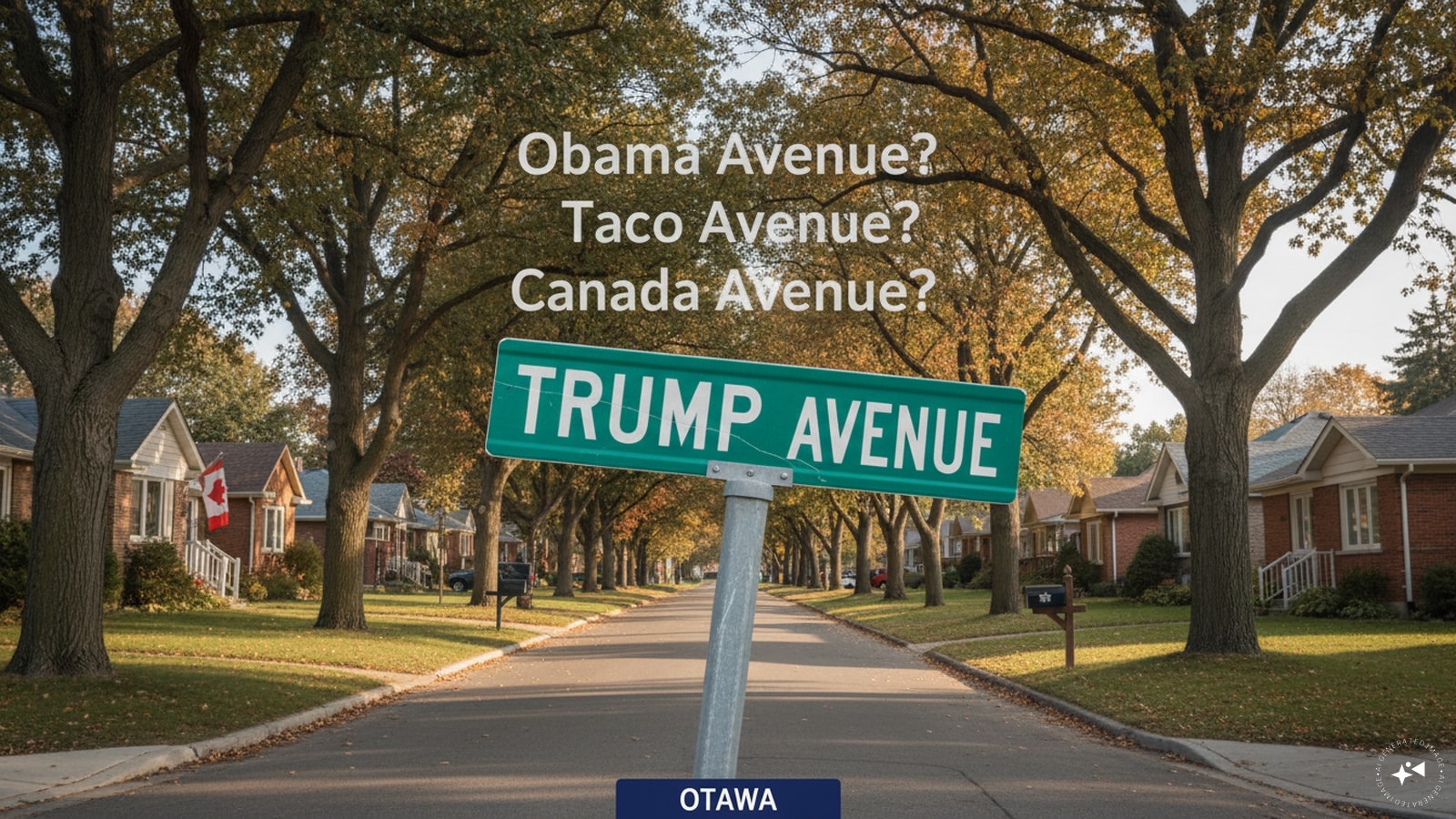
The asphalt on Trump Avenue does not care about geopolitics. It bears the weight of delivery trucks, the rubber soles of joggers, and the stubborn winter frost just as it has for a quarter of a century. Yet, beneath the familiar rumble of tires, something foundational is shifting in the capital of Canada.
Street signs are more than metal and green paint. They are municipal memory. When a city names a thoroughfare, it enters into a long-term contract with its residents, whispering a daily endorsement of who we are, or who we once aspired to be. For twenty-five years, that particular stretch in Ottawa stood as a quiet nod to a cross-border real estate developer turned politician, a marker born of an era when international handshakes felt simpler and neighborhood names were tossed out with casual optimism. Meanwhile, you can find related developments here: Inside the Himalayan Rescue Crisis Leaving Hundreds of Pilgrims Stranded.
Now, the air between Ottawa and Washington carries a different weight. Trade disputes, political friction, and the relentless churn of modern diplomacy have turned historical footnotes into flashpoints.
Consider a hypothetical resident living on that very block, someone who bought a home there twenty years ago. To them, the name on the corner was never a political ballot cast into the wind; it was just the address where their children learned to ride bicycles. It was where the mail arrived. It was mundane. But mundane things have a way of becoming complicated when the world outside grows loud. To explore the bigger picture, we recommend the detailed article by TIME.
When international relations sour, the tremors do not stop at national borders or trade tariffs. They ripple down into municipal councils, where ordinary citizens stand at podiums demanding action against perceived slights from their southern neighbor. Renaming a street becomes a proxy war. It is a low-cost, high-visibility way for a local government to flex its collective spine, signaling displeasure when federal leaders must maintain a diplomatic smile.
History shows us that urban cartography is rarely neutral. From St. Petersburg to Leningrad and back again, regimes change, alliances fracture, and the maps are redrawn to match the temperature of the room. Ottawa is hardly immune to this urge. Twenty-five years is a blink in the lifespan of a city, but in modern political time, it is an epoch.
Changing a street name is deceptively easy on paper. A vote passes. The signs are unbolted. But the human cost is messy. Imagine small business owners updating their letterhead, their online listings, their billing software, all because a foreign election echoed down a suburban corridor. Imagine the confusion of emergency services trying to navigate a transitional period where GPS databases lag behind municipal decrees.
To understand why this matters, we have to look past the cable news segments and the shouting heads. We have to look at how communities construct their identity. A name on a sign is supposed to reflect shared values. When those values feel assaulted or misaligned, the sign becomes a splinter under the fingernail.
Ottawa is wrestling with a very modern anxiety: how to maintain neighborly grace when the neighbor across the fence is playing a radically different game. The proposed renaming is not merely a bureaucratic tweak. It is an emotional barometer. It measures the cooling of a room.
The debate forces a blunt question. Should our street corners be monuments to permanent geography or temporary politics?
If a name can be bestowed in an era of warm handshakes, perhaps it should be expected to wither when the frost sets in. Or perhaps, street names should be treated with the gravity of stone, immune to the temper tantrums of four-year election cycles.
As the city council weighs its options, the residents of that quiet avenue keep sweeping their porches. They do not know what will greet them when they look up at the street sign next spring. They only know that the world feels smaller, sharper, and far less predictable than it did when the concrete was first poured.
The wind rattles the bare branches overhead, carrying the faint, distant hum of highway traffic toward the river, indifferent to the words we paint on metal.