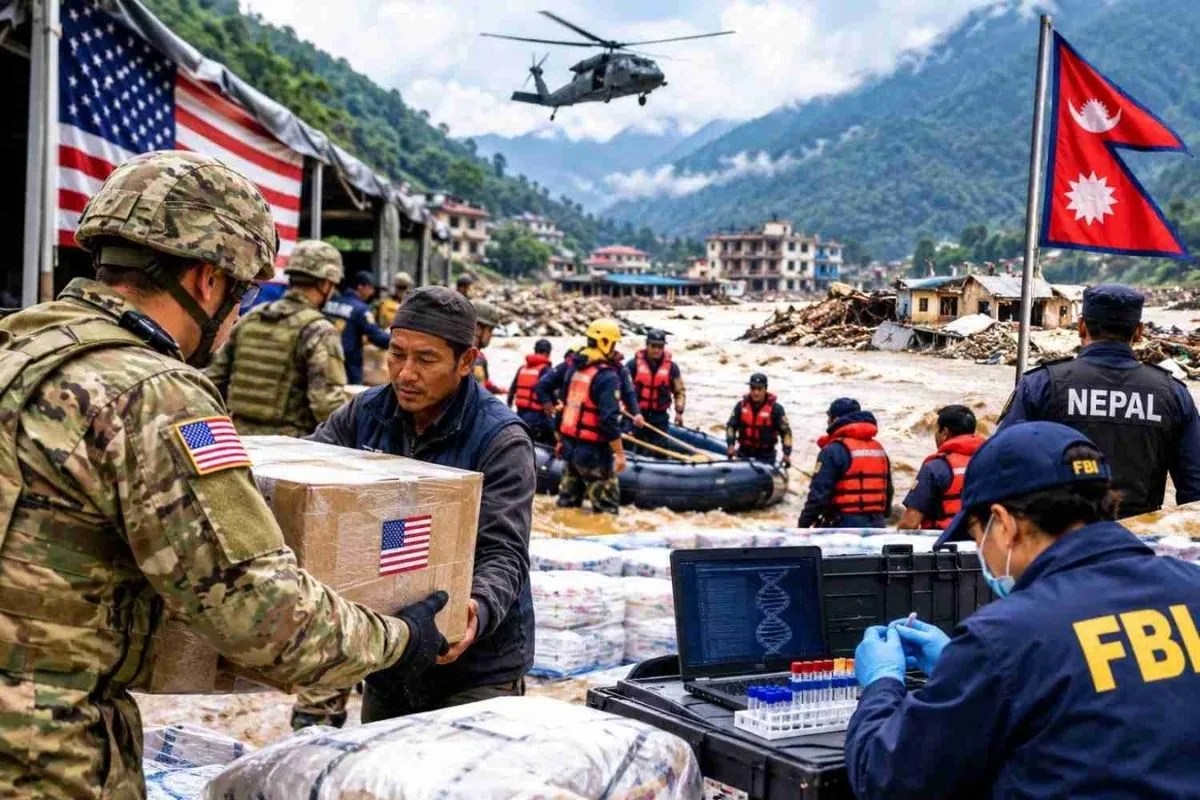
Disaster response operations at a nation-state level operate under severe systemic constraints, resource allocation bottlenecks, and complex bureaucratic friction. When catastrophic environmental events occur—such as the recent severe flooding in Nepal—the efficacy of international aid is rarely determined solely by the gross financial volume injected into the system. Instead, success is a function of institutional coordination, verification velocity, and targeted operational deployment.
International assistance frameworks rely on a multi-tiered architecture involving bilateral state commitments, multilateral development banks, and specialized operational agencies. Analyzing how external actors like the United States allocate emergency funding alongside specialized investigative bodies like the Federal Bureau of Investigation (FBI) reveals the underlying mechanics of modern disaster governance. This breakdown examines the structural components of international flood relief, the friction points in victim identification logistics, and the economic variables governing crisis recovery.
The Economic and Operational Anatomy of External Disaster Funding
When a foreign government announces supplemental emergency funding or aid packages during a natural disaster, the capital does not move as a liquid cash transfer into local accounts. The capital pipeline is governed by specific legislative authorizations, administrative overhead, and accountability mechanisms designed to mitigate graft and ensure fiduciary compliance.
1. Appropriation Versus Disbursement Velocity
The primary bottleneck in international disaster finance is the temporal lag between appropriation and operational deployment.
- Authorization Phase: Legislative bodies approve funding allocations, which are earmarked for specific humanitarian sectors such as potable water infrastructure, temporary shelter, and medical logistics.
- Intermediary Routing: Funds typically flow through designated channels, including United States Agency for International Development (USAID) mechanisms, international non-governmental organizations (INGOs), or United Nations specialized agencies.
- Operational Friction: Each handoff introduces administrative delay. While public announcements emphasize the total headline figure, the actual burn rate of funds is constrained by procurement regulations and supply chain realities on the ground in the affected region.
2. Targeted Resource Allocation Versus General Budget Support
Effective crisis management requires capital to be targeted toward high-leverage bottlenecks rather than dispersed evenly.
- Critical Infrastructure Stabilization: Emergency funds must prioritize immediate structural integrity, such as preventing secondary dam failures, clearing arterial roadways to restore supply chains, and repairing water treatment facilities to avert epidemiological crises.
- Humanitarian Direct Aid: Food security and emergency medical provisions consume the initial liquidity tranche, acting as a stopgap measure while longer-term infrastructure assessments are completed.
The Logistics of Crisis Verification and Institutional Collaboration
Disaster zones create severe information asymmetries. Local authorities are often overwhelmed, communication grids compromised, and baseline demographic records fragmented. In scenarios involving foreign nationals or cross-border complications, specialized investigative and forensic entities are integrated into the response framework.
1. The Role of Specialized Forensic Units in Mass Casualty Events
The inclusion of specialized investigative agencies, such as the Federal Bureau of Investigation's operational support units, in disaster identification highlights the complex demands of modern crisis management.
- Forensic Standardization: Accurate victim identification requires standardized dental, DNA, and fingerprint repositories. When local infrastructure lacks the capacity to process high volumes of casualties swiftly, external forensic capabilities provide critical technical assistance.
- Chain of Custody and Legal Verification: International assistance often requires rigorous documentation standards to satisfy foreign legal jurisdictions, insurance parameters, and diplomatic reporting requirements.
2. Information Sharing Architecture
The integration of domestic disaster management agencies with international technical advisors creates distinct coordination challenges.
- Data Interoperability: Disparate communication protocols between local emergency services and foreign technical teams can delay tactical decision-making.
- Resource Duplication: Without a centralized command structure, overlapping relief efforts can concentrate resources in accessible urban centers while remote rural areas experience severe supply deficits.
Systemic Vulnerabilities in Flood Disaster Response
Evaluating the structural response to large-scale flooding events reveals persistent vulnerabilities that transcend geographic boundaries.
1. Predictive Modeling Deficits
Many regional disaster management frameworks remain reactive rather than predictive. Early warning systems often fail to translate meteorological data into actionable evacuation protocols fast enough to prevent mass displacement.
- Hydrological Monitoring Gaps: Insufficient sensor density along river basins limits the window for advance warning.
- Urban Planning Failures: Encroachment on natural floodplains exacerbates the economic impact of seasonal monsoons, turning environmental events into systemic economic shocks.
2. Supply Chain Fragility
Flooding systematically destroys the physical infrastructure required to distribute aid. Road washouts, bridge collapses, and airfield inundation isolate affected populations precisely when logistics capacity must peak.
- Last-Mile Delivery Constraints: While international aid may arrive at national hubs, the secondary distribution network relies on functional local transport arteries. When these fail, airlift capabilities become the sole vector, significantly increasing the cost per unit of aid delivered.
Strategic Operational Recommendations
To optimize future international disaster interventions, institutional frameworks must transition from ad-hoc responses to standardized operational protocols.
- Pre-Positioned Inventory: Shift capital expenditure from reactive post-disaster purchasing to pre-positioned regional warehouses stocked with essential water purification and shelter materials.
- Streamlined Inter-Agency Protocols: Establish pre-negotiated legal and operational frameworks for foreign technical units (such as forensic and rescue teams) to deploy without administrative friction during the acute emergency phase.
- Decentralized Command Integration: Empower local municipal leaders with pre-approved emergency credit lines and autonomous operational authority to bypass central bureaucratic delays during the initial seventy-two hours of a crisis.