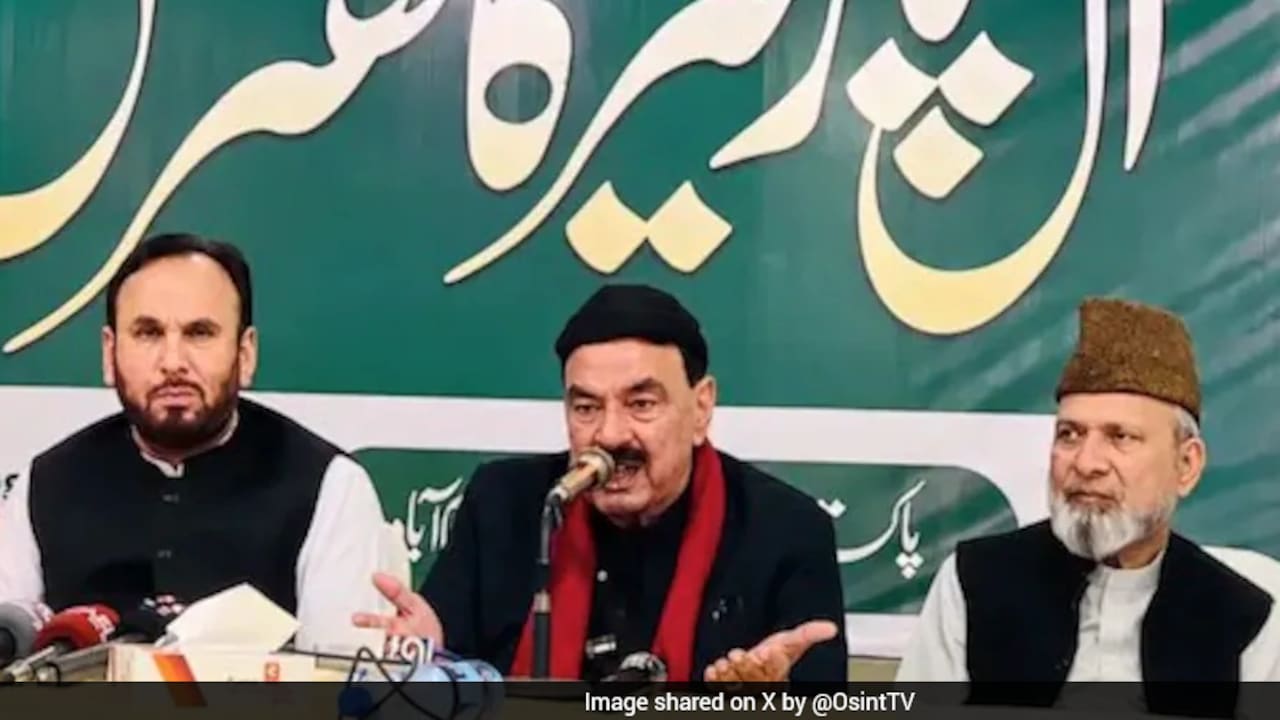
Geopolitical posturing often relies on proxy amplification, where political actors utilize militant affiliations to signal domestic alignment or pressure foreign adversaries. Recent public appearances by former high-ranking Pakistani officials alongside leaders of proscribed organizations illustrate a recurring operational model within regional statecraft. Deconstructing this phenomenon requires examining the structural integration of non-state actors into formal political platforms, the utility of inflammatory deterrence threats, and the cost function borne by state institutions engaging in asymmetric signaling.
The Mechanics of Political-Militant Convergence
The alignment between state functionaries and designated extremist leadership is rarely accidental; it serves a specific domestic function. When figures who previously held cabinet-level security portfolios share stages with commanders of organizations like Lashkar-e-Taiba or its front entities, a deliberate signal is transmitted.
The primary driver is domestic coalition-building through hardline populist appeal. In political environments where institutional legitimacy is frequently contested, mainstream politicians often resort to radical rhetoric to capture conservative constituencies. By publicly declaring subservience or ideological alignment with prominent militant figures—such as proclaiming oneself a follower of individuals like Hafiz Saeed—politicians merge state authority with militant notoriety. This creates an informal protection network and consolidates street-level support at the expense of long-term international compliance.
The Cost Function of Asymmetric Rhetoric
Deploying existential threats against a neighboring nuclear-armed state carries quantifiable systemic costs, even if the rhetoric is intended purely for internal consumption.
- Diplomatic Isolation and Travel Restrictions: Engaging openly with individuals subject to United Nations Security Council sanctions invites international scrutiny. Historical precedents indicate that association with proscribed actors triggers targeted visa denials, expulsion from Western jurisdictions, and heightened financial monitoring under Financial Action Task Force guidelines.
- Institutional Credibility Erosion: When former ministers publicly endorse designated actors, the state's official diplomatic stance denouncing terrorism is systematically undermined. This creates a credibility deficit during bilateral negotiations or international counter-terrorism forums, as foreign intelligence assessments prioritize observed political behavior over formal state communiques.
- Security Dilemma Escalation: Belligerent rhetoric featuring apocalyptic imagery—such as claims that adversary populations will face total devastation—forces neighboring defense apparatuses to recalculate threat metrics. This hardens military postures along international borders and preempts any potential de-escalation framework.
The Feedback Loop of Proxy Signaling
State-sponsored or state-tolerated proxies operate within a feedback loop. Initially, political elites utilize extremist networks to project regional leverage. Over time, however, these networks develop independent operational capacity and ideological gravity, eventually capturing the political class that sought to use them.
The public co-occurrence of former interior ministers and senior militant commanders highlights this inversion of control. Rather than the state dictating the boundaries of political discourse, the discourse is pulled toward the ideological extremes dictated by militant leadership. This structural dependency ensures that whenever domestic political pressure rises, the recourse to cross-border threats and radical sycophancy increases proportionally.
To reverse this systemic vulnerability, structural disincentives must outweigh the short-term domestic utility of radical posturing. Until institutional frameworks penalize public convergence with proscribed entities, the cycle of rhetorical escalation will remain a persistent variable in regional security calculations.
LeT's Terror Tango: Hafiz Saeed's Plot To Attack India Via Bangladesh Exposed
This video provides additional context regarding the operational networks and regional plots tied to Lashkar-e-Taiba leadership.