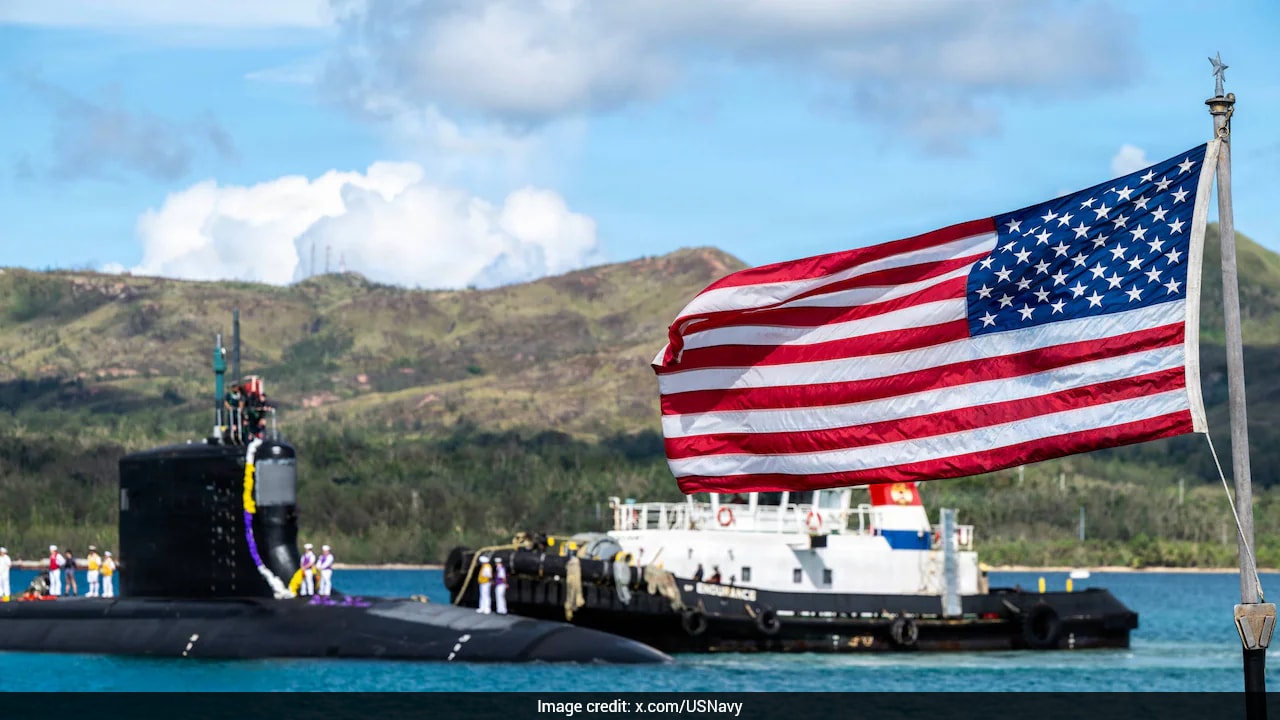
The systematic retirement of the Ohio-class guided-missile submarines creates a structural deficit in the underwater strike capacity of the United States Navy. As these legacy platforms approach the end of their operational lifecycles, the force faces an impending contraction of approximately sixty percent in its vertical launch missile inventory deployed beneath the surface. Addressing this capability gap requires more than simple hull substitution. It demands a complete re-engineering of the multi-mission fast-attack architecture. The integration of the Virginia Payload Module across Block V and subsequent hulls represents an operational response to declining magazine depth, shifting the volumetric efficiency and strategic deployment model of the modern fleet.
The Quantitative Mechanics of Hull Extension
To comprehend the engineering constraints of adding missile cells to an existing submarine design, one must analyze the physical trade-offs of internal volume. Early iterations of the Virginia-class architecture utilized a bow-mounted vertical launch system comprising twelve individual tubes. Block III designs reconfigured this layout by substituting two large-diameter payload tubes, maintaining a constant missile load while altering the payload delivery mechanism.
Block V introduces a structural departure by inserting an eighty-four-foot mid-body hull section known as the Virginia Payload Module. This modification increases the ship length from three hundred seventy-seven feet to approximately four hundred sixty feet, while driving submerged displacement from roughly 7,900 tons to over 10,200 tons. Within this expanded mid-body segment, four large-diameter vertical tubes are integrated. Each tube accommodates up to seven Tomahawk Land Attack Missiles using multiple all-up-round canisters.
Combined with the existing bow tubes, this structural extension elevates the total missile capacity of a modified boat from twelve up to forty weapons. This nearly triples the strike output per hull, converting traditional fast-attack platforms into high-density magazine carriers capable of compensating for the impending retirement of dedicated cruise missile platforms.
The Cost Function and Industrial Base Constraints
Scaling magazine depth via hull insertions introduces complex economic and industrial variables. Constructing a nuclear-powered submarine requires alignment across a specialized supply chain, specialized metallurgy, and highly constrained shipyard labor pools.
Adding an eighty-four-foot section to an active production line alters assembly workflows, welding certifications, and spatial requirements within construction bays at General Dynamics Electric Boat and Huntington Ingalls Industries Newport News Shipbuilding. Economically, the insertion of the payload module increases the unit cost of a baseline platform by approximately fifteen percent.
When evaluated against the alternative—designing, funding, and building an entirely new class of dedicated guided-missile submarines from the keel up—the mid-body insertion model minimizes capital expenditure. The cost function favors modular adaptation because it amortizes research, development, and reactor design overhead across an existing, proven construction baseline. However, shipyard throughput remains the primary bottleneck. Schedule delays in module fabrication directly propagate into fleet availability projections, testing the limits of industrial capacity.
Payload Flexibility and Non-Kinetic Adaptations
While the primary metric frequently cited is the count of Tomahawk cruise missiles, the large-diameter tubes of the payload module were engineered for modular multi-mission utility. The internal diameter of these vertical cylinders matches those developed for the Ohio-class conversions, allowing them to host diverse off-board payloads.
The operational value of these cells lies in their open architecture. Beyond kinetic munitions, the tubes can deploy:
- Large Displacement Unmanned Undersea Vehicles for extended reconnaissance and surveillance
- Fixed or mobile seabed sensors designed for persistent regional monitoring
- Special operations equipment and advanced launch-and-recovery chambers
- Future hypersonic glide bodies and advanced developmental strike packages requiring larger volumetric envelopes
This versatility shifts the submarine's operational profile from a pure tactical strike asset into a distributed node for undersea dominance, intelligence collection, and unmanned vehicle staging.
Distributed Lethality and Adversary Calculus
The strategic rationale for expanding missile cells on attack submarines centers on anti-access and area-denial environments. Modern peer competitors invest heavily in surface-to-air missiles, long-range maritime surveillance radars, and integrated anti-submarine architectures designed to keep surface combatants at risk far from contested littorals.
Nuclear-powered attack submarines operate beneath these detection layers with assured access. By distributing a massive volume of precision-strike weapons across a larger number of stealthy hulls rather than concentrating them on a few large surface ships or specialized platforms, the Navy complicates adversary targeting algorithms. An adversary can no longer focus defensive preparations on a predictable number of dedicated guided-missile submarines. Instead, any incoming attack submarine may carry an outsized strike package, forcing a dispersion of defensive assets and neutralizing fixed geographic assumptions.
The operational transition of these modified hulls into SSGN-designated capabilities upon delivery reflects this shift in tactical reality. By embedding heavy strike volume directly into the backbone of the fast-attack fleet, naval strategy hedges against industrial shortfalls while retaining the stealth required to operate inside contested zones.
Prioritize serial production stability across the shipyard enterprise while accelerating software integration for modular off-board sensors to ensure hull volume translates immediately to tactical optionality upon commissioning.


