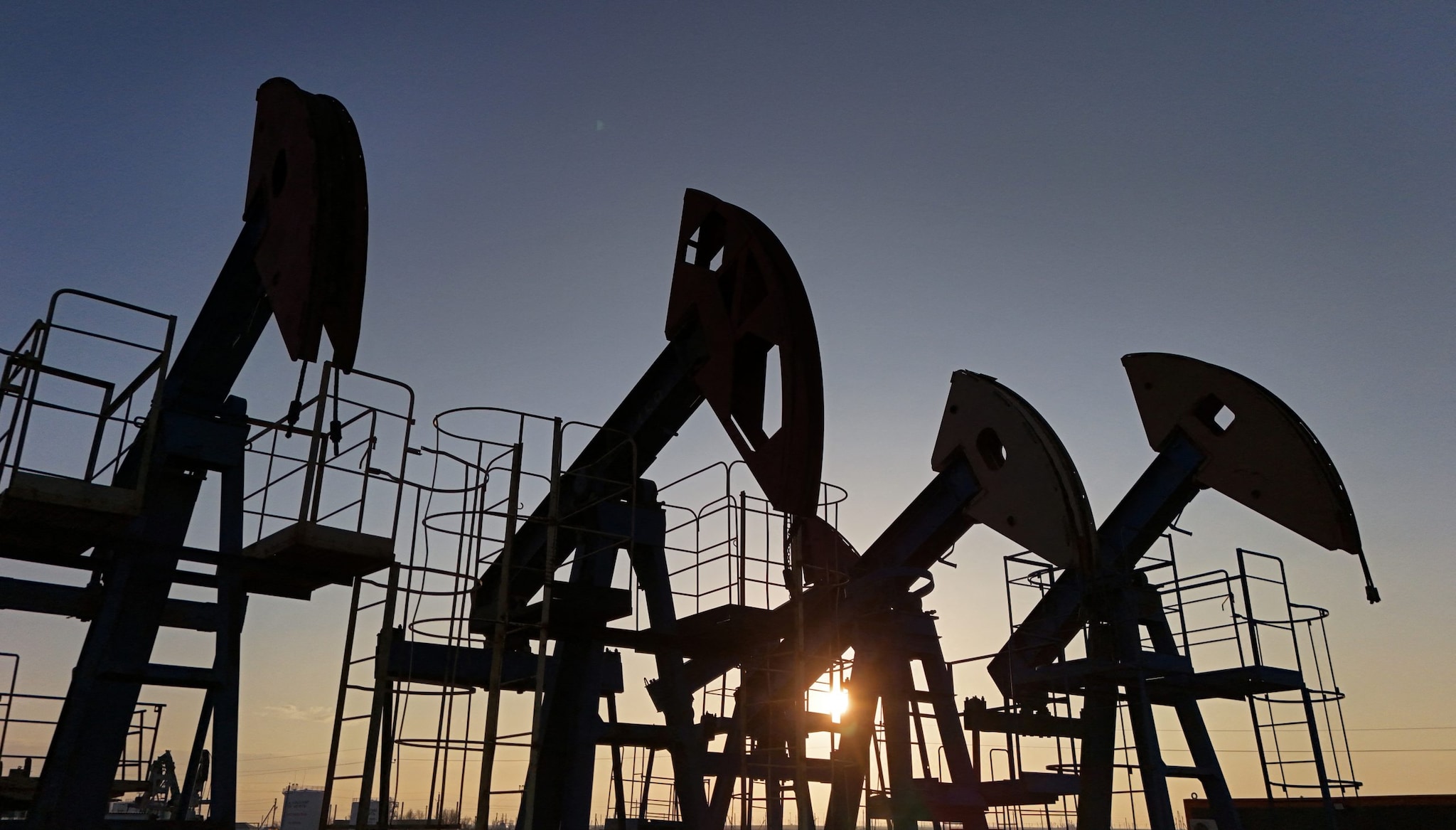
The current friction between British Columbia’s provincial leadership and United States trade policy regarding softwood lumber is not a result of "misunderstanding," but rather a collision of two incompatible economic architectures. The B.C. government operates on a system of administered pricing for timber harvesting—known as stumpage—while the U.S. domestic industry operates on a market-clearing private land model. This fundamental divergence creates a permanent subsidy allegation that persists regardless of fluctuating tariff lists or executive-level appeals. The exclusion of softwood lumber from recent tariff relief programs is a predictable outcome of the U.S. Department of Commerce’s commitment to its countervailing duty (CVD) framework, which views the Canadian crown land system as a non-market distortion.
The Triad of Regulatory Friction
To understand why softwood lumber remains entrenched in trade litigation while other commodities find relief, one must analyze the three structural pillars that define the North American lumber market. In similar news, take a look at: Why Rheinmetall Q1 Earnings Miss Is Just a Blip in the Defense Boom.
1. The Tenure and Stumpage Mechanism
Unlike the United States, where the majority of harvestable timber is privately owned, approximately 95% of British Columbia’s forest land is owned by the Crown. The provincial government grants long-term harvesting rights to corporations in exchange for stumpage fees. The U.S. Lumber Coalition argues that these fees are set below market value, constituting an unfair government subsidy. Because the "price" of the raw material is determined by a formula rather than a competitive auction, it remains vulnerable to the U.S. Tariff Act of 1930, specifically provisions regarding countervailable subsidies.
2. The Integrated Supply Chain Constraint
Lumber is not a standalone product; it is a byproduct of an integrated fiber chain. Sawmills produce residuals—chips and sawdust—that feed the pulp and paper industry. When tariffs are applied to lumber, the entire value chain experiences a margin squeeze. If a sawmill closes due to uncompetitive export costs, the local pulp mill loses its primary feedstock. This creates a systemic risk where trade barriers at the border induce a cascading failure of regional manufacturing ecosystems. Investopedia has analyzed this fascinating subject in extensive detail.
3. The Countervailing Duty (CVD) vs. Antidumping (AD) Dualism
The "tariffs" often cited in political discourse are actually a combination of two distinct legal instruments.
- Antidumping Duties: These are applied when Canadian firms sell lumber in the U.S. at prices lower than their cost of production or lower than prices in their home market.
- Countervailing Duties: These are intended to offset the perceived benefit of government subsidies (the stumpage system).
The exclusion of lumber from "relief" lists is often a technicality of law rather than a slight by a specific administration. Once a CVD investigation is finalized, the resulting duties are mandatory under U.S. law until a subsequent administrative review or a ruling by a trade body like the WTO or a USMCA panel alters the rate.
The Pricing Gap and Economic Rent
The core of the dispute rests on the definition of "Fair Market Value." In a private market (U.S. South), the price of standing timber fluctuates daily based on demand. In an administered market (B.C.), the stumpage rate is often "sticky"—it lags behind market crashes and climbs slowly during booms.
This lag creates two specific economic conditions:
- The Windfall Phase: When lumber prices skyrocket (as seen in 2021), Canadian producers with fixed stumpage costs capture significant economic rent, fueling U.S. claims of unfair advantage.
- The Survival Phase: When prices collapse, the high stumpage rates (calculated on previous high-price data) make Canadian operations unprofitable faster than their U.S. counterparts.
The B.C. premier’s frustration stems from a period where Canadian producers are in the Survival Phase, yet the U.S. continues to apply duties based on historical data from the Windfall Phase. This "asynchronicity" is the primary driver of political tension.
The Strategic Misalignment of Relief Advocacy
Advocating for lumber to be placed on a "tariff relief list" ignores the procedural reality of U.S. trade enforcement. General tariff relief—such as exemptions from Section 232 (Steel/Aluminum) or Section 301 (China)—is often discretionary and executive-led. However, Softwood Lumber (under Section 701/731) is subject to quasi-judicial processes.
The U.S. Department of Commerce performs annual administrative reviews. These reviews are backward-looking; the duties paid today are effectively "deposits" against a final rate that will be determined two years from now. This creates a massive capital drag on Canadian balance sheets. For a Tier 1 producer, hundreds of millions of dollars are locked in escrow, inaccessible for capital expenditure or forest management technology.
Regional Divergence: The B.C. vs. Eastern Canada Divide
The impact of these trade barriers is not uniform across Canada. The "Maritimes Exclusion" historically exempted several Atlantic provinces because their timber markets are dominated by private woodlots, mirroring the U.S. model. B.C. faces the heaviest scrutiny because its scale and crown-ownership structure represent the largest "threat" to U.S. domestic producers.
Furthermore, the B.C. industry is transitioning. A dwindling Annual Allowable Cut (AAC) due to wildfires and beetle infestations has reduced the total volume of fiber available. Ironically, while the U.S. industry fights to keep Canadian lumber out, the B.C. industry is shrinking due to internal ecological and regulatory constraints. This suggests that the tariffs are fighting a version of the Canadian industry that no longer exists in its previous hyper-competitive form.
The Cost Function of Protectionism
The burden of these duties does not fall solely on the Canadian producer. It is a shared cost distributed across the North American housing market.
- The Producer Burden: Reduced margins, leading to mill curtailments and layoffs in rural communities.
- The Consumer Burden: Increased input costs for U.S. homebuilders. Estimates suggest that duties can add between $5,000 and $10,000 to the cost of a new single-family home.
- The Substitution Effect: High lumber prices encourage the use of steel studs, concrete, and composite materials, permanently eroding lumber's market share in the construction sector.
The Structural Bottleneck of the USMCA
The United States-Mexico-Canada Agreement (USMCA) was intended to streamline trade, but Chapter 10 (Dispute Settlement) remains a slow-moving mechanism. While Canada has historically won most of these legal battles at the WTO or NAFTA/USMCA level, the victories are often pyrrhic. By the time a ruling is issued, the U.S. Department of Commerce can simply launch a "new" investigation with slightly altered parameters, effectively resetting the clock and keeping the duties in place.
This "circular litigation" loop is the reason why executive appeals for "understanding" or "fairness" rarely yield results. The U.S. domestic lobby is highly organized and uses the existing legal framework to ensure that "relief" is never a matter of political whim, but a matter of exhaustive—and expensive—legal proof.
Strategic Realignment for Canadian Producers
Reliance on political advocacy for "tariff relief" is a low-probability strategy. Success in this environment requires a shift toward two specific operational maneuvers.
1. Geographic Diversification of Asset Bases
The most successful Canadian forestry firms have spent the last decade acquiring sawmills in the U.S. South. By becoming domestic U.S. producers, these firms hedge against their own country's trade risk. They capture the "tariff premium" on the U.S. side while managing the "tariff penalty" on the Canadian side. This creates a neutral net position that protects the corporate entity, even if it harms the provincial labor market.
2. Value-Added Manufacturing Pivot
Tariffs are primarily focused on "commodity" lumber (2x4s, 2x6s). By shifting fiber toward mass timber, cross-laminated timber (CLT), and specialized engineered wood products, B.C. can move up the value chain where trade classifications are more complex and less susceptible to broad-brush CVD actions.
The path forward for British Columbia does not lie in convincing U.S. officials of the "fairness" of the stumpage system; that argument has failed for forty years. Instead, the focus must shift to a total modernization of the tenure system to include more market-based pricing components. This is the only move that addresses the root cause of the CVD investigation. Without a fundamental change to how the province sells its wood to its own mills, the "softwood lumber dispute" will remain a permanent feature of the economic landscape, regardless of which lists are drafted in Washington.
The ultimate strategic play for the B.C. government is to decouple the survival of the forest sector from the whims of U.S. trade law. This requires an aggressive internal pivot: transitioning from a high-volume, low-value commodity exporter to a low-volume, high-value technical fiber leader. This reduces the total export footprint—thereby lowering the "threat profile" to U.S. lobbies—while maintaining the economic viability of the provincial fiber basket through increased margins on specialized products.