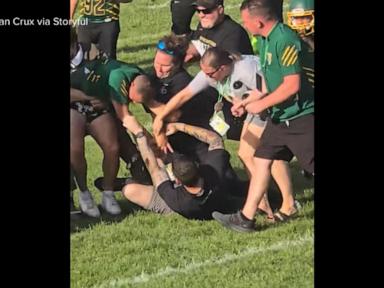
When authority figures in youth sports abandon behavioral constraints, the structural integrity of the entire competitive environment collapses. The recent on-field brawl during a Steel City Youth Football League game between third and fourth graders from Carlynton and Keystone Oaks exposes systemic failures in how adult behavior is monitored, regulated, and penalized. Rather than treating this incident as an isolated flashpoint of individual anger, a rigorous operational analysis reveals distinct systemic vulnerabilities that turn youth athletic fields into physical conflict zones.
The Tripartite Failure of Sideline Governance
Youth sports organizations operate on a fragile trust network dependent on three operational pillars: administrative oversight, officiating authority, and adult self-regulation. When any single pillar fails, the system destabilizes. For a deeper dive into similar topics, we suggest: this related article.
The administrative failure manifests in minimal credentialing barriers. Unlike professional or high school athletics, youth community leagues often rely on volunteer coaches whose background checks, psychological suitability, and conflict-resolution training are secondary to filling roster slots.
The officiating failure occurs when referees are forced to manage adult aggression with tools designed strictly for managing minor-league player infractions. A yellow flag or an ejection notice holds zero deterrence value for an adult already experiencing cognitive overload or emotional deregulation. For further information on this topic, extensive analysis can be read at NBC Sports.
The self-regulation failure represents the core vulnerability. Adults participating in youth sports frequently project unfulfilled competitive aspirations onto nine- and ten-year-old participants. This displacement elevates the stakes of a routine local game into a high-threat environment where minor disputes escalate instantly into physical violence.
The Mechanics of Escalation
The trajectory from verbal disagreement to a multi-person physical altercation follows a predictable behavioral cascade. In the Carlynton-Keystone Oaks incident, the sequence began with a late-game deficit in the fourth quarter, creating acute performance pressure.
- The Trigger Phase: Environmental stressors, including competitive pressure and disputed calls, lower the threshold for perceived threats. Allegations of inflammatory language or racial slurs act as high-velocity accelerators, bypassing rational executive function and triggering defensive limbic responses.
- The Boundary Breach: Physical posturing replaces verbal discourse. When a coach crosses the threshold from the sideline hash marks onto the playing field, a spatial boundary is violated. This movement signals intent to intimidate, forcing opposing staff and officials to recalculate the threat level.
- The Contagion Effect: Once physical contact occurs—such as initial shoving or retaliatory tackling—the conflict transitions from a bilateral dispute to a systemic melee. Observers and secondary staff members interpret the physical threat as generalized danger, drawing additional participants into the physical space.
This escalation dynamic proves that adult emotional regulation is the single greatest point of failure in youth athletic infrastructure. When a coach loses composure, they create a safety hazard for the children they are mandated to protect.
League Liability and the Economics of Enforcement
Leagues responding to such incidents face a strict operational constraint: balancing public relations damage control with structural reform. The immediate imposition of indefinite suspensions and subsequent organization-wide staff purges—such as the removal of ten total coaches across the two participating programs—represent reactive damage containment rather than preventative architecture.
To alter this risk profile, leagues must move past retroactive punitive measures. Permanent, lifelong bans codified in league bylaws create a credible deterrent, but enforcement remains decentralized. Because independent community organizations operate under loose affiliations, a coach banned from one regional league can often migrate to another neighboring municipality without cross-jurisdictional background tracking.
Reengineering Community Athletics
Fixing the structural decay of youth sports requires an overhaul of accountability metrics. Community sports boards must implement mandatory, independent third-party conflict de-escalation training for all staff before season credentials are issued. Officiating crews must be empowered with direct administrative backing to permanently forfeit matches and clear fields at the first sign of adult encroachment, removing the burden of physical negotiation from referees.
Organizations that fail to vet, monitor, and penalize volatile sideline behavior forfeit their social license to operate. The solution to systemic violence on the youth gridiron is not hoping for better temperament from volunteers, but engineering an environment where aggressive impulses carry immediate, permanent operational costs.