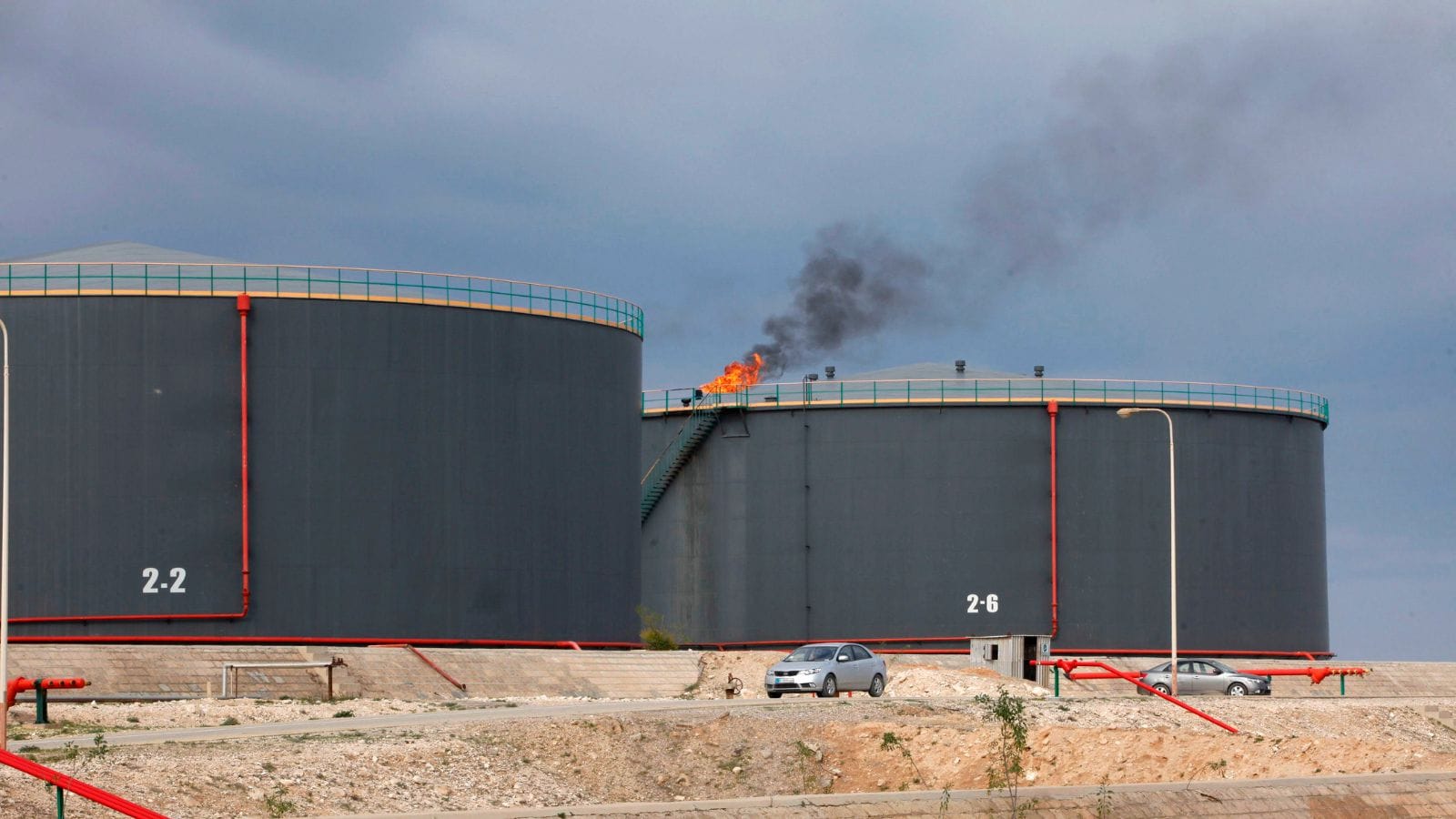
Recent aerial strikes targeting the Zawiya oil complex expose the fragile transmission channels linking localized security vacuums to international crude balances. When Libya's National Oil Corporation issues warnings regarding force majeure thresholds, market participants must look past the superficial metrics of physical asset survival and evaluate the systemic cost of logistics interruptions. The sequence of recent unmanned aerial vehicle attacks against the Zawiya refinery infrastructure highlights a recurring vulnerability: energy assets situated in contested zones function less as industrial operations and more as political leverage points.
The Operational Mechanics of the Zawiya Node
The Zawiya facility represents a critical nexus in North African petroleum logistics. With a processing capacity of 120,000 barrels per day, it operates as the primary functioning refinery supporting western Libya. More importantly, its operational continuity is structurally bound to the Sharara oilfield, which feeds up to 300,000 barrels per day into the pipeline network.
When drone munitions impact peripheral blending plants, storage depots, or untreated naphtha tanks, the primary damage is not always immediate structural obliteration. The ignition of a single storage vessel containing 4.5 million liters of fuel creates secondary operational bottlenecks:
- Emergency containment protocols demand the immediate diversion of human and technical resources away from standard refining processes.
- Port facilities and crude export terminals must initiate rapid tanker evacuation procedures to prevent catastrophic secondary detonations.
- Safety margins narrow rapidly, forcing plant operators to throttle throughput long before an official shutdown order is signed.
This cascading disruption means that even kinetic attacks resulting in zero structural casualties or minor physical damage still achieve the functional equivalent of an operational embargo. The transmission vector is psychological and procedural rather than purely mechanical.
The Political Economy of Force Majeure Declarations
In mature industrial markets, force majeure is a strict legal instrument deployed under conditions of unavoidable external constraint. Within the Libyan political architecture, the mechanism functions as a dynamic instrument of risk management and political signaling.
The National Oil Corporation occupies an unenviable position. It operates as the sole legally recognized revenue generator in a fractured state split between rival governing authorities in the east and west. Because the corporation lacks an independent security apparatus, its board of directors relies entirely on conditional warnings to deter combatants from utilizing industrial infrastructure as tactical cover or targets.
When the state oil entity states that continued strikes will trigger a legal force majeure, it alters the commercial calculus for international buyers:
- Spot market differentials for light sweet crude grades tighten immediately as physical supply certainty evaporates.
- Refinery margins across the Mediterranean shift to price in the sudden loss of regional product yields.
- Insurance premiums and maritime shipping costs spike to account for the heightened risk profile of berths near western Libyan ports.
History demonstrates that output curtailed through Libyan force majeure declarations returns unpredictably. Resumption depends entirely on elite political settlements and security guarantees rather than mechanical repair timelines. Physical repairs can take days, but the political consensus required to lift a shutdown often takes months.
Systemic Vulnerabilities and Mitigation Limits
Mitigating infrastructural risk in a politically fragmented environment requires more than enhanced firefighting readiness or localized air defense positioning. The concentration of refining capacity in vulnerable coastal nodes like Zawiya creates a single point of failure for the entire western energy grid.
Security analysts tracking these developments must monitor two specific operational indicators to gauge whether a full shutdown is imminent. First, the frequency of targeted strikes must be measured against the response velocity of local security forces; clustering multiple incidents within a 72-hour window signifies a breakdown in territorial deterrence. Second, the integrity of feedstock pipelines connecting interior extraction sites like Sharara to coastal terminals dictates whether upstream production must be choked off independently of refinery operations.
Cease the reliance on temporary hazard containment and pivot institutional focus toward decentralized fuel storage strategies and redundant pipeline routing to insulate baseline crude exports from localized municipal conflicts.