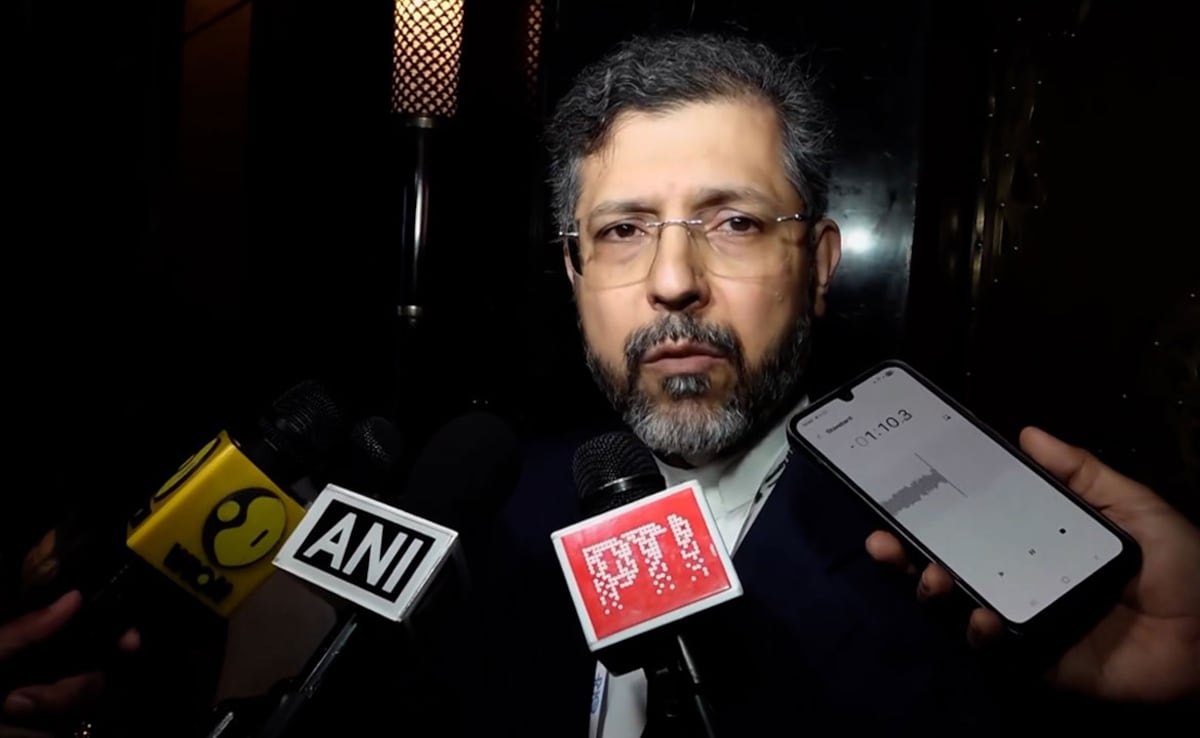
The survival of diplomatic channels between Tehran and Washington depends less on shared objectives and more on the management of institutional inertia. Iranian Deputy Foreign Minister Majid Takht-Ravanchi’s recent confirmation that communication paths remain "on track" is not an indicator of an imminent breakthrough, but rather a functional requirement for crisis de-escalation. These talks operate within a high-friction environment where both parties must balance domestic hardline constraints against the existential need to prevent a direct kinetic confrontation. To understand the current trajectory of these negotiations, one must look past the rhetoric of "goodwill" and analyze the underlying mechanics of signaling, leverage acquisition, and the specific hurdles posed by the transition of power in Washington.
The Architecture of Indirect Communication
The primary constraint on Iran-US relations is the absence of direct, formalized diplomatic ties. This necessitates a layered communication architecture that relies on third-party intermediaries and technical backchannels. The "track" referenced by the Foreign Ministry is built upon three distinct functional layers: If you found value in this post, you should check out: this related article.
- The Omani Conduit: Acting as the primary physical site for technical exchanges, Muscat provides the neutral ground required for non-public data transfer and message relay.
- The Swiss Protective Power: Switzerland facilitates formal consular and humanitarian messaging, ensuring that basic state-to-state functions do not collapse entirely.
- The Informal Signaling Layer: This involves public statements, military posturing, and nuclear enrichment levels—non-verbal data points used to communicate "red lines" and bargaining positions.
The maintenance of these channels serves as a pressure valve. By keeping the talks "on track," Tehran signals to global markets and regional neighbors that it is not seeking a total breakdown of the international order, even as it continues to expand its technical nuclear capabilities.
The Nuclear Leverage Function
The Iranian strategy treats its nuclear program not as a static asset, but as a dynamic variable in a broader geopolitical cost function. The expansion of enrichment to $60%$ and the deployment of advanced centrifuges are tactical maneuvers designed to shorten the "breakout time," thereby increasing the cost of inaction for the United States. For another perspective on this development, see the recent coverage from NBC News.
The logic follows a clear cause-and-effect chain:
- Step A: Tehran increases technical nuclear pressure (e.g., restricting IAEA access).
- Step B: This creates a strategic deficit for Washington, forcing a choice between military intervention or diplomatic concession.
- Step C: Negotiations resume to "freeze" the program at the new, higher baseline.
This cycle, however, faces a point of diminishing returns. As the technical baseline approaches the threshold of weaponization ($90%$ enrichment), the risk of triggering a preemptive military response from Israel or the US increases exponentially. Takht-Ravanchi’s insistence on keeping talks open suggests that Iran recognizes this "upper bound" and is attempting to downshift the escalation before the cost of the nuclear program exceeds its value as a bargaining chip.
Domestic Veto Players and Political Timing
The timing of these statements is inextricably linked to the political transition in the United States. The return of a transactional foreign policy under a Republican administration introduces a period of extreme uncertainty. Tehran’s current stance is an exercise in "pre-emptive positioning."
Within the Iranian political ecosystem, two competing factions influence the negotiation parameters:
- The Pragmatic Bureaucracy: Represented by the Foreign Ministry, this group views the removal of banking and energy sanctions as essential for long-term regime stability. They prioritize the "Maximum De-escalation" model.
- The Ideological Security Apparatus: This group views Western engagement as a Trojan horse for internal destabilization. They prioritize "Maximum Resistance" and strategic depth through regional proxies.
The Deputy Foreign Minister’s statement serves as a victory for the pragmatists, indicating that the Supreme Leader has granted a temporary mandate to test the waters of a new deal. However, this mandate is fragile. Any perception of American "bad faith" or the imposition of new "maximum pressure" sanctions will immediately trigger a shift back to the resistance model, likely resulting in further enrichment spikes or regional escalation via the "Axis of Resistance."
The Economic Bottleneck
The fundamental driver for Iran’s participation in these talks is the deteriorating state of its domestic economy. The "Sanctions-Resistant Economy" touted by hardliners has proven insufficient to address chronic inflation and the devaluation of the Rial.
The economic cost function for Iran is currently defined by:
- Oil Revenue Leakage: While Iran has successfully circumvented many oil sanctions, the "black market discount" required to sell to Chinese refineries significantly reduces the net profit per barrel.
- Capital Flight: Uncertainty regarding the nuclear deal drives private wealth out of the country, starving the domestic industrial sector of investment.
- Infrastructure Decay: The inability to import Western parts and technology for the energy sector leads to long-term production declines.
Diplomacy is viewed by the Iranian technocracy as the only viable path to reintegrating with the global financial system and stabilizing the Rial. The "on track" status of talks is, therefore, an economic necessity dressed in diplomatic language.
The Regional Security Variable
The talks cannot be analyzed in a vacuum, isolated from the conflicts in Gaza, Lebanon, and Yemen. Iran utilizes its regional influence as a secondary lever. The "Unity of Fields" strategy—coordinating actions across multiple fronts—serves to distract American resources and increase the price of US support for Israel.
A significant bottleneck in the current negotiation process is the decoupling of the nuclear file from the regional security file. Washington demands a "longer and stronger" deal that includes restrictions on ballistic missiles and proxy support. Tehran, conversely, insists on a narrow scope focused solely on the JCPOA (Joint Comprehensive Plan of Action) and sanctions relief. This fundamental disagreement on the "Terms of Reference" remains the largest structural barrier to a permanent agreement.
Technical Hurdles and the IAEA Deadlock
The technical integrity of any future deal rests on the International Atomic Energy Agency (IAEA). The current standoff regarding "unexplained uranium particles" at undeclared sites remains a "poison pill" for negotiations.
The technical impasse follows a rigid logic:
- The IAEA requires full transparency to close its "safeguards" investigation.
- Iran views the investigation as politically motivated and refuses to cooperate until sanctions are lifted.
- Western powers refuse to lift sanctions until the IAEA is satisfied.
This circular dependency ensures that even if a "political will" to talk exists, the technical execution remains stalled. Takht-Ravanchi’s optimistic tone masks the fact that none of these technical milestones have been met.
Strategic Forecast and Operational Recommendation
The most likely scenario for the next twelve months is a period of "Tactical Hibernation." Neither side is currently prepared to make the massive concessions required for a "Grand Bargain." Instead, we will see a continuation of the "No War, No Peace" status quo.
For observers and stakeholders, the following metrics should be tracked to determine if the talks are actually progressing or merely idling:
- Centrifuge Deployment Rates: A slowing of IR-6 centrifuge installation would indicate a genuine Iranian desire to lower the temperature.
- Third-Party Asset Releases: The movement of frozen Iranian funds in third-party countries (like South Korea or Qatar) often precedes a formal diplomatic thaw.
- Rhetorical Shifts in Tehran: Pay close attention to the Friday Prayer sermons and statements from the IRGC leadership. If the Deputy Foreign Minister’s "pro-talk" stance is met with silence rather than condemnation from the security apparatus, it suggests a broader internal consensus.
The current strategy for the international community should be one of "Recalibrated Containment." There is no utility in rushing toward a flawed agreement that fails to address the regional security architecture. However, maintaining the "on track" status of backchannels is critical to prevent a miscalculation that leads to a regional conflagration. The objective is not a "solution," but the sustainable management of a permanent crisis.
Tehran’s primary strategic play is to wait out the initial volatility of the incoming US administration while keeping the door just cracked enough to avoid a total snapback of UN sanctions. Success for Iran in 2026 will not be defined by a new treaty, but by the avoidance of a catastrophic economic collapse while retaining its technical nuclear "threshold" status.


