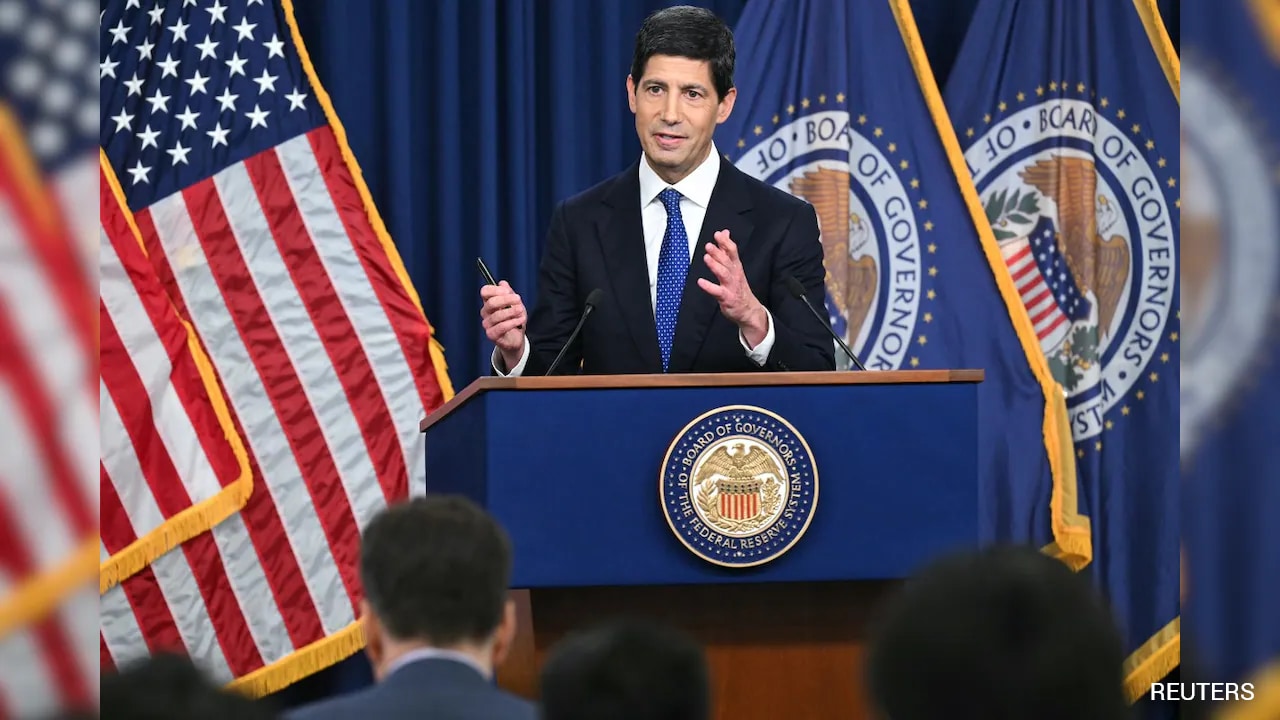
The appointment of a prominent academic researcher to the position of Chief Economist at a major multilateral institution represents a fundamental shift in institutional signaling. When an organization like the World Bank selects a Nobel laureate who has spent decades studying randomized controlled trials and the microfoundations of development economics, it alters the internal resource allocation mechanisms, the evidentiary standards for operational projects, and the theoretical baseline of global policy advice. This dynamic requires a rigorous examination of the structural incentives, institutional constraints, and intellectual trade-offs that define the office of the World Bank Chief Economist, moving beyond headline announcements to evaluate the actual leverage points of global economic governance.
The Dual Mandate and the Institutional Principal-Agent Problem
The World Bank Chief Economist operates within a complex institutional matrix characterized by competing objectives. The role requires balancing rigorous academic credibility with operational pragmatism, serving simultaneously as the intellectual leader of a global research department and as an internal counselor to operational vice presidencies that lend billions of dollars annually to sovereign governments.
This dual mandate creates a structural tension that can be modeled as a classic principal-agent problem. The principal—the global academic community and the ultimate stakeholders of international development—values long-term intellectual innovation, methodological purity, and objective empirical evaluation. The operational agents within the bank, however, face short-term lending targets, disbursement pressures, and political constraints imposed by shareholder governments.
When a leading academic assumes this post, the friction between these two competing imperatives intensifies. Theoretical rigor often slows down operational velocity. Randomized evaluations and rigorous impact assessments require extended timelines, longitudinal data collection, and counterfactual identification strategies that clash with the rapid-approval cycles demanded by sovereign borrowers facing immediate fiscal crises.
The institutional impact of a Chief Economist depends entirely on how they navigate this friction. If they retreat into ivory-tower purism, their influence over operational lending portfolios diminishes, relegating the research group to an internal think tank with negligible bearing on capital deployment. Conversely, if they capitulate to operational expediency, the institution loses its claim to evidence-based policy making, reducing empirical research to a post-hoc rationalization for pre-determined lending decisions.
Methodological Shifts and the Microfoundations of Policy
The intellectual legacy of Michael Kremer is inextricably linked to the Credibility Revolution in empirical economics, particularly the widespread adoption of experimental and quasi-experimental methods—specifically randomized controlled trials—to evaluate the causal impact of targeted interventions in education, health, and agriculture. Applying this methodological framework at the scale of the World Bank introduces both profound benefits and inherent limitations.
On the microeconomic level, experimental evaluation forces a rigorous confrontation with implementation realities. By isolating specific treatment effects, policymakers can identify what works in a narrow context, eliminating deadweight loss caused by poorly targeted subsidies or misallocated public goods. This approach shifts the burden of proof from speculative macroeconomic theory to verifiable microeconomic evidence.
However, scaling micro-level interventions to macroeconomic policy encounters severe structural obstacles.
The first limitation is the problem of general equilibrium effects. An intervention that yields a high marginal return when implemented on a small scale in a localized setting frequently fails to scale efficiently when deployed economy-wide. Prices shift, labor markets adjust, and infrastructural bottlenecks emerge that localized trials cannot capture.
The second limitation involves the external validity of experimental results across disparate institutional environments. A randomized education intervention that succeeds in Western Kenya under a specific non-governmental organization structure may encounter complete administrative failure when embedded within the entrenched bureaucratic hierarchies of a middle-income state with different political economy dynamics.
The third limitation centers on the political economy of reform. Economic development is rarely bottlenecked merely by a lack of information regarding the marginal returns of specific inputs. Rather, inefficient resource allocation is often the rational equilibrium outcome of competing interest groups, rent-seeking elites, and institutional capture. A purely technical, trial-based approach to development policy frequently underestimates the political friction required to alter institutional arrangements.
Resource Allocation and the Signaling Value of Intellectual Leadership
Beyond direct operational influence, the Chief Economist controls the intellectual agenda of the World Bank through the production of its flagship publications, most notably the World Development Report. These documents serve as global coordination devices, establishing the intellectual consensus that guides bilateral aid agencies, international investors, and finance ministries across the developing world.
The appointment of a laureate signals a strategic pivot in the bank's intellectual positioning. It communicates to international capital markets and academic institutions that the multilateral lender is doubling down on evidence-based evaluation, human capital accumulation, and targeted poverty alleviation.
This signaling function carries tangible economic consequences. Bilateral donors and philanthropic foundations frequently align their co-financing portfolios with the intellectual priorities established by the World Bank's research department. When the Chief Economist prioritizes specific thematic areas—such as educational tracking, health innovation, or market design for agricultural inputs—global research funding and operational lending patterns shift accordingly.
Yet, this intellectual centralization introduces the risk of monoculture. When a single methodological paradigm dominates an institution of this magnitude, alternative frameworks—such as structuralist industrial policy, evolutionary economics, or macro-financial stability models—risk marginalization. Economic development is a multi-dimensional challenge that requires synthesis across scales, from randomized field experiments to national macroeconomic stabilization and long-term structural transformation.
Strategic Operational Play
To maximize institutional impact without succumbing to academic irrelevance or operational capture, a Chief Economist must execute a deliberate sequencing strategy that bridges micro-evidence with macro-institutional reform.
The primary operational move requires shifting the institutional focus from standalone project evaluation to administrative capacity building. Instead of merely using randomized trials to test discrete interventions funded by external actors, the research department must embed experimental architecture directly into the routine administrative data systems of client governments. By transforming local ministries into data-generating entities, the institution builds indigenous capacity for continuous policy iteration.
The secondary move involves establishing explicit feedback loops between microeconomic insights and macroeconomic lending conditions. Rather than treating structural adjustment loans and targeted human capital projects as siloed operations, the analytical framework must explicitly model how localized behavioral responses aggregate into national productivity growth.
The final strategic imperative is maintaining intellectual pluralism within the research department. A world-class multilateral institution cannot afford methodological dogmatism. The integration of experimental rigor with rigorous macro-structural analysis ensures that the institution remains capable of addressing both immediate micro-level market failures and the overarching systemic shocks that define the global economic landscape.