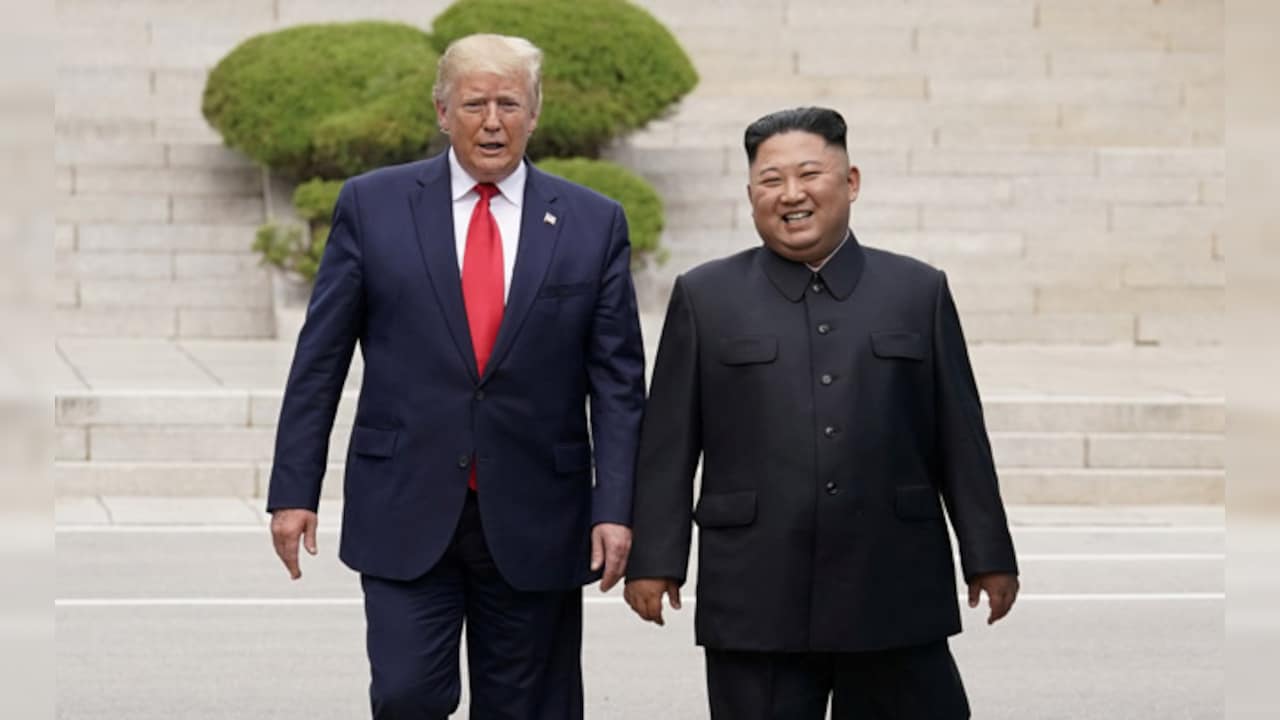
The unilateral decision by the United States executive branch to curtail the Ulchi Freedom Shield military exercises with South Korea exposes the structural fragility inherent in bilateral defense architectures when subjected to concurrent geopolitical shocks. By instructing Defense Secretary Pete Hegseth to substantially reduce active theater-level drills hours before their scheduled commencement, the administration has resurrected a playbook from its first term, utilizing alliance interoperability as a transactional lever.
This maneuver operates across two distinct vectors: an overt diplomatic overture toward Pyongyang predicated on interpersonal signaling, and a punitive financial or geopolitical retaliation against Seoul following its refusal to participate in the campaign against Iran. Deconstructing this event requires analyzing the cost function of joint military exercises, the friction points of alliance burden-sharing, and the systemic degradation of integrated deterrence in the Indo-Pacific.
The Cost Function and Signaling Mechanics of Theater Exercises
Military exercises serve a dual purpose within an alliance framework: operational readiness and strategic signaling. The operational component maintains command-and-control synchronization between roughly 28,500 United States personnel stationed in South Korea and the active components of the South Korean armed forces. Exercises like Ulchi Freedom Shield simulate modern warfare vectors, including drone incursions, electronic warfare, and cyber operations, incorporating battle-hardened tactical realities observed from external conflicts such as the war in Ukraine.
From an economic perspective, the executive framing relies on the direct financial outlay required to stage large-scale mobilizations. However, reducing or hollowing out these exercises yields negligible macroeconomic savings while generating an immediate operational deficit. The true cost is measured in readiness decay. Tactical proficiency degrades non-linearly when joint battle staff rehearsals are downscaled.
The signaling mechanism operates inversely to the operational requirement. While military commanders view exercises as necessary risk mitigation against an expanding North Korean nuclear arsenal, the executive branch treats them as provocative friction in personal diplomacy with Kim Jong Un. Designating multi-decade defensive drills as "inappropriate and hostile" shifts the diplomatic baseline, rewarding adversarial constraint assertions without securing verifiable concessions regarding fissile material production or ICBM development.
Interlocking Crises: The Middle East Spillover into East Asian Security
The friction surrounding the Ulchi Freedom Shield curtailment cannot be isolated from the broader strain on United States military resources caused by prolonged engagement in the Middle East. The ongoing campaign against Iran has drained regional missile defense stockpiles, delayed critical munitions deliveries to Indo-Pacific allies such as Japan, and necessitated the repositioning of carrier strike groups away from the theater.
Within this resource-constrained environment, the executive demand for South Korean alignment on Middle Eastern policy functions as an overreach of the bilateral security pact. Seoul's refusal to join the campaign against Iran triggered explicit presidential linkage, connecting regional alliance performance outside the Korean Peninsula to the execution of core defense commitments on it. This linkage introduces unpredictable volatility into a security architecture that relies on institutional predictability rather than transactional whims.
The resulting divergence creates a classic principal-agent problem. The United States aims to reallocate finite global military power toward alternative strategic priorities, while South Korea faces an immediate, nuclear-armed adversary that has deepened its conventional integration with external actors like Russia. When the security guarantor unilaterally discounts the value of readiness drills to punish a secondary policy divergence, the reliability of the extended deterrence umbrella is called into question.
Strategic Implications for Regional Deterrence Architectures
The reduction of joint readiness drills alters the calculus for both Pyongyang and Seoul, accelerating structural shifts in regional security self-reliance.
For North Korea, historical precedent indicates that scaled-back exercises are processed as tactical concessions rather than foundational peace overtures. Pyongyang's state apparatus continues to view the underlying alliance as an existential threat, maintaining its qualitative and quantitative weapons modernization regardless of seasonal adjustments to American and South Korean operational tempos. Without a formal, verified quid pro quo involving nuclear rollback, unilateral reductions serve primarily to weaken allied coordination without altering North Korean strategic intent.
For Seoul, the erosion of predictable alliance mechanics reinforces long-term domestic debates regarding strategic autonomy. The recurring uncertainty surrounding United States security commitments increases the political viability of indigenous defense options, including the development of an independent nuclear deterrent or accelerated conventional self-sufficiency. As the credibility of extended deterrence fluctuates based on executive communication channels, the cost-benefit analysis for frontline states shifts away from absolute reliance on Washington toward diversified defense postures.
The strategic play moving forward requires decoupling regional treaty obligations from extraneous global disputes. Maintaining operational readiness is a mathematical necessity for defending alliance territory against modern kinetic and asymmetric threats. When defense planning is subordinated to short-term diplomatic signaling, the long-term integrity of the security architecture degrades, creating structural vulnerabilities that no amount of executive optimism can mitigate.


