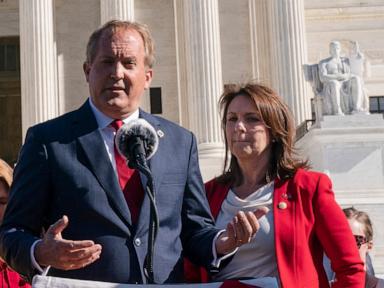
The finalization of Texas Attorney General Ken Paxton’s divorce from State Senator Angela Paxton marks the formal dissolution of a thirty-eight-year political and legal partnership, converting an informal domestic liability into a closed, quantifiable record. Standard coverage treats a high-profile political divorce as a personal milestone or a tabloid distraction. That framing misses the operational reality. In statewide electoral politics, a marital dissolution involving two sitting officeholders functions as a structural risk-management event that alters campaign finance disclosures, conflict-of-interest boundaries, and voter coalition dynamics.
Understanding the downstream effects requires separating verified legal procedures from political hypotheses, mapping the institutional overlaps between the Office of the Attorney General and the Texas Senate, and analyzing how family-values branding survives legal restructuring.
The Institutional Coupling Problem
For over a decade, the Paxtons operated as a vertically integrated political unit within the Texas Republican Party. Ken Paxton held executive legal authority as Attorney General, while Angela Paxton held legislative authority in the Texas Senate representing District 8. This dual-office structure created persistent institutional friction that went far beyond standard political spousal dynamics.
The core mechanism of this friction is jurisdictional overlap. Under Texas law, the Attorney General issues formal legal opinions that interpret statutes passed by the legislature, represents state agencies in litigation, and enforces state laws that senators debate and fund. When two spouses occupy these branches simultaneously, every legislative vote and executive legal opinion carries an implicit conflict-of-interest vector.
During the 2023 impeachment trial of Ken Paxton in the Texas Senate, this structural entanglement reached an acute breaking point. Senate rules required Angela Paxton to attend the proceedings as a member of the body, yet barred her from voting or participating in closed deliberations due to her direct marital interest in the outcome. Her physical presence without voting power altered the mathematical threshold required for conviction. Because the Texas Constitution requires a two-thirds vote of senators present to convict on impeachment articles, her mandatory presence effectively functioned as a structural buffer against removal, raising the absolute vote count needed by the prosecution without her casting a single ballot.
Finalizing the divorce severs this formal institutional coupling. Moving forward, the two offices operate as legally distinct entities without community-property entanglement or spousal privilege protections.
The Three Pillars of Political Divorce Restructuring
When a sitting statewide official finalizes a divorce, the transition is governed by three distinct operational mechanisms: asset partitioning, disclosure decoupling, and brand containment.
1. Asset Partitioning and Community Property Exposure
Texas is a community property state. Under the Texas Family Code, all property acquired by either spouse during a marriage is presumed to be jointly owned, regardless of whose name appears on the title or deed. For elected officials, this creates an ongoing transparency liability.
- Personal Financial Statements (PFS): Texas law requires statewide officials and legislators to file annual personal financial statements with the Texas Ethics Commission. While married, the financial holdings, real estate transactions, and debt obligations of one spouse directly inform the financial profile of the other.
- Liability Isolation: A finalized divorce decree executes a binding partition of the marital estate. Assets, real estate portfolios, and legal defense liabilities are assigned to individual ledgers. For an official who has faced sustained litigation—ranging from federal securities fraud charges resolved via pretrial intervention to whistleblower lawsuits—isolating personal net worth from spousal claims reduces the surface area for future civil discovery.
- Settlement Opacity: In high-profile Texas divorces, parties frequently utilize mediated settlement agreements and sealed financial schedules to keep exact asset divisions out of the public docket. While the final decree confirms the dissolution of the marriage, the underlying financial reallocation often remains shielded from immediate public audit unless it triggers a specific Ethics Commission amendment.
2. Legal Privilege and Evidentiary Boundaries
Marriage confers specific evidentiary protections under Texas Rules of Evidence, notably the confidential marital communication privilege and the spousal testimonial privilege in criminal proceedings.
- The Privilege Shift: Once a divorce is finalized, spousal testimonial privilege—which allows a spouse to refuse to testify against the other in a criminal case—terminates entirely. Confidential communications made during the marriage generally remain protected, but any communication occurring after the final decree carries zero marital privilege.
- Subpoena Vulnerability: In ongoing or future federal and state investigations, prosecutors no longer face the procedural hurdle of marital immunity when seeking testimony regarding post-divorce events, financial transfers, or political coordination. The legal firewall between the two individuals drops to that of ordinary political associates.
3. Coalition Management and Brand Containment
Ken Paxton’s electoral durability relies heavily on a coalition of social conservatives, evangelical voters, and grassroots constitutionalists. Within this demographic, traditional family structure is a core ideological pillar.
- The Timing Heuristic: Politicians rarely finalize divorces during peak primary campaigning. Executing the legal conclusion outside the immediate window of a primary ballot allows the news cycle to absorb and exhaust the narrative before voters cast ballots.
- The Narrative Pivot: Rather than defending the marital record, political communication strategies during a finalized split shift toward institutional performance. By framing the divorce as a closed private chapter, campaign operatives redirect voter attention toward ideological deliverables—such as federal border litigation, administrative state challenges, and conservative judicial appointments.
Cause-and-Effect Chain in Primary Elections
Standard political commentary often assumes that personal scandal or marital dissolution automatically erodes electoral support among religious conservatives. Empirical voting patterns in Texas Republican primaries demonstrate a more complex cause-and-effect chain driven by negative partisanship and issue prioritization.
- Initial Shock: Public allegations of infidelity—which surfaced prominently during the 2023 impeachment proceedings—introduce cognitive dissonance among social conservative voters.
- The Grievance Counter-Frame: Rather than retreating, the Paxton political apparatus consistently reframed institutional investigations and personal scrutiny as coordinated attacks by political enemies, establishment Republicans, and federal agencies.
- Coalition Consolidation: When voters perceive an attack as partisan warfare, personal transgressions are subordinated to ideological loyalty. The voter evaluates the candidate not as a moral exemplar, but as an effective combatant against shared political adversaries.
- Resolution Effect: A finalized divorce removes the ambiguity of an ongoing, messy public separation. Ambiguity breeds continuous media speculation; finality closes the loop. Once the legal decree is signed, opponents lose the ability to weaponize an active domestic dispute as a breaking news event.
Separable Realities Known Facts vs. Analytical Hypotheses
Rigorous political analysis requires drawing a hard line between verified legal outcomes and strategic projections.
Verified Structural Facts:
- The marriage between Ken Paxton and Angela Paxton has been legally dissolved through a finalized court decree, ending a thirty-eight-year union.
- Both individuals retain their respective elected offices—Attorney General and State Senator—as a divorce decree has zero legal bearing on constitutional officeholding qualifications in Texas.
- The Texas Senate rules regarding spousal recusal or non-voting attendance in impeachment trials are now moot with respect to their relationship.
- Future Personal Financial Statements filed with the Texas Ethics Commission will reflect separate, partitioned estates rather than a unified marital balance sheet.
Educated Strategic Hypotheses:
- Reduced Discovery Surface: Legal counsel for both parties likely structured the property settlement to minimize cross-exposure in any lingering civil litigation involving the Office of the Attorney General, such as the protracted whistleblower settlement disputes.
- Independent Campaign Trajectories: Angela Paxton’s future legislative races in Senate District 8 will no longer be directly tied to the fundraising and political fate of the Attorney General’s office, allowing her to build an autonomous donor base insulated from statewide executive controversies.
- Pre-Cycle Clearing: Finalizing the dissolution well ahead of the next statewide election cycle clears the deck for potential higher-office ambitions—such as a U.S. Senate bid—by ensuring that opposition researchers cannot extract fresh deposition material from an active family court docket during a primary campaign.
Limitations of the Containment Strategy
Assuming that a finalized divorce completely neutralizes political risk is an analytical error. Several structural vulnerabilities remain active regardless of the court decree.
- Public Docket Residuals: Even when financial schedules are sealed, divorce petitions, counter-petitions, and procedural motions in Texas district courts leave a permanent metadata trail. Opposition researchers routinely mine court filings for timelines, property valuations, and jurisdictional disputes to construct narrative attacks.
- Donor Base Overlap: For decades, the Paxtons raised money from the same pool of high-dollar Texas conservative donors. A split forces major contributors to navigate competing fundraising requests and potential personal loyalties, creating friction in campaign finance efficiency.
- Primary Challenger Ammunition: While general election voters prioritize party platform, primary challengers within the Republican Party compete for the exact same evangelical and social conservative electorate. A well-funded primary opponent can still utilize the dissolution to question personal judgment and character, particularly among older, traditionalist suburban voters in counties like Collin and Denton—the geographic core of the Paxtons' political base.
Strategic Forecast and Operational Trajectory
The finalization of the Paxton divorce should be read not as a political collapse, but as a deliberate balance-sheet restructuring prior to future electoral combat. By converting an open-ended personal liability into a closed legal record, Ken Paxton removes a major procedural vulnerability from his operational footprint.
To capitalize on this structural reset, the Paxton political operation will execute a strict compartmentalization strategy: isolating personal history behind the finality of a court decree, accelerating high-profile federal litigation to dominate conservative media cycles, and leveraging the newly simplified financial disclosure profile to prepare for future statewide or federal runs. Observers watching Texas politics should track upcoming Texas Ethics Commission filings and Collin County donor shifts—not tabloid headlines—to measure the true material impact of the split.