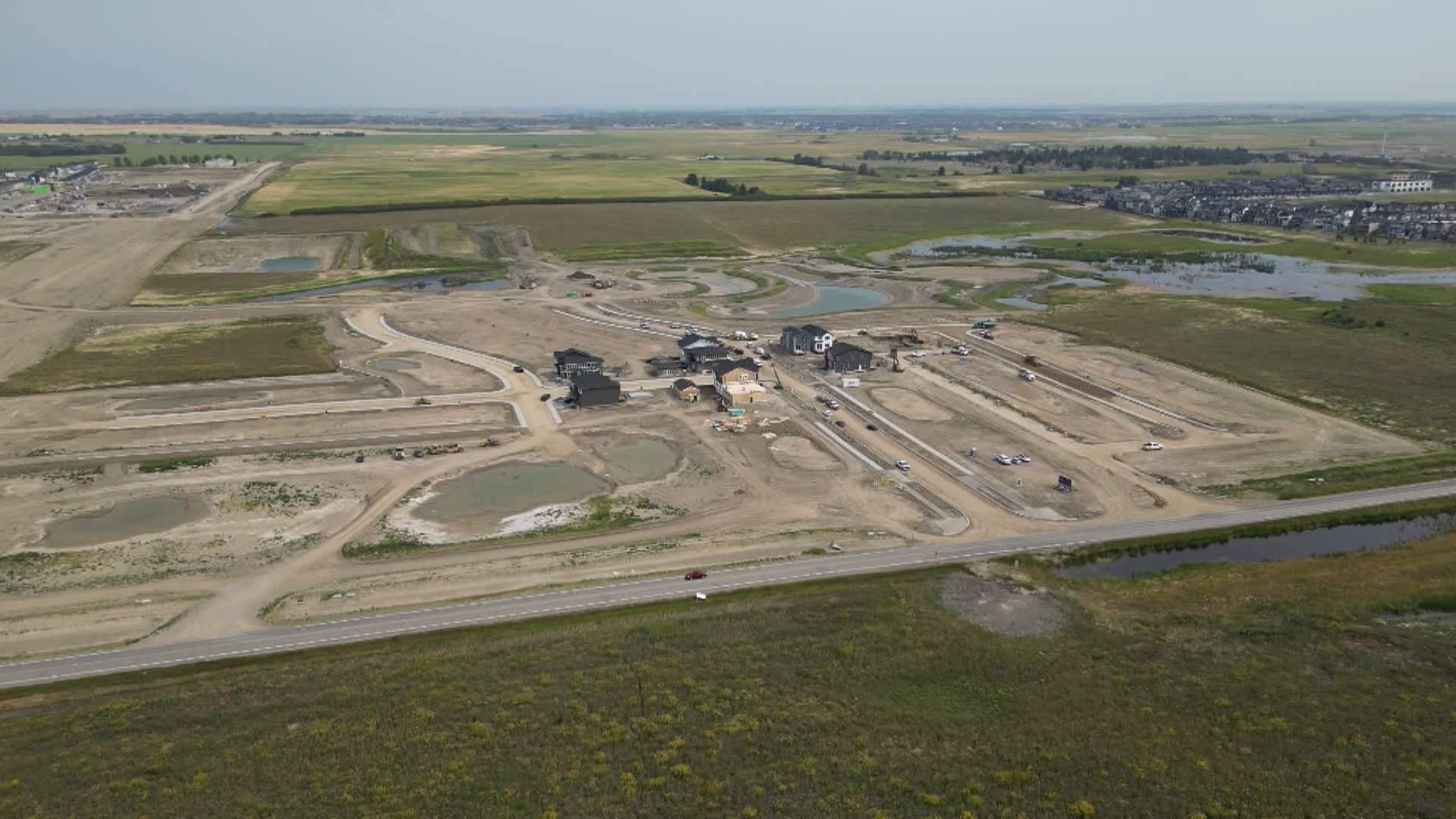
Urban expansion requires more than outward residential tract allocation; it demands the systemic integration of arterial transport corridors. The ongoing multi-million-dollar extension of Memorial Drive in Calgary past Stoney Trail toward 84 Street East represents a fundamental correction to an orphaned road network. For decades, the eastern terminus of Memorial Drive at Abbeydale and Applewood Park created a hard boundary, forcing traffic into bottlenecked macro-interchanges. Analyzing the engineering parameters, logistical alignment with the Belvedere Area Structure Plan, and capital allocation strategies reveals how this project restructures east Calgary mobility.
The Network Topology Problem
A transportation corridor functions as a distribution network where throughput capacity is constrained by its terminal nodes and intersection density. Prior to this intervention, the eastern edge of Calgary suffered from a structural discontinuity. Traffic originating from or destined for emerging southeast residential nodes like Belvedere, Hollins, and Halstead had to rely on circuitous detours via 16 Avenue N.E. or 17 Avenue S.E. Don't forget to check out our earlier coverage on this related article.
This reliance induced high volume stress on adjacent provincial highway connectors. By pushing Memorial Drive eastward over Stoney Trail and the Rotary Mattamy Greenway to connect with 84 Street E, the municipal authority is eliminating a major spatial discontinuity. The network effect of this connection is non-linear. Instead of forcing regional traffic onto singular arterial choke points, the extension distributes the load across an additional parallel east-west axis, lowering aggregate network impedance.
The Overpass Engineering and Stoney Trail Mechanics
A critical decision in the technical execution of the project involves the handling of Stoney Trail crossings. Initial phased proposals considered splitting the construction of the Stoney Trail overpass into two distinct chronological stages—initially building a two-lane structure followed by a subsequent structural expansion. If you want more about the context of this, NBC News provides an informative breakdown.
Securing capital upfront altered this calculation, enabling the deployment of a unified four-lane overpass configuration from inception. This single-phase deployment avoids the second wave of disruption, capital depreciation, and traffic re-routing that would have characterized a staggered build.
Crucially, the design explicitly omits on- and off-ramps connecting Memorial Drive directly to Stoney Trail. Introducing an interchange here would violate spacing geometry guidelines. Given the close proximity of the existing functional interchanges at 16 Avenue and 17 Avenue, an intervening node would severely compress weave and merge distances. In traffic engineering terms, compressed weaving zones trigger localized capacity breakdowns, erratic lane-changing maneuvers, and exponential escalation in collision rates. Bypassing direct interchange access preserves mainline velocity on Stoney Trail while dedicating Memorial Drive strictly to intra-urban continuity.
Multimodal Cross-Section and Urban Boulevard Economics
The cross-sectional profile of the new extension departs from traditional car-centric highway engineering, utilizing an urban boulevard typology. This design choice is governed by specific performance criteria:
- Segregated spatial allocation for active modes of transport, including multi-use pathways and cycling infrastructure.
- Controlled, grade-level intersections and targeted transit stop integration to support future high-frequency public mobility.
- Geometry engineered to naturally suppress vehicular speed without relying purely on enforcement.
The incorporation of a controlled at-grade crossing for the CN Rail tracks and a four-lane bridge over the Rotary Mattamy Greenway addresses environmental and industrial interfaces directly. By building these elements into the primary contract awarded to Graham Construction, the project minimizes interface friction between municipal road users and freight rail operations.
Capital Sequencing and Resource Optimization
Large-scale municipal interventions frequently suffer from temporal inefficiencies where multiple agencies excavate the same right-of-way sequentially. The Memorial Drive Extension avoids this trap through synchronized capital planning alongside the East Belvedere Feeder Main water infrastructure initiative.
Coordinating the timeline of the water feeder main installation—which began construction ahead of the roadway works—with the road extension contractor ensures that heavy earthmoving, utility trenching, and asphalt paving cycles occur within overlapping or contiguous execution windows. This parallel execution dampens cumulative neighborhood disruption and optimizes contractor mobilization costs across a total projected capital expenditure profile of approximately $70 million. Furthermore, mitigation measures such as the erection of specialized noise barriers east of Abbeydale Drive N.E. address externalized environmental costs borne by legacy residents, stabilizing community acceptance metrics during the 2026 to 2028 buildout phase.
Implement rigorous post-construction traffic monitoring down the 84 Street E and Stoney Trail corridors immediately following the 2028 completion milestone to recalibrate signal timing matrices and isolate residual micro-bottlenecks before secondary residential phases reach full occupancy.