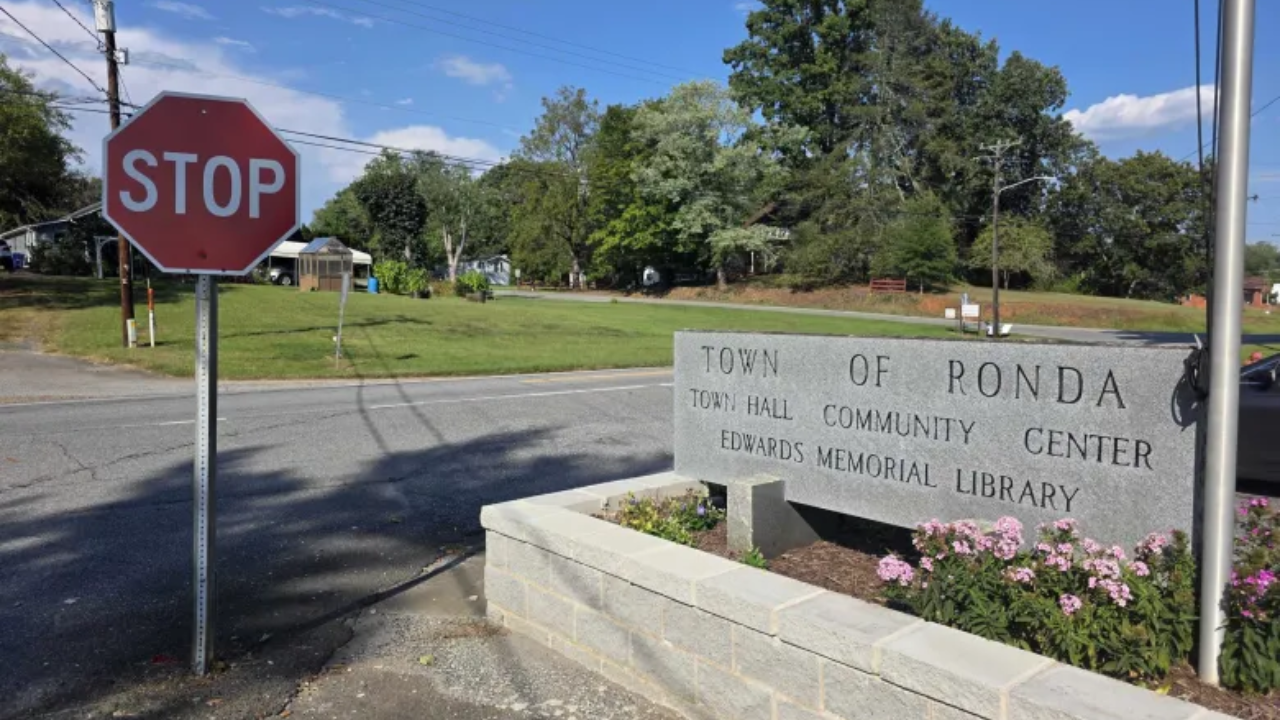
Municipal dissolution is not merely an administrative choice; it represents the terminal failure of a local government's fiscal feedback loop. When a town opts to surrender its charter and revert to unincorporated status governed by a county, it exposes a fundamental flaw in the foundational economics of small-scale local governance. Tax bases shrink, legacy liabilities compound, and the fixed costs of infrastructure maintenance outpace revenue generation. Analyzing the mechanics of municipal collapse reveals how systemic under-capitalization and demographic shifts dictate the lifespan of vulnerable local entities.
The Economic Vulnerability Matrix of Micro-Municipalities
Small municipalities founded in the early twentieth century often inherited geographic and economic footprints optimized for an industrial or agricultural era that no longer exists. The revenue model of these towns typically relies on property taxes and utility fees. However, micro-municipalities face distinct structural vulnerabilities:
- Narrow Tax Bases: A heavy reliance on residential property values without a diversified commercial or industrial anchor leaves the municipality exposed to localized economic shocks.
- Fixed Infrastructure Burden: Roads, water treatment facilities, and electrical grids require capital expenditure independent of population size. A town of five hundred residents bears a per capita infrastructure maintenance cost exponentially higher than a dense urban center.
- Absence of Economies of Scale: Administrative overhead—such as municipal clerks, zoning boards, and basic public safety—requires a baseline expenditure that cannot be scaled downward efficiently for declining populations.
When these three factors intersect with a declining or aging population, the municipal balance sheet enters an irreversible contraction phase. Property values stagnate, limiting the town's ability to raise millage rates without driving out remaining residents. Meanwhile, deferred maintenance creates a silent backlog of capital liabilities.
The Mechanics of Fiscal Decay
The progression from financial strain to dissolution follows a predictable economic trajectory. It begins with operational budget deficits driven by revenue shortfalls rather than discretionary overspending.
Revenue Contraction -> Deferred Maintenance -> Tax Base Erosion -> Emergency Borrowing -> Insolvency
As tax revenues fail to cover baseline operational expenses, municipal leadership faces a constrained decision tree:
- Option A: Increase property tax rates, which accelerates out-migration and commercial abandonment.
- Option B: Cut public services, reducing the town's attractiveness to prospective residents and businesses.
- Option C: Defer infrastructure maintenance, converting short-term cash flow relief into catastrophic long-term capital debt.
Most struggling municipalities select Option C by default, masking the structural deficit until an external shock—such as an environmental mandate, a catastrophic equipment failure, or rising borrowing costs—triggers acute insolvency. At this juncture, short-term debt instruments and emergency state loans only serve to inflate the debt service burden, accelerating the arrival of statutory receivership or dissolution proceedings.
The Mechanics of State Intervention and Charter Surrender
When a municipality can no longer service its debt or maintain mandated public safety standards, state-level mechanisms are triggered. State governments maintain a vested interest in preventing chaotic municipal defaults, as systemic failures degrade regional credit ratings and disrupt critical service continuity.
Dissolution is the ultimate structural correction. By revoking the municipal charter, the state transfers authority, assets, and liabilities to the surrounding county government. This process achieves three economic objectives:
- Administrative Consolidation: Eliminates redundant governance structures, overhead salaries, and election costs.
- Tax Base Pooling: Absorbs the distressed area's remaining liabilities into a broader, more resilient countywide tax base.
- Service Rationalization: Transitions the maintenance of roads and utilities to county agencies capable of deploying larger-scale operational efficiencies.
However, county absorption does not erase accumulated debt. Bondholders and creditors must be satisfied through asset liquidation, ongoing special district taxation, or state-level debt restructuring. The remaining property owners within the dissolved corporate limits frequently face continued special assessments to pay off legacy obligations incurred by the defunct town council.
Strategic Forecast for Vulnerable Jurisdictions
The dissolution of historic micro-municipalities serves as a leading indicator for broader demographic and fiscal pressures facing rural and semi-rural local governments. As populations centralize and remote economic activity alters traditional retail and industrial footprints, the friction between fixed municipal costs and elastic local revenues will intensify.
Future viability for small towns depends entirely on proactive functional consolidation long before insolvency forces the issue. Jurisdictions that fail to merge administrative services, share utility burdens, or dynamically adjust their governance models to match their actual economic gravity will face the same forced administrative liquidation. The market for municipal governance demands solvency; when local governance structures become economically unviable, dissolution is the inevitable market clearing mechanism.


