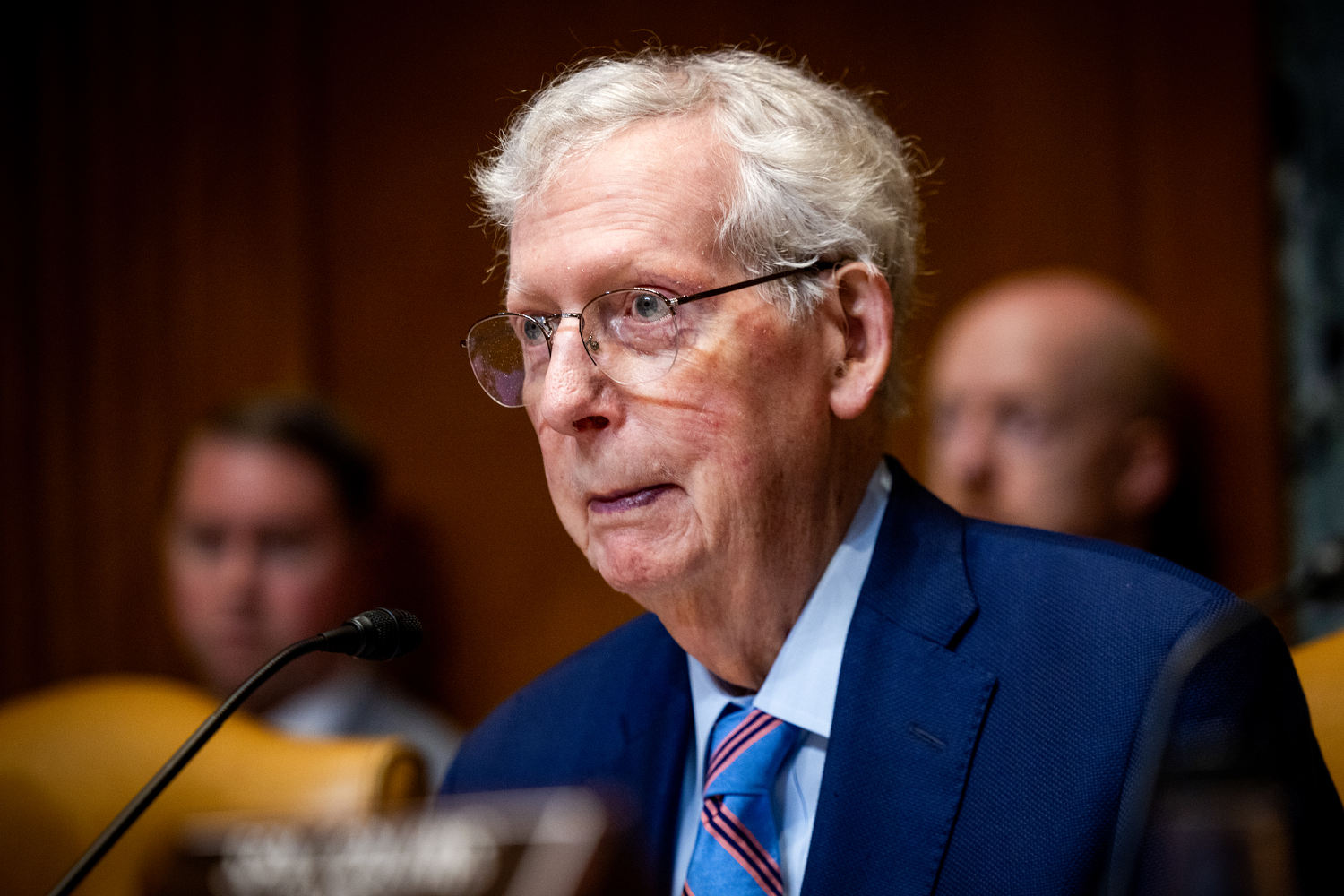
Political governance functions as a continuous operating system where leadership continuity is treated as an unstated baseline assumption. When that baseline is disrupted by questions regarding cognitive or physical capacity, the standard communication channels between executive officeholders and legislative delegates typically rely on partisan rhetoric. A structural analysis of the public friction between Kentucky Governor Andy Beshear and Senate Minority Leader Mitch McConnell reveals an underlying operational dilemma. This situation shifts the focus from simple political posturing to the mechanics of institutional stability, the cost of friction in governance, and the legal frameworks governing political succession.
The Institutional Cost of Capacity Uncertainty
In any high-functioning organization, leadership requires predictable decision-making velocity. When an institutional leader experiences prolonged public scrutiny regarding their physical or cognitive capacity, the entire organizational network absorbs a specific tax in efficiency.
The Friction Coefficient of Representation
Representation relies on a direct transmission of constituent intent into legislative action or executive oversight. If an official’s operational bandwidth is constrained, the transmission mechanism breaks down. This creates a vacuum filled by unelected staff members, creating an accountability gap. The principal-agent problem intensifies because the public cannot easily audit the unelected nodes making day-to-day choices on behalf of the principal.
Information Asymmetry in Public Office
Outsiders rarely possess full visibility into an official's true medical or operational capacity. Medical privacy laws and political incentives create a high degree of information asymmetry. Observers must rely on proxy indicators, such as public appearances, legislative responsiveness, and communicative fluency. When these proxy indicators flash warning signs, market uncertainty spikes among stakeholders who depend on stable legislative environments.
The Legal and Constitutional Architecture of Vacancies
To move past superficial media commentary, one must examine the precise statutory framework governing Senate vacancies in Kentucky. Under current state law, the mechanism for filling a vacant United States Senate seat is governed by specific procedural guardrails designed to limit executive overreach while ensuring continuity of representation.
The Statutory Constraint Matrix
Kentucky statute requires the governor to fill a Senate vacancy from a list of three names submitted by the state executive committee of the political party of the person who vacated the seat. This statutory constraint fundamentally alters the strategic calculus for any sitting governor.
- The Partisan Boundary: A Democratic governor faced with filling a vacancy for a historically Republican-held seat operates within a tightly defined cage. The requirement to select from a party-list nominated by the opposing party's internal apparatus neutralizes partisan gain.
- The Time Horizon: The operational delay between a vacancy occurring and a successor being seated introduces a window of legislative vulnerability where a voting margin in the federal chamber is compressed.
The Misalignment of Incentives
The public debate often frames requests for resignation as moral imperatives. From a structural perspective, however, resignations are purely risk-mitigation decisions. An aging official balances personal legacy against the operational risk of a public collapse that triggers a forced transition. Meanwhile, opposing executives balance systemic stability against immediate political leverage.
Strategic Framework for Evaluating Executive Fitness
Assessing whether an official can continue to serve effectively requires an objective rubric rather than subjective partisan complaints. We can categorize this evaluation into three distinct operational pillars.
Pillar One: Throughput Capacity
Throughput measures the volume of decisions an office can process within a standard timeframe. This includes signing legislation, casting floor votes, negotiating bipartisan compromises, and responding to executive branch inquiries. If throughput drops below a critical threshold, the office becomes a bottleneck for the entire legislative ecosystem.
Pillar Two: Delegation Safety
Effective delegation is a sign of mature management. However, when delegation shifts from task distribution to total operational substitution—where the principal merely signs off on work produced entirely by proxies—the safety margin collapses. The critical question is whether the elected official retains active veto power rooted in personal situational awareness.
Pillar Three: Crisis Response Agility
Normal operations can often be managed through autopilot systems. Crises, conversely, test the immediate response agility of leadership. Natural disasters, economic shocks, or national security emergencies require unscripted, high-stakes decisions from the principal. An official unable to operate dynamically during high-stress scenarios fails the baseline test of executive continuity.
The Downstream Market and Governance Effects
The public dispute between the executive branch in Frankfort and the federal legislative delegation creates measurable downstream effects on policy execution.
When institutional friction increases, capital allocation decisions by federal agencies regarding infrastructure projects, disaster relief funding, and state-level grants often slow down. State administrators find themselves hedging their bets, unsure if their primary federal advocate retains the internal political capital required to push initiatives through committee hearings and floor votes.
[Capacity Decline] ---> [Information Asymmetry] ---> [Proxy Governance] ---> [Legislative Bottleneck]
This sequence illustrates the systemic transmission of a single point of failure. The decline in individual capacity ripples through proxy governance structures, ultimately manifesting as a systemic bottleneck at the federal level.
Strategic Allocation of Political Capital
Political figures rarely expend capital on calls for resignation without a calculated return on investment. Governor Beshear’s public positioning serves two distinct strategic functions within the political marketplace.
First, it establishes moral clarity ahead of any potential operational crisis. By publicly framing the issue around the binary metric of "serving or resigning," the executive sets an objective performance standard. If the official subsequently misses key votes or experiences visible public distress, the governor's prior statements act as pre-validated diagnostic proof.
Second, it forces the internal party apparatus of the opposing faction to confront their own succession planning. Political parties hate unplanned disruptions because they invite factional warfare. By highlighting the vulnerability openly, the executive forces the opposing party's stakeholders to weigh the costs of managed succession against the risks of a sudden, catastrophic vacancy.
The Terminal Vector of Institutional Aging
The intersection of advanced biological age and high-consequence public office represents an unresolved structural flaw in modern democratic institutions. Unlike corporate entities with mandatory retirement ages, public service relies on the voluntary capitulation of power by incumbents.
Until structural reforms introduce standardized, transparent capacity assessments or objective performance audits for elected officials, governance will remain vulnerable to these friction points. The ongoing friction between Kentucky's executive leadership and its senior congressional delegation is not an isolated personal feud. It is the predictable output of a system designed for an era of different life expectancies, operating under outdated assumptions about human endurance and institutional accountability.
Initiate contingency planning for legislative stalemates by diversifying state-level advocacy channels across multiple congressional offices, bypassing single-point-of-failure representation to insulate local economic projects from federal volatility.