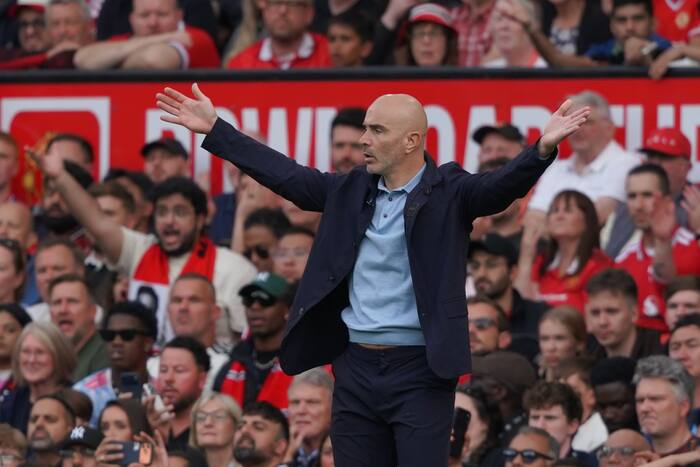
Elite sports enterprises operate under asymmetric constraints where on-field performance metrics and off-field legal liabilities exist in continuous tension. When a dominant institution faces external regulatory scrutiny or unprecedented legal adjudication, the internal response strategy relies on predictable behavioral economics and organizational psychology. The public narrative deployed by club managers and executives during periods of systemic threat serves a distinct operational function: insulating the core productive asset, the playing squad, from exogenous shocks that degrade competitive output.
The Defensive Architecture of Institutional Trust
Leadership communication under duress follows a calculated input-output framework. When stakeholders, fans, and media analysts focus on systemic vulnerabilities, executive messaging deliberately shifts the locus of control inward.
[Regulatory/Legal Shock]
       │
       ▼
[External Uncertainty] ──> [Media Speculation] ──> [Squad Destabilization Risk]
       │
       └─► [Executive Insulation Strategy] ──> [Operational Focus on Controllables]
By emphasizing internal operational trust, management decouples daily tactical execution from long-term legal exposure. This behavioral firewall prevents the cognitive load of governance disputes from translating into diminished athletic performance.
The mechanism operates through three distinct levers:
- Compartmentalization of Authority: Technical staff manage athletic output while legal counsel manage institutional defense, preventing cross-contamination of daily operational priorities.
- Narrative Framing: Shifting media attention away from speculative outcomes and toward measurable, immediate performance indicators.
- Resource Protection: Ensuring capital allocation and infrastructural support remain unaffected by external legal contingencies.
Operational Volatility and the Cost of Uncertainty
Institutional stability in professional football is directly correlated with variance reduction. Every high-profile legal dispute introduces operational drag, manifesting as player acquisition friction, contract negotiation hesitancy, and stakeholder anxiety.
To counteract this drag, organizations must maintain absolute consistency in their internal signaling. When a prominent manager articulates unconditional trust in the infrastructure of the club, that statement functions as a risk-mitigation tool. It signals to asset holders—players, commercial partners, and institutional investors—that the foundational utility of the enterprise remains insulated from macro-level legal rulings.
+---------------------------+-----------------------------------+
| Variable                  | Impact of Institutional Volatility|
+---------------------------+-----------------------------------+
| Squad Retention           | Elevated flight risk / wage premium|
| Commercial Partnerships   | Extended contract review cycles   |
| Tactical Focus            | Potential degradation of output   |
+---------------------------+-----------------------------------+
The Limits of Managerial Insulation
While tactical communication can successfully buffer a squad in the short to medium term, it possesses clear operational ceilings. Managerial authority is bounded by the physical and financial realities dictated by governing bodies. If regulatory mechanisms impose structural penalties—such as restrictions on transfer spending, point deductions, or structural restructuring—rhetorical confidence reaches a point of diminishing returns.
The inflection point occurs when legal liabilities transition from theoretical risks to balance-sheet realities. At this juncture, behavioral insulation must be replaced by strategic structural adaptation. The enterprise must pivot from defense to structural reorganization, modifying its operating model to comply with evolving governance standards without sacrificing core competitive advantages.
Strategic Capital Allocation Under Regulatory Pressure
Organizations navigating intense regulatory scrutiny must optimize their capital allocation strategies to absorb potential negative rulings. This requires a dual-track approach:
- Liquidity Preservation: Maintaining cash reserves sufficient to absorb legal defense costs and potential revenue shortfalls without triggering structural breaches of financial sustainability rules.
- Asset Optimization: Prioritizing the development and retention of internally generated talent to mitigate reliance on external transfer markets when spending restrictions are active.
By treating regulatory pressure not as a crisis but as a fixed operational constraint, elite sports enterprises build long-term structural resilience. The ultimate test of leadership is not the avoidance of external scrutiny, but the maintenance of high-performance output while the structural foundations are under active interrogation.