The suitcase never quite makes it to the attic. It lives in the corner of the spare bedroom, zipped shut, a permanent reminder of how thin the thread is between a life built over a decade and an abrupt, enforced goodbye.
Consider Priya. Let us use a hypothetical name for a very real geometry. Priya arrived in Chicago twelve years ago with a single carry-on bag, a master’s degree in computer science, and a mind wired for systems architecture. Today, she leads a team of engineers at a mid-sized healthcare technology firm. She pays high taxes, owns a modest townhouse with a ten-year mortgage, and volunteers at the local animal shelter. Her husband, an electrical engineer, works for a firm designing smart-grid infrastructure. Read more on a connected subject: this related article.
They are, by every conventional metric of the American experiment, home.
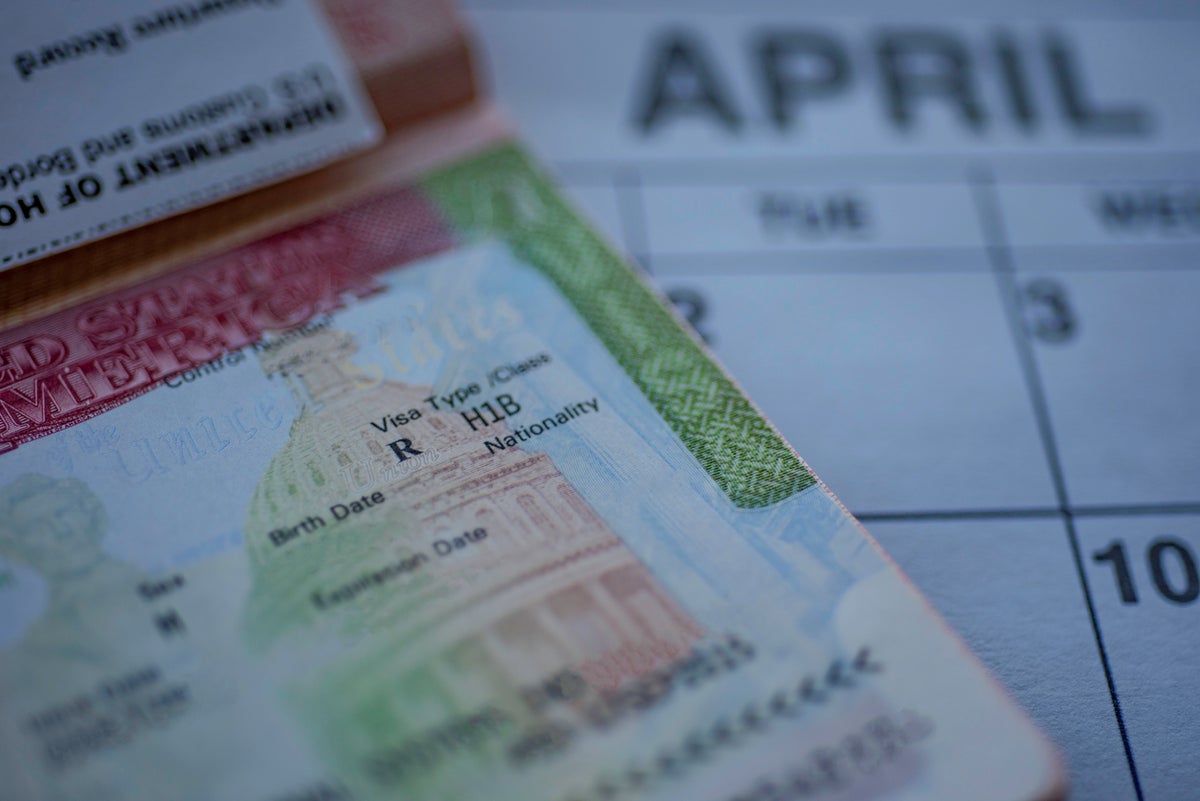
Except they are not. They are tenants of a bureaucratic permission slip known as the H-1B visa, tethered to an employment status that can evaporate in sixty days if a corporation decides to trim its headcount. And now, the political winds are shifting again, promising stricter adjudications, tighter renewals, and heightened vulnerability for the spouses who hold dependent visas—the H-4 holders—who fought for and won the right to work, only to watch that right become a perennial political football. More reporting by Al Jazeera highlights similar perspectives on this issue.
We talk about immigration in this country as a matter of border lines and legal codes. We treat it as an administrative ledger, a question of quotas, caps, and legal categorization. But the reality on the ground is starkly different. It is an emotional topography of chronic low-grade anxiety. It is the feeling of looking at a magnificent sunset over Lake Michigan and wondering if you will be permitted to see the next one.
To understand why recent policy proposals targeting H-1B visa holders and their dependents sting so deeply, we have to look past the talking points and examine the architecture of the system itself.
The H-1B program was designed as a bridge. It was meant to allow American companies to source specialized global talent when domestic supply fell short. But over decades, that bridge has morphed into a narrow tightrope suspended over a canyon of uncertainty. The visa is tied directly to the employer. This creates a severe power asymmetry. An engineer working under an H-1B cannot easily speak up about wage stagnation, hostile work environments, or unsafe conditions. To lose your job is not merely to experience unemployment; it is to face immediate deportation alongside your family, your children pulled out of their schools, your home sold at a loss, your entire existence packed into boxes within eight weeks.
Now, imagine layering family dynamics onto that structural precarity.
For years, spouses of H-1B holders—primarily women—arrived on H-4 dependent visas barred from earning a single dollar. They could not code, they could not consult, they could not volunteer in certain capacities, and they could not contribute to the household income despite holding advanced degrees of their own. Many watched their professional identities wither away, turning capable scientists, architects, and educators into isolated dependents. When the rule was finally changed to allow H-4 EAD (Employment Authorization Document) holders to work, it felt like an oxygen mask dropping in a depressurizing cabin.
Proposed restrictions and shifting administrative hurdles threaten to pull that mask away again.
When politicians propose tightening H-1B renewal criteria, increasing processing fees, or resurrecting challenges to dependent work authorizations, they often frame it as a protectionist measure for native-born workers. The logic sounds tidy in a campaign speech: restrict foreign labor, protect domestic jobs.
But economics is rarely that simplistic. When you make it difficult for high-skilled immigrants to build stable lives, you do not automatically redirect those jobs to local applicants. Instead, you incentivize multinational corporations to move the work itself. Why spend months navigating hostile visa adjudication policies and legal fees when you can open an engineering hub in Toronto, Vancouver, London, or Bangalore? The talent stays put; the capital, the intellectual property, and the tax revenue leave.
Worse still, you drive away the people who actively chose America when they had the entire world to choose from.
Priya remembers the exact moment she realized her citizenship status was an invisible asterisk on her life. It was not when she got her first tax bill. It was not when she bought her house. It was when she tried to book a routine vacation to visit her aging parents in Mumbai. Because of consular backlogs and the risk of administrative processing delays—where a visa stamp renewal can trap you abroad for months, away from your job and your home—she simply stopped traveling. For six years, she missed weddings, milestone birthdays, and final goodbyes.
That is the hidden tax of the system. It is paid in missed funerals, fractured family structures, and a persistent sense of unbelonging.
When policy proposals hint at making it even harder for these families to stay, the message is internalized immediately. It tells the software architect, the research scientist, the quantitative analyst, and the pediatric nurse that their contributions are valued only as long as they are convenient, and disposable the moment they become politically inconvenient.
Countries rise and fall on their ability to attract and retain ambition. Throughout history, empires and republics that kept their doors open to the world’s restless minds flourished, while those that turned inward stagnated into irrelevance. America’s superpower has never merely been its geography or its natural resources. It has been its magnetism—the radical idea that you could come from anywhere, hold any creed, and become an integral part of the national story.
When we signal to talented, hardworking families that their suitcases should stay packed near the door, we are not protecting the nation. We are diminishing it. We are trading long-term vitality for short-term political theater, losing the very people who power our next wave of innovation.
Priya’s suitcase remains in the corner of the spare room. She hopes, as she has hoped for twelve years, for the day she can finally unpack it, put it away in the basement, and stop living a life measured in expiration dates.