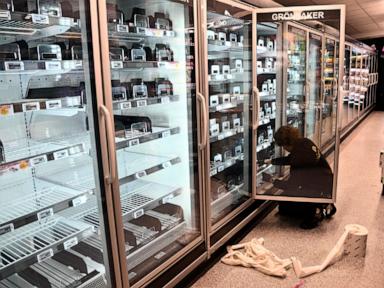
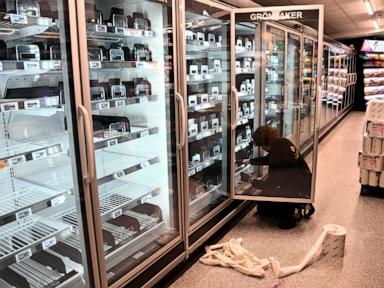
Walk into any modern grocery store in Berlin, Paris, or London, and you're surrounded by computers pretending to be appliances. Those sleek glass-door coolers holding your milk and chicken breasts aren't just dumb metal boxes with compressors anymore. They're internet-connected endpoints, and right now, hackers are treating them like an open buffet.
A fresh wave of fridge cyberattacks hitting European supermarkets has forced security teams to confront an uncomfortable truth about retail infrastructure. Attackers aren't just going after point-of-sale terminals or corporate email servers anymore. They're targeting Operational Technology (OT) and Internet of Things (IoT) refrigeration controllers to disrupt supply chains, spoil thousands of euros worth of perishable inventory, and extort store operators who can't afford an hour of downtime. If you enjoyed this piece, you should read: this related article.
If you think hacking a grocery store cooler sounds like a weird prank, you're missing the financial math behind modern ransomware. Food retail runs on razor-thin margins. When a threat actor locks up the temperature controls across fifty regional stores on a Friday afternoon, the retailer doesn't have three days to rebuild servers from backups. They have about four hours before health regulations force them to throw every piece of meat, dairy, and frozen produce into a dumpster.
How Attackers Actually Breach Supermarket Refrigeration Systems
Most people assume retail networks are neatly segmented. In theory, the corporate Wi-Fi, the cash registers, and the building management systems live in completely separate digital neighborhoods. In practice, that separation barely exists once you look behind the curtain of a real supermarket chain. For another look on this story, refer to the latest coverage from The Next Web.
Commercial refrigeration units from major manufacturers—think Carrier, Danfoss, or Carel—rely on Programmable Logic Controllers (PLCs) and networked thermostats to monitor temperatures, manage defrost cycles, and alert maintenance contractors when a compressor starts failing. To save money on truck rolls, supermarkets routinely give third-party HVAC and refrigeration vendors remote access to these controllers over the internet.
That remote connection is almost always where the trouble starts.
Based on incident patterns documented by European cybersecurity agencies like ENISA (the European Union Agency for Cybersecurity), attackers rarely need zero-day exploits to get into building management networks. Instead, they rely on painfully basic entry points:
- Exposed remote management interfaces sitting directly on the public internet, easily discoverable through search engines like Shodan.
- Default or reused vendor credentials that were set during installation five years ago and never changed.
- Flat internal networks where compromising a single contractor's VPN login or an unpatched back-office PC gives an intruder a direct path straight to the store's refrigeration control bus.
- Unencrypted industrial protocols like Modbus TCP or BACnet running over standard IP networks without any authentication checks.
Once an attacker lands on the controller network, they don't even need sophisticated malware to cause chaos. They can simply issue legitimate commands to turn off cooling loops, disable high-temperature alarms so store managers don't notice until it's too late, or lock out local technicians by changing administrative passwords on the controllers themselves.
Why European Grocery Chains Are Prime Targets Right Now
You might wonder why European supermarkets are seeing such a concentrated spike in these incidents compared to other sectors. It comes down to a collision of strict regulatory pressure, aging infrastructure, and aggressive energy-efficiency mandates.
Over the past few years, European retailers have rushed to retrofit older stores with smart energy management systems to comply with EU green transition rules and offset volatile electricity prices. Connecting legacy refrigeration racks to cloud dashboards makes it easy to shave peak power usage across hundreds of locations. It also dramatically expands the attack surface overnight.
I've seen how these rollouts happen in the real world. The sustainability team wants real-time telemetry from every cooler by the end of the quarter. The facilities team hires an external contractor to install cellular gateways or bridge the local Modbus network to a corporate VLAN. Nobody loops in the information security team until after the system goes live, and by then, dozens of stores are broadcasting unauthenticated telemetry ports to the outside world.
European food safety laws also raise the stakes for extortionists. Under strict EU hygiene regulations, once chilled goods exceed specific temperature thresholds for a set window, they cannot legally be sold—even if they still look and smell fine. Ransomware groups know this. Threatening to dump a retailer's customer database is one thing; threatening to ruin €2 million worth of fresh inventory across a holiday weekend creates immediate, visceral panic in the boardroom.
What Happens Inside a Store During a Refrigeration Attack
Forget Hollywood depictions of screens flashing skulls and crossbones. A real refrigeration cyberattack looks boring at first, and that's precisely why it works so well.
Consider an illustrative example of how a typical weekend intrusion unfolds. Late on a Friday night, an automated script compromises an exposed remote gateway used by a regional maintenance contractor. The intruder moves laterally into the store's building management server, disables automated SMS alerts that normally notify the store manager when a freezer warms up, and slowly raises the target temperature setpoints by ten degrees.
By Saturday morning, the display panels on the aisles might still show normal numbers if the attacker spoofed the local readouts, or they might simply be locked behind an error screen that looks like a routine hardware glitch. Store staff call the regular refrigeration mechanic. The mechanic shows up with a laptop, plugs into the controller, and realizes their service credentials no longer work.
By noon, milk cartons are warm, ice cream is turning into soup, and the retailer receives an email demanding a cryptocurrency payment to restore administrative access to the controllers. Even if the chain refuses to pay and sends technicians to manually hard-reset every single compressor board across twenty stores, the physical labor alone takes longer than the spoilage window of the food sitting on the shelves.
The Dangerous Myth of Air-Gapped Retail Equipment
If you talk to facilities directors at traditional grocery chains, you'll hear the same reassuring line over and over: "Our fridges aren't connected to the cash registers, so a hack can't spread."
That mindset is completely outdated.
First, modern point-of-sale networks and building management systems almost always share underlying physical infrastructure—the same routers, the same switches, and the same broadband lines coming into the back of the store. A single misconfigured VLAN trunk is all it takes for ransomware hitting an office workstation to jump straight into the OT environment.
Second, attackers don't need to reach the cash registers to shut down a supermarket. Health codes do the job for them. A grocery store without functioning refrigeration cannot legally keep its doors open to sell perishable goods, regardless of whether its credit card terminals work perfectly.
There's also a physical safety angle that gets overlooked. Industrial refrigeration systems in large European supermarkets increasingly use natural refrigerants like carbon dioxide (transcritical CO2 systems) or ammonia to meet EU F-Gas regulations. These systems operate under extremely high pressures. While hardware safety relief valves prevent catastrophic explosions, maliciously manipulating compressor pressures and valve states can cause severe mechanical damage that takes weeks of backordered parts to repair.
Practical Steps Retailers Must Take to Lock Down Coolers
Securing supermarket refrigeration doesn't require buying expensive AI threat-detection platforms. Honestly, most breaches would be stopped dead in their tracks by basic network hygiene that IT teams have preached for twenty years.
If you manage retail infrastructure, facilities, or store security, start with these concrete fixes immediately:
- Audit every external connection to your building management systems. Run an external scan of your store IP ranges or check with your maintenance vendors to find every cellular modem, VPN tunnel, and port-forwarding rule touching your HVAC and refrigeration controllers. Shut down direct public internet access to port 502 (Modbus) and port 47808 (BACnet) today.
- Enforce multi-factor authentication and jump hosts for vendors. Third-party refrigeration mechanics should never have always-on VPN access straight into your store subnets. Force contractors through a monitored jump server with MFA enabled, and only grant access during scheduled maintenance windows.
- Isolate OT networks at the firewall level. Put refrigeration controllers, lighting systems, and smart meters on a dedicated VLAN with strict firewall rules that block inbound connections from corporate workstations and point-of-sale terminals.
- Install independent, out-of-band temperature alarms. Never rely solely on the networked controller to tell you when a cooler is warming up. Place cheap, battery-powered cellular or LoRaWAN temperature sensors inside high-value meat and dairy cases that report directly to an independent cloud dashboard. If the main controller gets hijacked, you'll still know within fifteen minutes that temperatures are rising.
- Drill manual override procedures with store managers. Make sure on-site staff and local technicians know how to physically bypass networked thermostats and run compressors in manual failsafe mode without needing network access.
Hackers go where the friction is lowest and the urgency is highest. Right now, European supermarket coolers offer both—unpatched industrial controllers sitting on poorly segmented networks, guarding millions of euros in perishable food that can't wait until Monday morning to be fixed. Treating refrigeration gear with the same security rigor as payment terminals isn't optional anymore; it's the only way to keep the lights on and the milk cold.