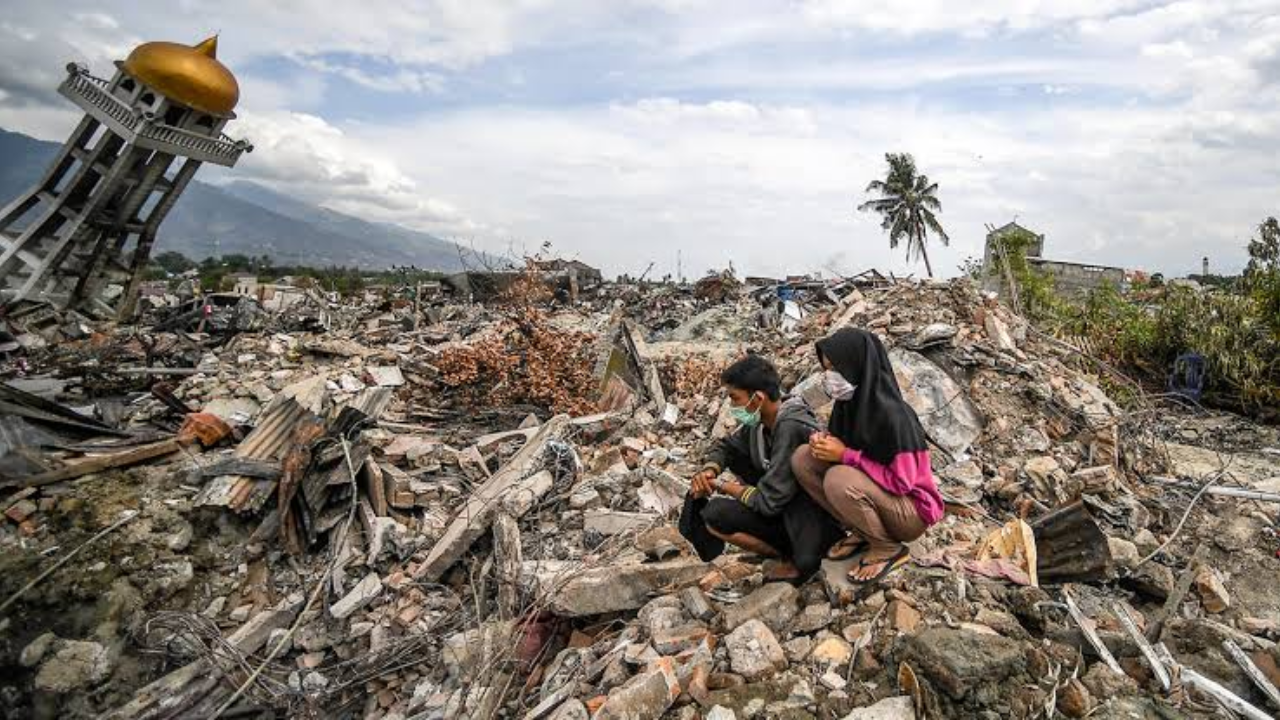
Seismic events impose extreme physical constraints on human biology, where survival duration is governed by strict physiological thresholds and structural protection dynamics. When an 84-year-old woman was extricated alive from structural debris three days following an earthquake in Indonesia, public discourse typically framed the event through the lens of anomalous miracles. From an operational and physiological standpoint, however, survival following seventy-two hours of entrapment represents the intersection of deterministic variables: micro-environment compartmentalization, basal metabolic suppression, and precise hydration management.
Traditional disaster reporting relies on anecdotal framing, reducing complex rescue outcomes to statistical outliers. A rigorous analysis requires shifting the perspective from sensationalism to structural mechanics. The duration of human survival in a collapsed structure is not random; it is dictated by a predictable degradation curve of vital resources, heavily modified by physical architecture and individual pathology.
The Structural Architecture of Survivable Voids
The primary determinant of acute post-earthquake survival is the geometry of the collapse. Progressive collapse mechanisms dictate whether occupants are subjected to massive compressive loads or protected by structural bridging. When a reinforced concrete or timber frame fails, it rarely reduces to uniform dust. Instead, it forms a matrix of voids known in urban search and rescue terminology as survivable pockets.
Three distinct structural variables govern the viability of these spaces:
- Load-bearing triangulation occurs when vertical supports lean against fallen horizontal slabs, creating a rigid triangular geometry that resists the downward kinetic force of upper floors.
- Debris porosity determines the rate of ambient air exchange. Highly fragmented rubble permits gas diffusion, preventing localized carbon dioxide accumulation while maintaining ambient oxygen thresholds above the critical hypoxia line of 12 percent.
- Thermal mass isolation protects the entrapped subject from environmental extremes. Concrete and earth elements absorb daytime radiant heat and release it slowly, dampening diurnal temperature fluctuations that would otherwise trigger fatal hypothermia or hyperthermia.
In the Indonesian seismic event, the subject's persistence for seventy-two hours indicates that her immediate micro-environment successfully isolated her from the crushing weight of the superstructure while preserving an open conduit for atmospheric air. Without this physical shielding, human tissue fails under minimal static loads long before metabolic starvation occurs.
The Physiological Cost Function of Entrapment
Once physical safety from compression is secured, the biological timeline is governed by a strict hierarchy of physiological depletion. The human body operates under a predictable resource allocation model where water availability supersedes caloric intake by an order of magnitude.
The survival window is dictated by the Dehydration Velocity Index. In a resting state, under moderate ambient temperatures and high humidity typical of tropical seismic zones, insensible water loss through respiration and minimal dermal diffusion continues unabated. Without exogenous fluid intake, hemoconcentration increases blood viscosity, leading to microvascular thrombosis, acute renal failure, and rapid cardiovascular collapse within seventy-two to ninety-six hours. The fact that the subject reached the seventy-two-hour mark places her at the absolute outer boundary of unassisted survival without water, implying either trace moisture ingestion from condensation on surrounding rubble surfaces or an exceptionally low metabolic baseline.
Metabolic rate suppression acts as the primary internal variable. Advanced age correlates with a lower baseline basal metabolic rate, which paradoxically reduces cellular oxygen demand and caloric expenditure during acute stress. Furthermore, immobilization induced by physical entrapment forces the somatic musculature into a quiescent state, dramatically curtailing adenosine triphosphate consumption.
The Compounding Failure of Extraction Logistics
Rescue operations following seismic events face a severe resource allocation dilemma known as the Golden 72-Hour Window. Emergency management frameworks universally recognize that the probability of locating live casualties degrades exponentially past this threshold due to physiological exhaustion and secondary structural instability.
The operational bottleneck is rarely personnel availability; it is spatial information processing and acoustic localization fidelity. First responders must balance rapid heavy machinery deployment against the risk of inducing secondary collapses that compress the very structural voids preserving life.
- Acoustic signature detection relies on seismic listening devices, yet ambient urban noise and aftershock activity introduce high signal-to-noise ratios that obscure faint human vocalizations.
- Kinetic clearing methods, such as hydraulic jackhammering and bucket excavation, transmit vibrational energy through the rubble matrix, risking displacement of the triangulation supports maintaining the subject's void.
- Triage prioritization forces incident commanders to abandon slow, surgical extraction methods in favor of mass clearance once thermal imaging or canine units fail to register clear signatures within a designated sector.
The successful recovery of an octogenarian after three days exposes a critical variance in standard triage assumptions. Conventional predictive models often downgrade the survival probability of elderly cohorts due to assumed vulnerabilities in cardiovascular and immunological resilience. This case validates a counter-hypothesis: age-related reductions in baseline physical activity and metabolic velocity can inadvertently conserve critical homeostatic resources when external inputs are entirely severed.
Resource Depletion Sequencing and Environmental Modifiers
To map the exact degradation of human vitality under rubble, one must analyze the interaction between environmental humidity, ambient temperature, and physiological reserves.
[Seismic Collapse Event]
       │
       ├──► Structural Void Formation (Protects against crush injury)
       │         │
       │         └──► Gas Exchange Maintenance (Prevents asphyxiation)
       │
       └──► Metabolic Suppression (Age-adjusted baseline reduction)
                 │
                 └──► Hydration Threshold Boundary (The 72-hour hard limit)
In tropical environments, high ambient humidity reduces the rate of evaporative cooling, which prevents rapid dehydration through sweat but exacerbates heat stress if the void lacks ventilation. Conversely, convective air movement accelerates moisture depletion through the respiratory tract. The survival threshold is achieved only when the environmental parameters intersect favorably with the individual's metabolic profile.
Deploy advanced acoustic sensors and carbon dioxide monitoring arrays concurrently during the initial forty-eight hours of structural reconnaissance to identify low-metabolic survivors who are unresponsive to vocal prompts. Integrate age-adjusted physiological parameters into rescue prioritization software to prevent premature triage abandonment of older demographics trapped in isolated structural pockets.