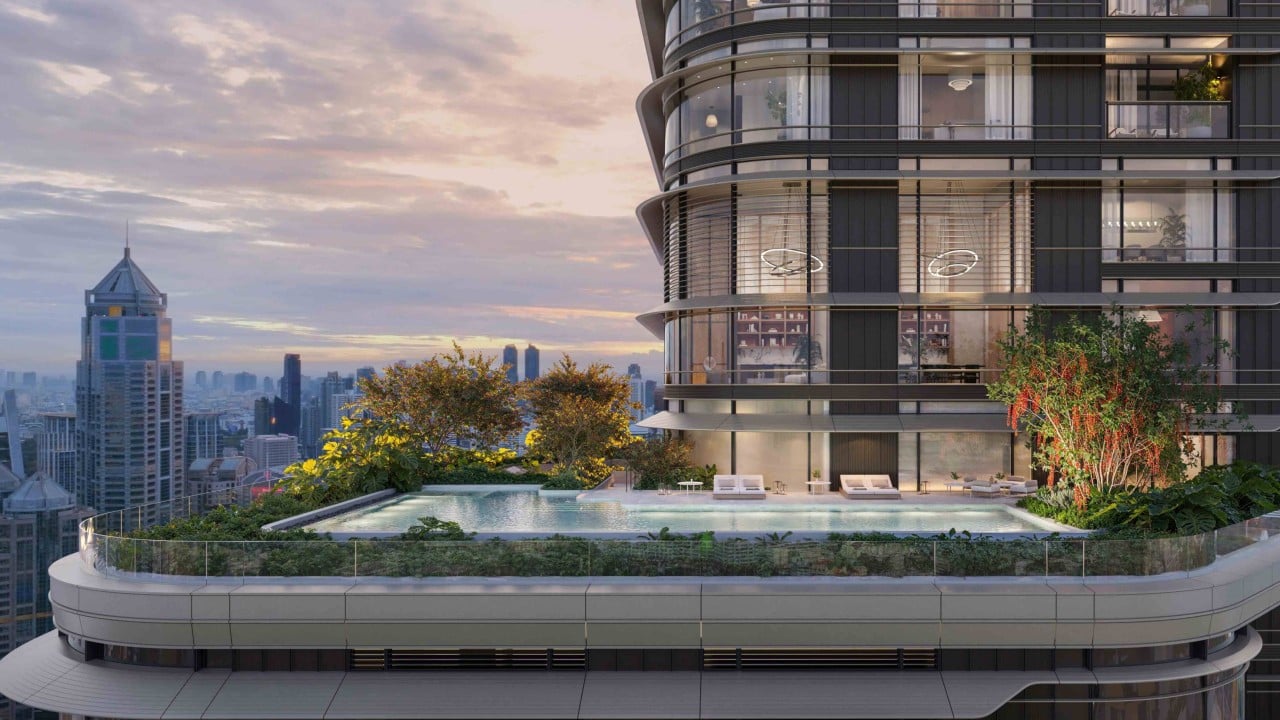
The hospitality press loves a good press release. Whenever a blue-chip Hong Kong developer announces an expansion into Southeast Asia, the trade publications fall over themselves to praise the vision, the pedigree, and the inevitable triumph of luxury branding.
Swire Properties and its Thai partner, City Realty, recently announced plans to bring the coveted Upper House brand to Bangkok. The consensus among industry observers is predictable. They see a slam dunk. They point to the cult success of The Upper House in Hong Kong, designed by Andre Fu, and assume that transplanting that exact DNA onto Wireless Road or Lumpini will print money. Recently making waves in related news: Why Oil Traders Betting on Peace Could Get Burned Again.
They are wrong. Not because Swire lacks execution power, and not because Bangkok lacks luxury demand. They are wrong because they are analyzing a 2026 real estate play using a 2014 hospitality playbook.
If you look closely at the unit economics of ultra-luxury urban developments in Thailand right now, Swire is not building a hotel brand expansion. They are executing a high-stakes residential exit strategy disguised as a boutique hospitality play. And if they are not careful, the very qualities that made Upper House iconic in Hong Kong will become its biggest financial liability in Bangkok. More details regarding the matter are detailed by Bloomberg.
The Myth of the Plug-and-Play Boutique Brand
The lazy consensus goes like this: Ultra-high-net-worth travelers are tired of cookie-cutter legacy luxury. They want quiet luxury, understated residential warmth, and hyper-personalized service. Swire nailed this in Admiralty with The Upper House. Therefore, dropping a 150-key Upper House into Bangkok will immediately capture market share from the Mandarin Oriental, The Siam, and Four Seasons.
This argument ignores the structural reality of how Bangkok hospitality actually works.
In Hong Kong, land is scarce, construction costs are astronomical, and room rates routinely clear $900 to $1,200 USD per night with high occupancy. The math supports a low-key-count, high-touch, non-traditional luxury hotel because the Average Daily Rate (ADR) absorbs the punishing labor-to-room ratio.
Bangkok is a different animal entirely.
For decades, Bangkok has been the global capital of underpriced five-star luxury. Even with the post-pandemic rate resets pushed by the Four Seasons Chao Phraya River and Capella Bangkok, the Thai capital remains hyper-competitive on price relative to service delivery. You can still get world-class service in Bangkok for half the price of Tokyo, London, or Hong Kong.
When you introduce a boutique, design-led brand like Upper House—which relies heavily on massive entry-level room sizes (often starting at 70 square meters) and a rejection of traditional lobby-and-ballroom revenue streams—you create a massive operational bottleneck.
Where the Revenue Actually Comes From
Traditional luxury hotels in Bangkok do not survive on room revenue alone. They survive on high-margin Food and Beverage (F&B), lavish Thai weddings, corporate gala dinners, and sprawling spa operations. The local elite in Bangkok use five-star hotels as their living rooms. If your hotel is not the place to be seen for Sunday brunch, afternoon tea, or a 400-person society wedding, your RevPAR (Revenue Per Available Room) will bleed out during the low season.
The Upper House philosophy is built on the exact opposite premise: privacy, discretion, no sprawling public lobbies, and an anti-banquet ethos.
I have watched dozens of foreign hospitality groups bring "intimate, understated luxury" to Southeast Asia, only to panic eighteen months after opening when their F&B outlets sit half-empty on Tuesday nights because the local Thai socialites prefer the flashier, louder venues down the street. You cannot pay Bangkok property taxes and debt service on quiet sophistication alone.
The Real Play Is Branded Residences, Not Hotel Keys
If the standalone hotel economics are tight, why is Swire doing this? And why is City Realty—controlled by the Sophonpanich family, one of Thailand's most astute banking and real estate dynasties—partnering with them?
Stop looking at the hotel rooms. Look at the square footage above them.
In modern Asian real estate development, the ultra-luxury hotel is rarely the primary profit engine. It is a loss-leader—or at best, a break-even marketing expense—designed to justify a 40% to 60% price-per-square-meter premium on branded residences.
Let us break down the mechanics of how this actually works on a developer's balance sheet:
- The Halo Effect: Selling a freehold or long-term leasehold condominium in central Bangkok at 500,000 to 700,000 THB per square meter requires an ironclad brand anchor. Buyers from Hong Kong, Singapore, Taiwan, and mainland China already trust the Swire name. They know Pacific Place. They know The Upper House.
- Pre-Sales Velocity: By attaching the Upper House flag to residential towers, the joint venture can pre-sell units off-plan to Swire's existing VIP database before a single concrete pile is driven into the ground. That pre-sale cash flow finances the construction of the entire mixed-use development, drastically reducing the developers' equity exposure.
- The Exit: Once the residential units are sold and handed over, the developer has already booked the lion's share of their internal rate of return (IRR). The hotel downstairs simply needs to stay open, maintain the asset's prestige, and keep the residential homeowners happy with concierge services.
When industry analysts debate whether Upper House Bangkok will beat Capella on occupancy rates, they are asking the wrong question. Swire does not need to win the hotel occupancy war if they win the residential pre-sale war.
The Saturation Trap on Wireless Road and Lumpini
Even if we accept that the residential component is the true financial engine, Swire and City Realty are walking into the most crowded ultra-luxury battlefield in Asia.
Look at the immediate neighborhood around Lumpini Park and Wireless Road. You have:
- The Ritz-Carlton Bangkok at One Bangkok (with ultra-luxury residences).
- Aman Nai Lert Bangkok, tucked into a private park just minutes away, commanding eye-watering residential prices and ultra-exclusive hotel rates.
- Four Seasons Private Residences on the river, which already absorbed a massive chunk of Bangkok's domestic and regional billionaire buyer pool.
- Dusit Central Park, bringing Dusit Thani and branded residences right across from Lumpini.
- Sindhorn Kempinski and Kimpton Maa-Lai anchoring the Langsuan corridor.
Every single one of these projects is chasing the exact same buyer: the regional family office principal who wants a lock-and-leave trophy apartment in Bangkok.
The Danger of Oversupplying the Ultra-Rich
There is a dangerous delusion among developers that the top 0.1% of buyers is an infinite well of capital. It is not.
When five different mega-projects launch ultra-luxury branded residences within a three-kilometer radius within a 36-month window, absorption rates stall. Resale values stagnate. Suddenly, the "exclusive" trophy asset looks like a commoditized glass box.
I have sat in boardrooms in Singapore and Hong Kong where developers projected 15% annual capital appreciation on Bangkok luxury condos based on peak 2018-2019 demand. Those models got shredded by reality. Foreign buyer quotas (capped at 49% for Thai condominiums under the Condominium Act) mean developers eventually have to rely on domestic Thai wealth to clear the remaining inventory.
Wealthy Thai families do not buy 500-square-meter sky villas to live in. They already own multi-generational compounds in Sukhumvit, Thonglor, or along the river. They buy condos as investment vehicles or crash pads for their kids. And wealthy Thais are ruthless bargain hunters who do not pay retail prices for foreign brand premiums unless the yield makes sense.
Why Swire's "Quiet Luxury" Could Backfire in Thailand
There is also a cultural friction point that Western and Hong Kong observers routinely miss when analyzing the Thai market.
In Hong Kong, space is the ultimate luxury. Because Hong Kong apartments are notoriously cramped, walking into The Upper House—with its serene, minimalist limestone baths, muted oak tones, and calm, library-like atmosphere—feels like an exhale. It is a sanctuary from the claustrophobic, hyper-dense verticality of Hong Kong Island.
Bangkok is not Hong Kong. Bangkok is sprawling, chaotic, sensory-heavy, and deeply rooted in expressive hospitality.
When Thai high society and regional leisure travelers book a five-star stay in Bangkok, they often want theater. They want dramatic architecture, lush tropical landscaping, resort-style pools that feel like an urban oasis, and vibrant social energy. Look at why The Siam works so well: it leans heavily into Thai heritage, antiques, and riverside drama. Look at why Four Seasons Chao Phraya works: it feels like an expansive resort dropped into the middle of a megacity.
A minimalist, inward-looking urban hotel tower—even one designed by the best architects in Asia—risks feeling cold in Bangkok. If Upper House Bangkok simply imports the Hong Kong aesthetic without radically adapting to Bangkok's tropical, indoor-outdoor DNA, it will feel like a corporate business hotel wearing expensive linen.
The Staffing Reality Nobody Talks About
Let us talk about service. The Upper House in Hong Kong built its reputation on a flat organizational structure: no traditional front desk, no bellboys hovering for tips, and "House Hosts" empowered to handle everything from check-in to bespoke itinerary planning via iPad.
That model works when you have a small, hyper-educated, multilingual workforce paid Hong Kong wages, operating in a 117-room vertical footprint.
Try replicating that exact flat-hierarchy model in Bangkok right now. Thailand is facing a severe, structural shortage of experienced hospitality talent. Since 2020, tens of thousands of seasoned Thai hotel workers left the industry for tech, logistics, or overseas jobs in the Middle East and Europe, and they have not come back.
Every new luxury opening in Bangkok is currently poaching middle management and guest-relations staff from existing five-star properties. Salaries for bilingual, high-EQ hospitality staff have surged, while service consistency across the city has noticeably dipped.
Building a service culture based on intuitive, unscripted, "non-corporate" hospitality requires years of training and low staff turnover. In a Bangkok labor market characterized by aggressive poaching and wage inflation, maintaining the Upper House service standard will cost Swire far more per key than their initial feasibility studies likely projected.
What Swire Must Do to Avoid the Trap
Swire Properties is one of the sharpest real estate operators in Asia. They are not amateurs, and City Realty knows every political and economic undercurrent in Thailand. They have the balance sheet to weather a slow ramp-up.
However, to turn this joint venture from a vanity trophy into an actual financial outlier, they need to abandon the playbook that made them famous in Hong Kong.
- Ditch the Minimalist Restraint: Bangkok does not want a quiet concrete box. The architecture and interior program must integrate aggressive greenery, water features, and resort-style openness. If guests feel like they are in a financial district tower rather than a tropical capital, the concept fails.
- Monetize the Local Social Scene: You cannot ignore Bangkok's F&B economy. Upper House Bangkok needs at least one destination restaurant or rooftop concept that operates independently of the hotel's quiet ethos—a venue loud enough, exclusive enough, and photogenic enough to pull Bangkok's elite out of Thonglor and onto the property every single night.
- Price the Residences for Liquidity, Not Ego: Developers love bragging about setting record price-per-square-meter benchmarks. That ego is poison in a saturated market. Swire should price the initial residential tranches aggressively enough to guarantee 70% absorption within the first six months, locking in their capital return before competing towers finish construction.
- Lock Down Talent Two Years Early: Waiting until six months before opening to recruit House Hosts will result in a staffing disaster. They need to build a dedicated hospitality academy in Bangkok now, recruiting outside the traditional hotel pool and locking key talent into multi-year retention equity or bonus structures.
The Verdict on the Partnership
Let us give credit where it is due: pairing Swire's design discipline and North Asian buyer network with City Realty's local landbank and institutional muscle is a textbook masterclass in cross-border real estate structuring. On paper, it is one of the strongest joint ventures in Southeast Asia.
But paper does not pay construction loans.
The hospitality press will keep writing breathless profiles about how Upper House is bringing "understated Hong Kong elegance" to the Land of Smiles. Ignore the noise. Watch the residential pre-sale absorption rates in the first two quarters after launch, and watch the staff turnover in year one.
Bangkok does not care how famous your hotel is in Admiralty. In a city drowning in five-star luxury, pedigree only buys you an opening party—after that, you bleed for every dollar like everyone else.