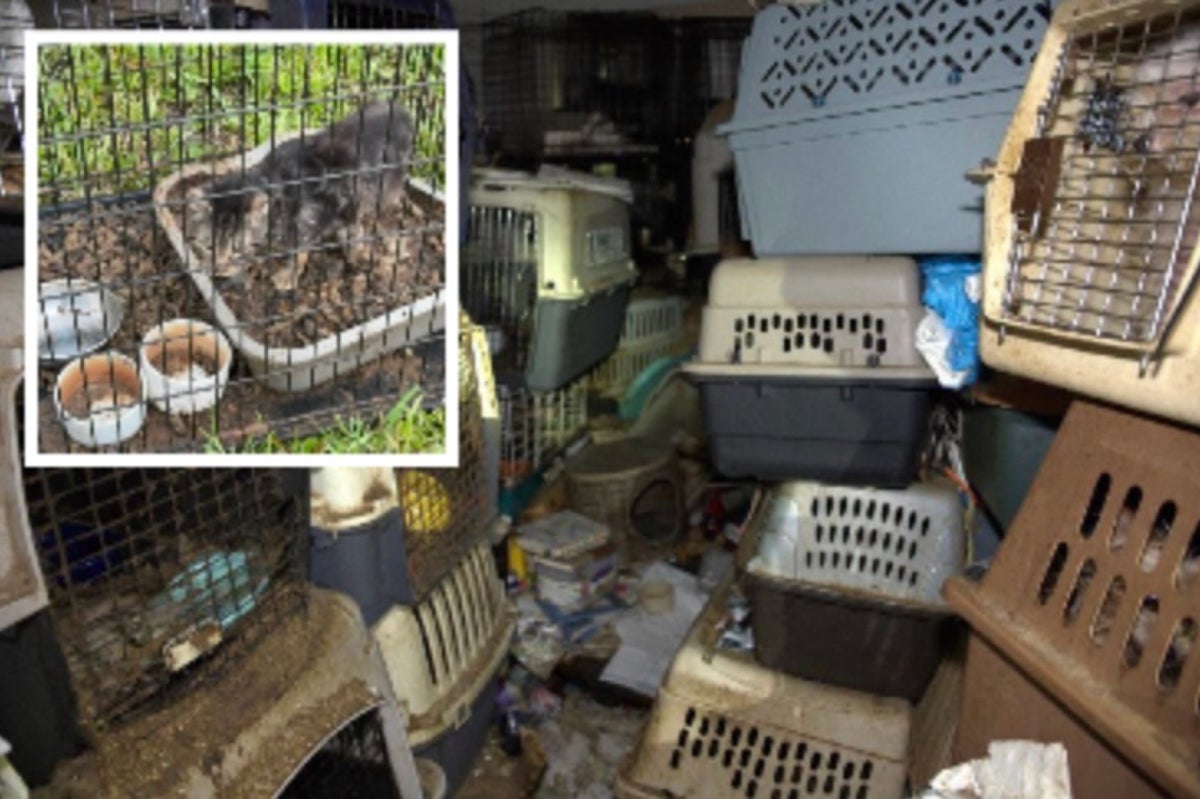
Animal hoarding cases involving large numbers of domestic animals represent a structural breakdown in community health monitoring, local animal control capacity, and occupational oversight. When an individual operating within a structured, public-facing role like postal delivery accumulates 80 animals inside a single-family residential property, the event signifies a failure across multiple early-detection vectors. Deconstructing this phenomenon requires examining the socio-behavioral mechanics of animal hoarding, the logistics of unmanaged accumulation, and the operational gaps that allow such situations to escalate unchecked.
The Operational Mechanics of Rapid Animal Accumulation
The accumulation of 80 cats within a residential environment relies on three distinct operational drivers: biological reproduction rates, access vectors, and low detection thresholds. Discover more on a similar issue: this related article.
Exponential Biological Growth
Feline reproduction mechanics create a rapid compound growth rate when left unmanaged. A single non-spayed female cat can produce between two and three litters per year, with an average of four to six kittens per litter. In a closed residential space where shelter and minimal food inputs are provided, population expansion shifts from linear to exponential within 12 to 18 months. Without strict reproductive control, a baseline population of ten unsterilized animals yields a critical mass exceeding 50 to 80 individuals within a compressed timeframe.
Route-Based Supply Vectors
Employment within public delivery networks provides continuous, routine access to stray populations. A mail carrier operating along assigned daily geographic routes possesses a steady stream of exposure to homeless animals. This occupational access vector lowers the acquisition cost of strays to zero, creating a continuous intake pipeline that bypasses standard shelter adoption vetting processes. Additional reporting by NPR explores comparable views on this issue.
Environmental Containment and Concealment
Residential properties absorb significant biological load before external indicators become visible to neighbors or local authorities. The timeline between initial accumulation and public discovery expands based on property density, setback distances, and internal containment strategies. In hot or humid climates such as Florida, HVAC performance, air circulation, and structural sealed-space limits dictate the rate at which ammonia buildup and waste decay cross the threshold from internal hazard to external nuisance.
The Psychological and Structural Architecture of Hoarding Behavior
Animal hoarding is clinically recognized as a complex manifestation of attachment disorders, object-accumulation tendencies, and severe executive dysfunction. Analyzing the structural dynamics of this disorder reveals why voluntary compliance or simple self-correction rarely occurs.
The Delusion of Rescue
Hoarders operate under a cognitive distortion where their perception of care completely diverges from objective reality. The individual perceives intake as a benevolent act of rescue, filtering out observable evidence of overcrowding, disease transmission, waste accumulation, and malnutrition. This cognitive shield blocks internal triggers of distress that would typically compel a person to seek external help or reduce animal numbers.
Isolation and System Resistance
As the population grows beyond maintenance capacity, the owner increasingly isolates the home from external observers to prevent intervention. Maintenance workers, family members, and utilities inspectors are systematically barred from entry. This defensive isolation accelerates property degradation, creating an environment characterized by hazardous ammonia levels, biological waste buildup, and structural decay.
Institutional Breakdown and Early Warning Failures
The escalation of an intake system to 80 animals requires systemic failures across several public and civic monitoring bodies.
+-----------------------------------------------------------------------+
|                       Occupational Monitoring                         |
|     (Missed signs of animal intake during daily postal routes)        |
+-----------------------------------------------------------------------+
                                   |
                                   v
+-----------------------------------------------------------------------+
|                     Municipal Code & Utility Audits                   |
|   (Unnoticed water usage anomalies, odor complaints, exterior decay)  |
+-----------------------------------------------------------------------+
                                   |
                                   v
+-----------------------------------------------------------------------+
|                       Animal Control Interventions                    |
|    (Reactive rescue response triggered only at critical failure)      |
+-----------------------------------------------------------------------+
Occupational Oversight Gaps
While public employers do not monitor the off-duty private lives of personnel, occupational health and safety protocols often intersect with off-duty behaviors when physical safety, hygiene, or performance deteriorates. Uniform conditions, recurring attendance patterns, and physical health changes serve as secondary indicators of severe personal crises.
Municipal Code Enforcement Bottlenecks
Local code enforcement agencies typically operate on a reactive, complaint-driven model. This framework inherently fails in isolated properties where neighbors hesitate to report early warning signs such as minor odors, increased stray presence, or excessive trash accumulation. By the time a complaint triggers formal municipal entry, the situation has already progressed from a minor code violation to a full-scale environmental hazard requiring hazmat-level mitigation.
Animal Control Resource Constraints
Municipal animal services routinely operate at or above physical housing capacity. When an enforcement action recovers 80 animals simultaneously, it instantly consumes regional shelter bandwidth, strains medical triage capabilities, and places severe financial demands on local government budgets for veterinary care, spay/neuter procedures, and behavioral evaluation.
Operational Playbook for Municipal Mitigation and Inter-Agency Protocol
Resolving the structural vulnerabilities that permit large-scale hoarding events demands a systemic shift from reactive intervention to proactive cross-agency communication.
- Establish Cross-Agency Escalation Triggers: Municipalities must establish clear, direct data-sharing channels between code enforcement, utility departments, and local animal control. Sudden drops or spikes in water usage, combined with repeated refuse collection anomalies, should automatically trigger an exterior inspection.
- Implement Targeted Intake Protocols: Animal control agencies must maintain dedicated emergency response protocols for sudden, high-volume surrenders to prevent local shelter collapse. Partnering with regional humane societies and non-profit rescue networks distributes the intake load before an enforcement action occurs.
- Legislate Proactive Property Inspections: Local ordinances should define specific animal limits per residential acre while granting clear, legal authority for welfare checks when credible, documented reports of biological hazard or unauthorized animal density are filed.
Municipalities must treat animal hoarding not as an isolated personal crisis, but as an environmental health hazard requiring structured monitoring, clear intervention metrics, and integrated civic management.