` tags.
Let's draft it.
Why the Panic Over West Coast Clam Cancer Misses the Whole Point
news, health
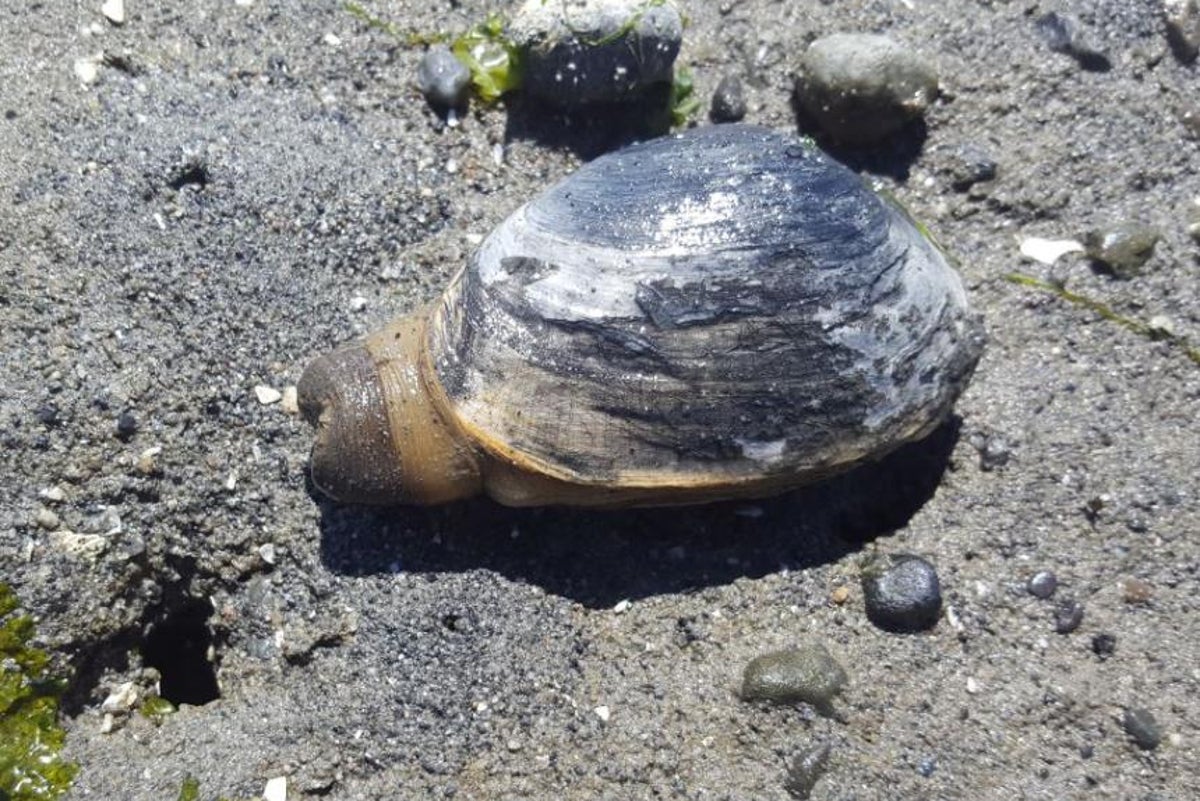
The headlines want you to picture an environmental apocalypse. They paint a grim portrait of West Coast soft-shell clams (Mya arenaria) wasting away from a mysterious leukemia-like disease, pointing fingers squarely at human pollution, warming oceans, and industrial runoff. It is a predictable narrative. It is also entirely wrong.
The mainstream media coverage of Bivalve Transmissible Neoplasia (BTN) treats this marine disease like a modern human health crisis. They look at a clam packed with cancerous hemocytes and see a victim of industrialization.
They are missing the grander, far more unsettling reality. This is not a symptom of modern pollution. This is an ancient evolutionary heist.
The Lazy Consensus of Environmental Determinism
Open any standard report on marine pathology from the last year and you will find the same foundational flaw: the assumption that a surge in wildlife disease must be driven by anthropogenic stress. The logic appears sound on the surface. Pollution weakens immune systems; weak immune systems invite disease.
But when you examine the genomic architecture of BTN, that hypothesis falls apart.
This disease is not a standard cancer caused by genetic mutations within an individual clam's body. It is a clonal, transmissible cancer line. The cancer cells themselves are the infectious agent. They drift through the water column, survive the marine environment, invade a new host, and bypass its immune defenses entirely.
Genetic sequencing by researchers at the Pacific Northwest National Laboratory and the Seattle-based Marine Sciences Laboratory shows that these tumor cells do not share the DNA of the clams they are currently killing. Instead, they clone themselves. The current line devouring West Coast soft-shell populations originated from a single ancestral clam that lived decades, perhaps centuries, ago.
Stop blaming the local chemical plant for a biological phenomenon that has been engineering its own survival since before the industrial revolution.
The Mechanics of an Immortal Parasite
To understand why the current panic is misplaced, we must look at the actual mechanics of transmission.
$$\text{Transmission Rate} \propto \text{Population Density} \times \text{Water Filtration Volume}$$
Clams are sedentary filter feeders. They pump liters of water through their systems every hour to extract nutrients. In a dense clam bed, an infected individual releases millions of neoplastic cells into the water column when it dies or decomposes. The surrounding clams literally pump the pathogen directly into their own circulatory systems.
Imagine a scenario where a human cancer cell could survive a sneeze, float through the air for three days, and then take root in the lungs of anyone who walked past. That is what we are dealing with in the intertidal zone.
[Infected Clam] -> Releases Clonal Cancer Cells -> [Water Column] -> Filter Feeding -> [Healthy Clam Infected]
This is not a failure of the ecosystem. It is a wildly successful evolutionary strategy for the cancer cell line. By becoming transmissible, the cancer achieved a twisted form of biological immortality. It outlived its original host and turned the entire Pacific coastline into its personal incubator.
The Economic Hysteria and the Real Danger
Commercial shellfish operations are sounding the alarm, demanding massive state interventions and clean-up funding to "save" the beds. I have spent years analyzing resource management frameworks, and this pattern is always identical: use an ecological boogeyman to secure public subsidies.
The industry wants you to believe that BTN will wipe out the entire shellfish market. Let us look at the hard data from past outbreaks on the Atlantic coast. When transmissible neoplasia hit New England soft-shell populations hard in the late 20th century, certain beds experienced high mortality. But the species did not vanish.
Instead, a brutal process of natural selection took place. Clams possess varying levels of genetic resistance to cell binding. The highly susceptible lines were wiped out rapidly, leaving behind a resilient, genetically distinct sub-population that could tolerate the presence of the clonal cells.
By stepping in with artificial hatcheries and chemical interventions to shield wild populations from this selective pressure, we do not fix the problem. We prolong it. We keep weak genetic strains alive, ensuring that the parasite always has a steady supply of vulnerable hosts.
Dismantling the PAA Fallacies
The public discourse around this topic is flooded with flawed premises. Let us address the questions people are actually asking, without the sugarcoating.
Can humans catch cancer from eating infected West Coast clams?
No. The physiological barrier between an invertebrate bivalve and a mammal is an evolutionary chasm. Your immune system recognizes foreign human tissue instantly, let alone a rogue clam cell. The danger to human health is exactly zero. The real hazard is the economic waste generated by panicking consumers who stop buying perfectly safe seafood because of a scary headline.
Is ocean warming causing the spread of clam cancer?
Temperature influences the metabolic rates of bivalves and can accelerate the replication of cells within an infected host, but it is not the root cause. This cell line has survived through multiple climate fluctuations. Attributing the spread solely to climate change ignores the fundamental driver: high population densities in commercial and wild clam beds that facilitate easy transmission.
The Cost of the Wrong Strategy
If we continue to treat BTN as a pollution problem, we will pour millions of dollars into broad environmental remediation projects that do absolutely nothing to stop a cellular parasite. You cannot scrub a clonal cell line out of the ocean with better wastewater treatment.
The only logical path forward is hands-off evolutionary management.
- Cease restocking infected zones with hatchery-raised seedlings. This provides fresh fuel for the clone.
- Allow wild beds to collapse if necessary. The surviving individuals will form the foundation of a truly resistant population.
- Shift commercial focus temporarily. Diversify toward species like Pacific oysters (Crassostrea gigas), which utilize different immune recognition mechanisms and are currently unaffected by this specific clonal lineage.
Accept the uncomfortable truth. The ocean is not a fragile museum piece that breaks down the moment humans touch it. It is a ruthless, adaptive arena where a cancer cell can evolve into an independent organism and dominate an ecosystem. Stop trying to cure the ocean. Let natural selection finish the job.