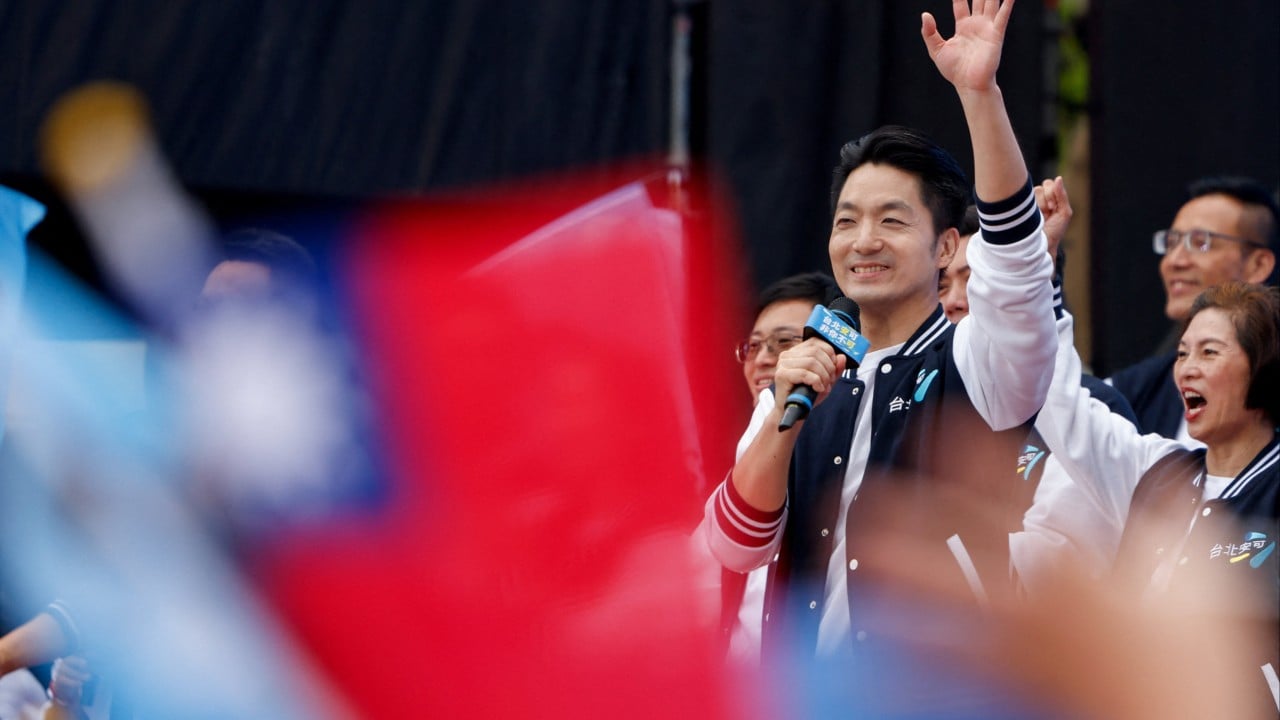
A municipal election for trash collection, bus routes, and urban renewal normally wouldn't rattle geopolitical nerves across the Taiwan Strait. Yet heading into Taiwan's November 28, 2026 local elections, the contest for Taipei City Hall has turned into an unexpected flashpoint between Taipei, Beijing, and Washington.
According to reporting from the South China Morning Post, CommonWealth Magazine, and the Global Taiwan Institute, the race between Kuomintang (KMT) incumbent Chiang Wan-an and Democratic Progressive Party (DPP) challenger Puma Shen has tightened dramatically. What political analysts once wrote off as an easy re-election for Chiang is now deadlocked. If Shen pulls off an upset and becomes the first DPP mayor of Taipei in nearly three decades, the fallout will extend far beyond city limits—potentially severing the last major institutional dialogue channel between Taiwan and mainland China.
Why a Local City Race Carries Geopolitical Weight
You might wonder how a mayor—an official who has zero legal authority over foreign policy, defense, or cross-strait affairs—can trigger regional instability. In Taiwan, Taipei isn't just another municipality.
Historically, Taipei City Hall serves as the ultimate launchpad for the presidency. Three of Taiwan's four directly elected presidents—Chen Shui-bian, Ma Ying-jeou, and Tsai Ing-wen's predecessor dynamic—either held the Taipei mayorship or used Taipei political battles to build national power. Both Chen Shui-bian (elected mayor in 1994) and Ma Ying-jeou (elected in 1998) leveraged their tenures in the capital to win the presidency.
Analysts at the Global Taiwan Institute describe the 2026 Taipei mayoral election as the "opening skirmish of the 2028 presidential election". Incumbent Chiang Wan-an, 47, is widely viewed as a rising star and a leading future presidential contender for the opposition KMT. Meanwhile, the DPP hasn't held Taipei since 1998. For President Lai Ching-te's ruling party, flipping a traditional KMT stronghold would signal a massive shift in voter sentiment ahead of the 2028 national cycle.
The Clash Over the Taipei-Shanghai Twin-City Forum
The most immediate cross-strait casualty of a DPP victory in Taipei would be the annual Taipei-Shanghai Twin-City Forum.
Ever since Beijing suspended official communication with Taiwan's central government in 2016, this municipal exchange has functioned as the single highest-profile institutionalized dialogue channel still operating across the Strait. Both sides have used it to keep low-level civic, economic, and cultural lines open while higher-level diplomacy stayed frozen.
The two candidates hold completely incompatible views on whether that bridge should stay standing:
- Chiang Wan-an's pragmatic engagement: Chiang argues that maintaining the Twin-City Forum acts as a vital buffer against miscalculation. His platform emphasizes city-to-city diplomacy as a low-tension mechanism to protect dialogue, support local businesses, and keep peace practical rather than ideological.
- Puma Shen's skepticism and exit plan: Shen has openly defended plans to end the Twin-City Forum. He argues that the exchanges aren't cost-effective and serve Beijing's broader "united front" strategy rather than delivering reciprocal benefits to Taipei residents.
If Shen wins and shuts down the forum, Beijing loses a key sub-national avenue for engagement. As Professor Chang Wu-ueh noted in CommonWealth Magazine, the suspension of the Twin-City Forum itself might be treated by Beijing as a secondary symptom—the real shock would be the symbolism of who replaced Chiang.
Why Beijing Views Puma Shen as a Red-Line Figure
To understand why Beijing is watching Taipei so closely, look at Puma Shen's background before he entered electoral politics.
Shen, 44, isn't a conventional career politician. Before becoming an at-large DPP legislator in 2024, he spent years researching Chinese cognitive warfare and information operations. He founded Doublethink Lab, an organization tracking authoritarian disinformation, and co-founded Kuma Academy, a civil defense training initiative preparing Taiwanese civilians for potential conflict.
Because of this work, China's Taiwan Affairs Office (TAO) formally designated Shen as a "diehard Taiwan independence separatist". Chinese authorities have barred him from entering mainland China, opened a police investigation against him for alleged "separatist activities," and slapped sanctions on companies linked to his family.
For Beijing, a candidate on its official blacklist winning the capital city creates an acute domestic and strategic dilemma. According to analysis published by CommonWealth Magazine, Chinese officials would struggle to explain domestically how a figure labeled an outright separatist captured Taipei—historically a Pan-Blue bastion—especially if younger voters power his victory.
How a Local Campaign Turned Into a Dead Heat
Early in 2026, few political observers gave Shen much of a shot. Even within the DPP, running for Taipei mayor was seen as a thankless uphill battle that most senior party figures avoided.
Shen flipped the script by running a campaign that intentionally sidestepped cross-strait ideology on the stump. Speaking to AFP, as reported by the Bangkok Post and Taipei Times, Shen emphasized that he is running for mayor, not president, and deliberately steered conversations toward bread-and-butter urban issues.
Instead of campaigning solely on national security, Shen pitched himself around "companionship"—addressing urban loneliness, overhauling Taipei's bus network, and advancing a long-term "Two Rivers" urban renewal plan. He leaned heavily into pop culture and anime references, like Neon Genesis Evangelion, to connect with younger voters who often feel alienated by traditional party politics.
Meanwhile, Chiang Wan-an focused on his incumbency record, highlighting his "Urban Renewal 3.0" fast-tracking initiative, tiered maternal subsidies, expanded public preschool slots, and the commercial rollout of the Taipei Dome.
Yet polling conducted before Taiwan's statutory pre-election blackout took effect on November 18 showed a dramatic tightening. Multiple surveys tracked Shen closing the gap, with a November 2 poll by the Strategy and Public Research Institute of Taiwan even showing Shen surging ahead following the candidates' first debate. Critics from the KMT camp argue that Shen's softer municipal persona masks a rigid ideological stance, while Taiwan's Mainland Affairs Council (MAC) has accused Beijing of attempting to meddle in the race through targeted sanctions and state-affiliated media attacks.
Disinformation and Interference Ahead of Polling Day
The tight margin in Taipei has also turned the city into a testing ground for information warfare.
Taiwan's National Security Bureau (NSB) warned ahead of the vote that foreign interference and intelligence-gathering efforts would likely intensify as candidates blacklisted by Beijing gained traction. Researchers at Soochow University and Taiwanese authorities have flagged a surge in deceptive social media posts designed not necessarily to convert voters directly, but to sow fatigue, emotional polarization, and institutional distrust.
Some disinformation campaigns have even used "fake support" tactics—fabricating extreme or provocative endorsements tied to Shen's campaign to alienate moderate swing voters in Taipei. At the same time, Chinese state-linked outlets and social media channels have publicly warned Taiwanese entertainers and business figures against associating with pro-DPP causes, echoing warnings seen around cultural figures like Kevin Tsai.
What Happens to Cross-Strait Ties After November 28
Regardless of who wins City Hall on November 28, the margin of victory in Taipei will shape how Beijing, Taipei, and Washington calibrate their moves heading into 2027.
If Puma Shen wins:
- Expect Beijing to freeze remaining municipal-level channels with Taipei immediately, effectively ending the Twin-City Forum for the foreseeable future.
- Chinese leadership will likely interpret the result—especially if accompanied by strong DPP showings in neighboring New Taipei or Keelung—as proof that demographic shifts among younger voters are permanently eroding KMT support.
- Increased political pressure, economic signaling, or grey-zone military activity around Taiwan could follow in early 2027 as Beijing seeks to deter the DPP ahead of President Lai's potential U.S. transits and the 2028 presidential race.
If Chiang Wan-an holds on:
- A narrow victory still sends a warning shot to the KMT. If an incumbent star struggles to fend off a challenger Beijing labels a separatist in Taiwan's traditional Pan-Blue capital, Beijing may question the KMT's ability to reclaim the presidency in 2028.
- The Taipei-Shanghai Twin-City Forum will survive, preserving a narrow diplomatic valve during a year when U.S.-China-Taiwan dynamics face heavy domestic pressures.
How to Watch the Results Like an Analyst
When returns come in after polls close at 4:00 PM Taipei time on November 28, don't just look at who wins the mayor's chair. Watch three specific metrics to gauge what comes next across the Strait:
- The vote-share margin in Taipei: A razor-thin win for Chiang (under 3 percentage points) carries almost as much political shock value for Beijing as an outright Shen victory, because it proves the DPP can compete evenly in the capital.
- Spillover into New Taipei and Keelung: Check whether the momentum around Shen lifts DPP candidates in neighboring northern cities like New Taipei, where Su Chiao-hui has also tightened the race against the KMT.
- Third-party vote collapse: Track how many voters abandon the Taiwan People's Party (TPP). Where those former TPP swing voters land in Taipei will tell you which party holds the upper hand for 2028.


