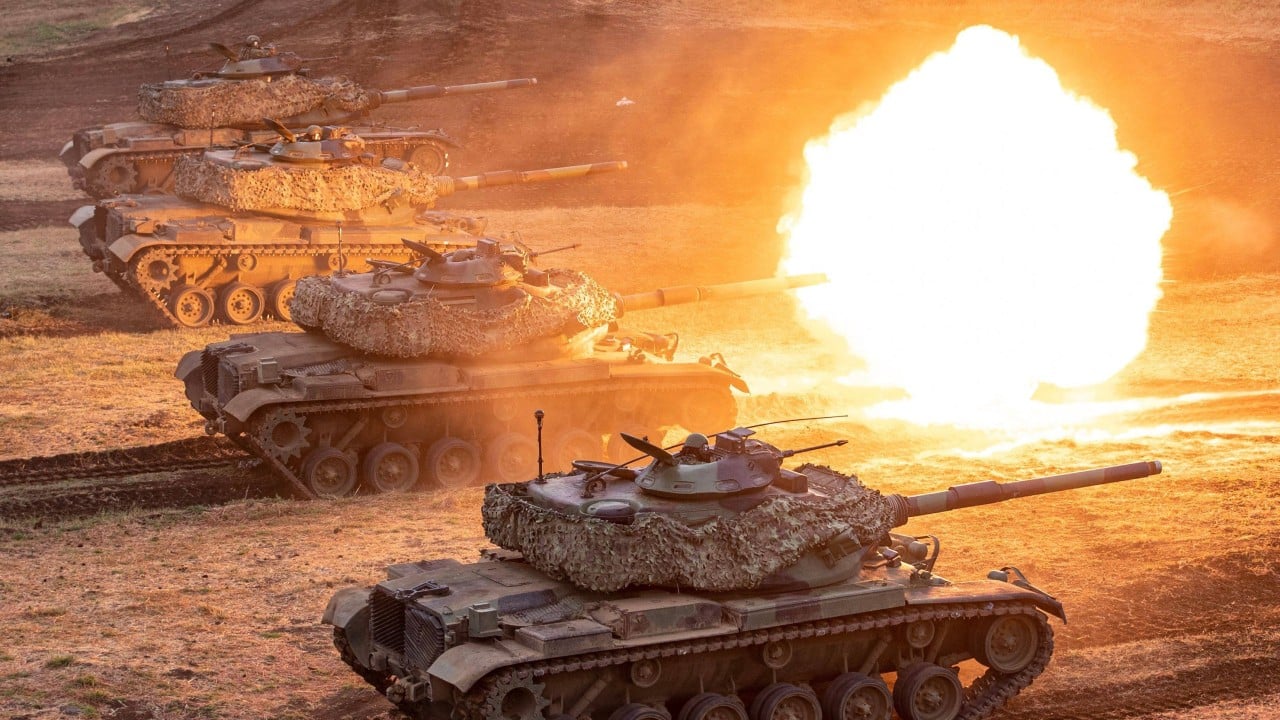
When military planners talk about a cross-strait conflict, everyone pictures a massive D-Day style amphibious invasion across the Taiwan Strait. But that vision misses reality. Beijing's most probable and dangerous first move isn't an outright invasion. It is a maritime quarantine or a full sea and air blockade designed to starve the island of energy and critical supplies without firing a single shot at a major port.
Taiwan knows this. That is why the annual Han Kuang military exercises have shifted focus. Taipei is actively hardening its infrastructure and practicing how to break a total cordon. If you enjoyed this piece, you might want to look at: this related article.
Shifting Focus From Invasion to Cordon Breaking
For decades, Taiwan trained primarily to push enemy troops back into the sea from its beaches. That script is outdated. The modern exercise design assumes Beijing wraps a chokehold around the island first.
The scenarios test how military forces, the coast guard, and civilian sectors can crack open an established blockade. You have to look at how supplies move when standard commercial shipping lines shut down. Troops practice escorting cargo vessels, rerouting vital imports through alternative lanes, and conducting at-sea transfers of raw materials. For another look on this development, check out the latest coverage from NPR.
It is messy work. Operating commercial-style logistics under simulated enemy fire forces the armed forces to adapt quickly.
Hardening the Lifelines of Energy and Tech
Energy is the island's single biggest vulnerability. Taiwan imports nearly all of its coal and natural gas. If tankers stop docking, the power grid collapses within weeks.
To counter this, recent drills integrate emergency energy management alongside military maneuvers. Authorities test decentralized power grids, hidden fuel reserves, and rapid repairs for shattered energy infrastructure.
At the same time, the drills factor in the global importance of semiconductor manufacturing. Defense planners are decentralizing tech supply chains and spreading weapons production across hidden locations. Keeping factories running while under siege means moving critical manufacturing components inland and underground.
Mobilizing Reservists and Civil Defense
Military hardware alone won't break a blockade. Society-wide resilience determines whether a population can withstand months of economic strangulation.
Taiwan's exercises now call up thousands of reservists to test brigade-level mobilization. Law enforcement and civilian agencies work side-by-side with regular troops to safeguard communication nodes and manage rations.
Civil defense isn't just a buzzword here. It involves practical drills for telecommunications blackouts, cyber defense failures, and continuous drone surveillance. When you integrate local police and civilian authorities into defense command structures, you build a much tougher target.
Beijing faces a massive gamble if it chooses the blockade route. It is never a low-cost option. It triggers immediate international escalation paths, drags in global economic fallout, and forces a high-stakes military response. Taiwan's current military drills aim to make that cost entirely prohibitive.
Briefing the Report: Wargaming a Chinese Blockade of Taiwan
This video provides a detailed breakdown from security experts regarding the strategic challenges and military scenarios involved in a potential Chinese blockade of Taiwan.
http://googleusercontent.com/youtube_content/1


