Mainstream financial press loves a clean geopolitical morality play. A head of state makes an unscripted comment about Beijing, a neighbor freezes bilateral trade talks, and suddenly every op-ed predicts a mass exodus of semiconductor capital.
That narrative is lazy, comforting, and completely divorced from how silicon actually gets built.
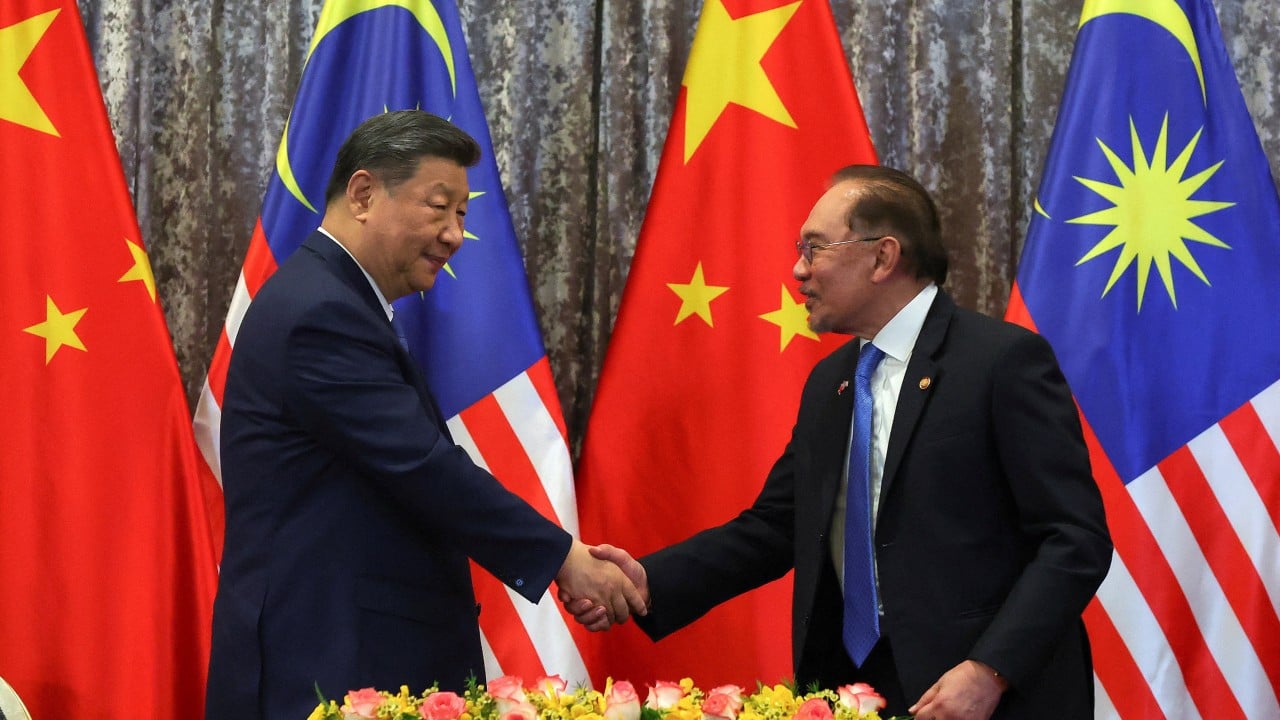
In November 2026, Taipei suspended bilateral investment negotiations with Kuala Lumpur after Malaysian Prime Minister Anwar Ibrahim stated in an Al Jazeera interview that Taiwan is "part of China, period" and implied force could be justified to prevent secession. Kuala Lumpur scrambled to reassure nervous boardrooms. Pundits immediately warned that Taiwanese chipmakers would pack up their cleanrooms and decamp for Vietnam or Thailand.
They will not. In fact, Taipei’s freeze on diplomatic talks exposes a glaring asymmetry that the financial press refuses to admit: Taiwan’s semiconductor ecosystem needs Penang far more urgently than Kuala Lumpur needs Taipei’s diplomatic validation.
The Illusion of the "Taiwan Plus One" Exit
Look at the actual numbers moving between these two economies before buying into any panic. Between January and September 2026, bilateral trade between Malaysia and Taiwan hit RM254.21 billion, with Malaysian exports to Taiwan surging 88% to RM116.58 billion. In the first seven months of the year alone, Taiwanese exports to Malaysia reached $23.35 billion—nearly half of which ($11.17 billion) consisted of integrated circuits.
You do not unwind a $23 billion supply artery because a politician gave a bad television interview.
I have watched global hardware firms burn hundreds of millions of dollars trying to relocate back-end chip operations on political whims. On paper, moving Outsourced Semiconductor Assembly and Test (OSAT) capacity from Penang to Ho Chi Minh City or Bangkok looks like a simple spreadsheet exercise. On the factory floor, it is an operational nightmare.
Why Penang Cannot Be Cloned Overnight
Advanced wafer fabrication in Hsinchu or Tainan gets all the headlines, yet a processed silicon wafer is useless until it is diced, packaged, and tested. Over the past five decades, Penang has built an irreplaceable cluster of engineering talent, tooling vendors, chemical suppliers, and logistics infrastructure dedicated specifically to OSAT and advanced packaging.
- Engineering density: Malaysia commands roughly 13% of the global back-end semiconductor assembly, testing, and packaging market. Replacing multi-generational process engineers who understand thermal dissipation and substrate warpage takes ten years, not one fiscal quarter.
- Grid and water stability: High-volume packaging facilities require uninterrupted power and ultra-pure water systems. Neighboring Southeast Asian hubs frequently touted as "alternatives" still suffer from industrial brownouts and permitting bottlenecks that ruin yield rates.
- Local procurement integration: Unlike mainland Chinese manufacturers that import their own construction crews and closed vendor networks, Taiwanese firms in Malaysia rely heavily on local builders and specialized Malaysian tooling shops. Ripping out those roots destroys project timelines.
What the Diplomatic Freeze Actually Targets
If Taiwanese chipmakers aren't leaving, why did Taiwan's Ministry of Foreign Affairs (MOFA) suspend negotiations to update a 30-year-old bilateral investment pact?
Because diplomats trade in optics while CEOs trade in physics.
Taipei’s move is a calculated warning shot aimed at middle-power capitals across Southeast Asia, not an evacuation order for ASE Technology, Siliconware Precision, or Phison. When Anwar Ibrahim went beyond Malaysia’s standard 1974 One-China policy—which recognizes Beijing without endorsing military coercion—he crossed an unspoken red line. By pausing formal talks, Taipei signaled that public alignment with Beijing’s rhetoric carries a diplomatic price tag.
Yet notice what Taipei did not do:
- It placed zero restrictions on outbound capital flows to Malaysia.
- It set no deadline or ultimatum for Kuala Lumpur to retract the statement.
- It kept back-channel economic working groups running quietly behind closed doors.
Even the Taiwanese Chamber of Commerce in Malaysia carefully framed its objection around crisis neutrality—whether Kuala Lumpur would stay out of the way during a Taiwan Strait emergency—rather than threatening an immediate divestment.
The Real Threat to Taiwanese Chipmakers in Malaysia
If you are an executive running a Taiwanese semiconductor firm with operations in Kulim or Bayan Lepas, Anwar’s interview isn't even in your top three risk factors. Focusing on diplomatic rhetoric distracts from the actual operational threats quietly building inside Malaysia's borders.
1. The Export Control Trap
Western regulators are scrutinizing Southeast Asian data centers and chip packaging hubs for gray-market diversion of restricted AI accelerators into mainland China. If a Taiwanese firm’s Malaysian subsidiary gets caught in an enforcement sweep—or if local customs enforcement appears overly accommodating to Beijing—Washington’s Bureau of Industry and Security (BIS) will revoke export privileges overnight. That compliance risk matters infinitely more than a prime minister's soundbite.
2. Severe Talent Poaching
The biggest threat to Taiwanese operations in Malaysia isn't politics; it's Western and Chinese competitors opening facilities down the street. Intel, Infineon, Micron, and mainland Chinese packaging giants are all competing for the exact same pool of Malaysian electrical engineers. Taiwanese firms under the Chung-Hua Institution for Economic Research’s "Taiwan Plus One" initiative are actively flying Malaysian graduates to Taiwan for training just to keep their local lines staffed. Walking away from Malaysia means handing your trained workforce directly to your fiercest competitors.
3. Currency and Subsidy Volatility
In 2025, Taiwanese manufacturers committed RM3.711 billion across 45 Malaysian projects largely because Kuala Lumpur’s National Semiconductor Strategy offered aggressive tax holidays, land grants, and capital incentives. Freezing the bilateral investment treaty delays modernized tax protections and dispute-resolution mechanisms—meaning Taipei’s diplomatic protest actually hurts Taiwanese firms' legal protection on the ground more than it hurts Malaysia.
Where the Contrarian Bet Breaks Down
Let's be honest about the downside of staying put. Betting heavily on Malaysia assumes that Kuala Lumpur’s political establishment separates rhetorical appeasement of Beijing from cold commercial self-interest.
That assumption holds during peacetime. It fractures during a kinetic blockade or severe sanctions regime.
Imagine a scenario where cross-strait tensions escalate into a naval quarantine, and Washington demands that allied supply chains sever all commercial nodes operating in countries deemed friendly to Beijing. In that tail-risk environment, having 30% of your packaging capacity sitting inside a jurisdiction whose leader publicly endorsed Beijing’s territorial claims becomes an existential liability.
Smart executives are not pulling out of Malaysia, nor are they pretending political risk doesn't exist. They are pricing it in.
How Semiconductor Leaders Should Actually Play This
Stop reading diplomatic press releases and start managing physical exposure. If your capital or supply chain touches the Malaysia-Taiwan corridor, execute three immediate adjustments:
- Split your advanced packaging footprint. Keep mature, high-volume OSAT lines in Penang where cost efficiency and yield stability remain unmatched. Route next-generation 2.5D and 3D chiplet packaging—the high-margin intellectual property targeted by US export controls—to facilities in Japan, the United States, or domestic Taiwanese fabs.
- Lock in multi-year local utility and vendor contracts now. Political friction makes local Malaysian officials eager to prove business continuity. Use Kuala Lumpur’s anxiety to negotiate preferential power tariffs, accelerated land approvals, and local R&D grants while government ministries are desperate for good news.
- Audit your third-party logistics and customs brokers. Strip out any freight forwarders or warehousing partners in Johor or Penang with opaque ownership ties to mainland Chinese entities. Insulate your Malaysian entity from secondary sanctions before Washington comes knocking.
Diplomats will eventually find face-saving language to unfreeze the talks, because neither side can afford a rupture. Until then, ignore the headlines—and take advantage of the discount while everyone else panics.


