Taiwan's tightening of military draft exemption standards is not an isolated administrative adjustment; it is a forced supply-side intervention designed to counteract a severe demographic contraction and close a widening operational readiness gap. By raising the physical thresholds required to avoid mandatory service—specifically recalibrating Body Mass Index (BMI) limits, height requirements, and clinical disqualification criteria—the Ministry of National Defense (MND) is attempting to extract thousands of additional active-duty personnel from a shrinking pool of eligible males. Understanding the true impact of this policy requires looking past headline recruitment projections and examining the underlying manpower supply chain, the friction of institutional absorption, and the economic trade-offs imposed on Taiwan's high-tech labor market.
The Structural Deficit Driving Taiwan's Manpower Squeeze
Every conscription system operates on a basic funnel equation: total annual male birth cohort minus medical exemptions, deferments, and alternative service allocations equals net active-duty intake. For over a decade, Taiwan's military planners have faced a dual-front erosion of this funnel. Recently making news recently: The Ghost on the French Highway (And the Forty-Year Wait for a Name).
First, the demographic denominator is collapsing. Taiwan possesses one of the lowest fertility rates globally. The birth cohorts reaching the conscription age of eighteen in the mid-2020s are significantly smaller than those of the early 2000s. When the total available cohort shrinks by double-digit percentages over a ten-year horizon, maintaining a static standing force requires either extending service duration or increasing the extraction rate from the remaining pool. Taiwan has already executed the first lever by extending mandatory conscription from four months back to one year, effective January 2024. Tightening exemption rules is the mandatory second lever.
Second, the exemption rate had drifted far beyond historical norms, creating a structural leak in the funnel. Under previous regulations, Taiwan's physical exemption rate routinely hovered above twenty percent—a figure substantially higher than comparable conscription-based democracies such as South Korea, Singapore, or Finland. A primary driver of this anomaly was the rapid upward drift in BMI thresholds. Men with a BMI exceeding 31.5 or falling below 16.5 were routinely classified as exempt or relegated to substitute service, effectively removing thousands of otherwise functional individuals from combat and combat-support billets. Additional insights into this topic are explored by The Washington Post.
By revising the physical examination standards—raising the upper BMI ceiling for exemption to 35 and tightening the lower bound to 15, while simultaneously narrowing exemptions for flat feet, myopia, and mild cardiovascular conditions—the MND is shifting its screening philosophy. The standard is moving from selecting for peak athletic baseline to filtering out only those with incapacitating clinical pathology.
The Mechanics of Exemption Tightening
To evaluate whether adding thousands of previously exempt conscripts translates into genuine combat power, one must break down the three distinct mechanisms through which the policy operates.
1. Recalibration of Anthropometric Thresholds
Height and weight standards are the easiest administrative variables to adjust because they require zero subjective clinical judgment. Under the revised framework, individuals who previously qualified for exemption due to obesity or extreme thinness are now inducted into the active force or directed into specialized conditioning programs.
The operational hypothesis behind this adjustment is straightforward: modern warfare relies heavily on logistics, drone operation, signal intelligence, and armored vehicle maintenance—roles where cognitive aptitude and technical literacy outweigh long-distance infantry endurance. However, this creates an immediate downstream burden. Inducting personnel with borderline metabolic or musculoskeletal profiles shifts the cost of physical conditioning onto military training commands. If basic training facilities lack the specialized medical oversight and progressive physical therapy infrastructure required to condition higher-BMI recruits safely, injury rates during initial entry training will spike, leading to medical discharges that erase the initial intake gains.
2. Standardization of Clinical Diagnostics
Historically, medical exemptions in Taiwan suffered from variance across regional evaluation centers and opportunistic exploitation of ambiguous diagnostic criteria. Conditions such as borderline hypertension, minor spinal curvature, and mild psychiatric symptoms offered pathways to avoid uniform service.
The updated protocol enforces stricter verification procedures, requiring longitudinal medical histories, inpatient observation for contested diagnoses, and standardized imaging benchmarks. This reduces false-positive exemptions. Yet, it introduces administrative latency. Extending the medical vetting timeline delays induction schedules, creating synchronization bottlenecks between seasonal recruitment waves and unit training cycles.
3. Reallocation of Substitute Service Quotas
Taiwan's Alternative Military Service system originally absorbed surplus conscripts during periods when the standing military lacked the capacity to train entire birth cohorts. During the four-month conscription era, thousands of draft-eligible men were routed into municipal administration, firefighting support, and corporate research positions.
By tightening physical exemptions while simultaneously shrinking alternative service quotas, the MND is consolidating manpower strictly under uniformed command. The strategic intent is to rebuild the reserve mobilization base. Under Taiwan's defense doctrine, active-duty conscripts are not merely filling peacetime guard posts; they are cycling through a one-year training pipeline to populate territorial defense brigades upon discharge. Without sufficient throughput in the active-duty pipeline, the reserve force hollows out within five years.
The Absorption Bottleneck in Military Infrastructure
Adding thousands of conscripts to the induction ledger solves an accounting problem, not a capability problem. In military operations, raw manpower is an unrefined input; combat effectiveness is the output. Between the two lies the institutional absorption capacity of the armed forces, which is currently constrained by three operational bottlenecks.
The Non-Commissioned Officer (NCO) Ratio Deficit
Conscripts require high-ratio supervision during their first six months of service. Taiwan's military has struggled for years to retain mid-level career NCOs and junior officers—the exact demographic responsible for squad-level instruction, equipment maintenance, and live-fire safety. Injecting thousands of additional draftees into the training pipeline without a proportional increase in experienced cadre dilutes instructional quality. When instructor-to-trainee ratios degrade, training defaults to low-risk, repetitive administrative tasks rather than complex combined-arms maneuvers.
Equipment and Range Throughput Limits
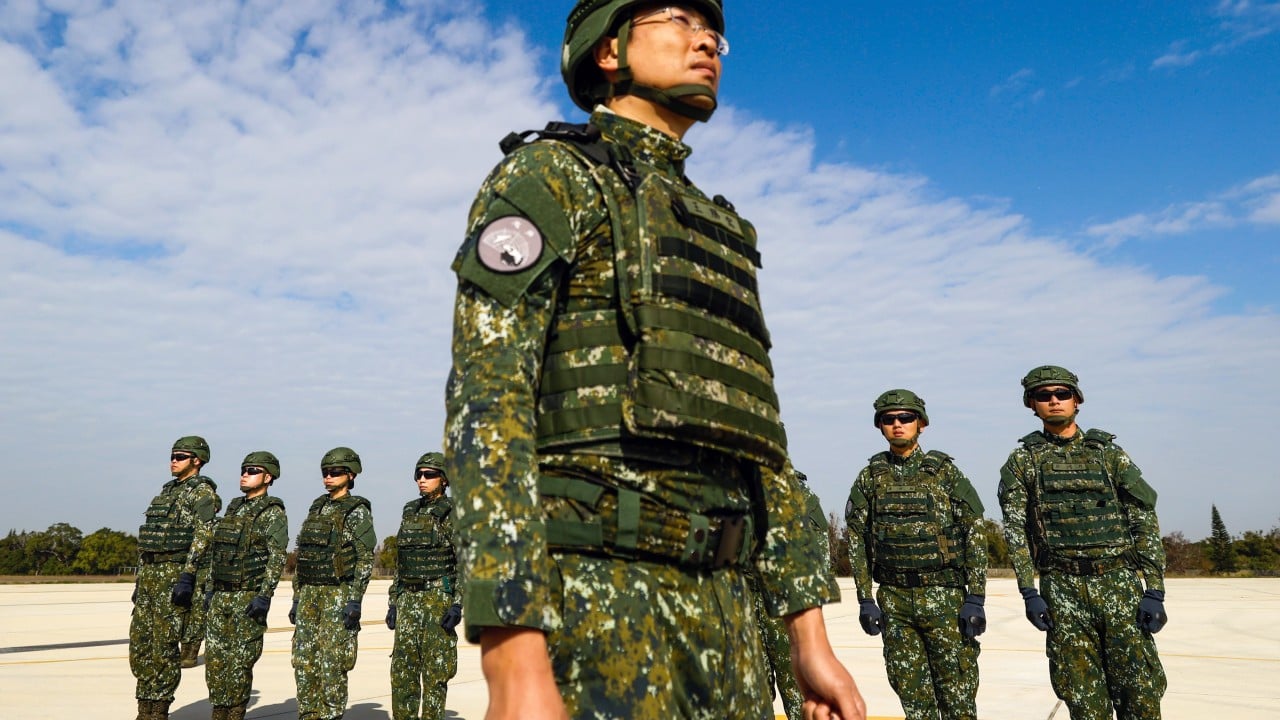
A one-year conscription model combined with higher intake volumes places immense strain on physical training infrastructure. Taiwan is a densely populated island with severe geographic constraints on live-fire artillery ranges, maneuver grounds, and urban combat training facilities. Furthermore, modernizing the conscript experience requires issuing contemporary personal protective equipment, modern optics, and tactical communications gear. If newly inducted personnel are issued legacy equipment due to procurement backlogs, the psychological and operational value of the extended service term diminishes rapidly.
Integration of Marginal Physical Profiles
When an organization lowers its physical entry barrier to capture the marginal tail of a demographic cohort, operational complexity increases nonlinearly. Commanders must segregate training tracks, modify physical fitness assessments, and manage higher baseline medical utilization. Without dedicated administrative staff to manage these accommodations, line officers spend a disproportionate share of their duty hours handling medical waivers and light-duty profiles rather than conducting tactical readiness exercises.
Economic Friction and Opportunity Cost Analysis
From a macroeconomic perspective, conscription is a direct tax-in-kind levied on the labor market. For Taiwan, whose global strategic relevance is anchored in its dominance of advanced semiconductor manufacturing and precision electronics supply chains, tightening draft exemptions carries a measurable opportunity cost.
Taiwan's technology sector already faces an acute structural talent shortage, driven by the same demographic contraction affecting the military. The engineering graduates and technical specialists entering the workforce in their early twenties are the exact cohort targeted by the expanded draft.
Under the previous regime, individuals with minor medical exemptions or those routed into corporate research alternative service could enter the private sector immediately upon graduation, contributing to R&D cycles and capital formation. By pulling thousands of these individuals into uniformed service for a full year, the state delays their entry into the high-productivity civilian workforce.
While the macroeconomic impact of removing several thousand young workers per year from a labor force of roughly eleven million appears modest in aggregate terms, the friction is concentrated in specific technical bottlenecks. Furthermore, the psychological friction of mandatory service—combined with geopolitical anxiety—creates secondary incentives for high-achieving students to pursue overseas university degrees, contributing to long-term human capital flight if those graduates choose not to return before their draft eligibility expires at age thirty-six.
Evaluating the Strategic Trade-Offs
To understand the limitations of Taiwan's manpower strategy, it is necessary to compare its approach against established defense economics principles. Force structure design always involves a trade-off between mass (total personnel available for attrition-heavy territorial defense) and quality (highly trained, career professionals operating complex weapon systems).
| Dimension | High-Exemption / Short-Term Model (Pre-2024) | Tightened-Exemption / One-Year Model (Current) |
|---|---|---|
| Primary Strategic Goal | Cost minimization; political palatability; reliance on small volunteer core | Mass generation; territorial defense saturation; reserve pipeline replenishment |
| Induction Screening | Selective; high medical attrition; broad BMI and clinical exclusions | Inclusive; narrow clinical exclusions; absorbs borderline physical profiles |
| Training Burden | Low; basic familiarization only; minimal strain on NCO cadre | High; requires full-cycle infantry/specialist training and medical conditioning |
| Civilian Labor Impact | Minimal disruption; rapid transition from education to private sector | Moderate friction; one-year delay in technical talent pipeline entry |
| Reserve Quality | Low; rapid skill decay; weak unit cohesion | Moderate-to-High, provided cadre ratios and equipment sustainment scale |
The table illustrates a fundamental reality: Taiwan has abandoned the volunteer-centric force model because demographic and geopolitical realities rendered it mathematically unviable. A purely volunteer force cannot generate the sheer infantry mass required to hold urban terrain, guard critical infrastructure against sabotage, and absorb casualties in a high-intensity blockade or amphibious contingency.
However, tightening exemptions is subject to the law of diminishing marginal returns. The first wave of newly eligible conscripts—those who missed the previous cutoffs by narrow BMI margins or minor, correctable conditions—represents a net gain in usable manpower. Subsequent waves, captured by scraping deeper into borderline clinical categories, yield rapidly declining operational utility per dollar spent on training, housing, and medical care.
Strategic Imperatives for Force Optimization
Simply expanding the draft net will not secure Taiwan's deterrence posture unless the MND pairs intake expansion with structural reforms inside the training and reserve apparatus. To convert higher induction numbers into credible combat capability, defense planners must execute four operational adjustments:
- Implement Role-Based Physical Tiering: Eliminate the uniform physical standard for initial entry and replace it with tiered occupational tracks. Conscripts inducted under relaxed BMI or musculoskeletal criteria should be systematically routed into cyber defense, unmanned aerial vehicle (UAV) piloting, air defense radar operation, and supply chain logistics immediately following a condensed, low-impact basic orientation. Attempting to force higher-BMI recruits through traditional light-infantry conditioning wastes training weeks and inflates injury rates.
- Outsource Non-Core Garrison and Administrative Duties: Free up scarce career NCOs by transferring routine base security, facility maintenance, and administrative logistics to civilian contractors or specialized municipal guard units. Every career NCO removed from administrative overhead and placed into a conscript training brigade directly increases the tactical competence of the incoming draft cohort.
- Establish Pre-Induction Conditioning Programs: Address the anthropometric bottleneck before day one of active duty. The MND should partner with municipal sports centers to offer voluntary, subsidized physical conditioning and nutritional programs for draft-eligible youth whose BMI falls outside optimal ranges. Incentivizing recruits to meet baseline fitness metrics prior to induction—perhaps through minor stipends or preferred branch selection—reduces military medical overhead and accelerates unit readiness.
- Synchronize Reserve Assignments with Civilian Technical Skills: Prevent human capital waste by mapping conscripts' civilian academic and technical backgrounds directly to their reserve mobilization billets. An electrical engineer or telecommunications technician drafted under the tightened rules should not spend twelve months as a basic rifleman only to be assigned to an unspecialized reserve infantry battalion. Aligning civilian expertise with specialized military occupational specialties ensures that the economic opportunity cost paid by the private sector yields an asymmetric technological advantage for the defense establishment.
Taiwan's decision to narrow draft exemptions is an unavoidable tactical response to demographic decline. Yet manpower volume alone is a lagging indicator of military strength. The ultimate success of the reform will not be measured by how many thousands of additional men pass through the induction centers, but by whether the defense bureaucracy can adapt its training, medical, and organizational systems to turn an increasingly diverse physical cohort into a disciplined, cohesive reserve force.