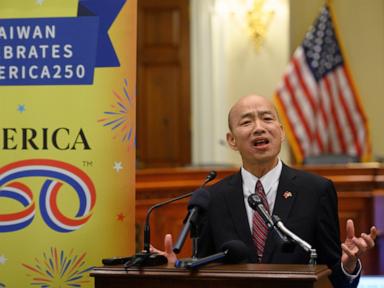
Capitol Hill just gave a massive welcome to Taiwan's legislative leader, Han Kuo-yu. More than 30 House representatives, including Speaker Emerita Nancy Pelosi and Representative Michael McCaul, crowded into a reception at the Longworth House Office Building. They wanted to send a loud message. Taiwan has friends.
But behind the handshakes and the standard political theater, a much bigger game is playing out. This visit happens right as the Trump administration reviews a massive $14 billion arms sales package for the island. It's a deal that already passed preliminary congressional hurdles, but it faces a bumpy road ahead. If you enjoyed this piece, you might want to check out: this related article.
If you think this is just another dry diplomatic meeting, you're missing the real story. This is about cutting-edge microchips, defense gridlock, and an island nation fighting severe international isolation.
The Chip Factory Connection
Before landing in Washington, Han and his eight-person cross-party delegation stopped in Phoenix, Arizona. Why Arizona? Because that's where Taiwan Semiconductor Manufacturing Co., better known as TSMC, is building massive new factories. For another look on this event, check out the recent coverage from The Guardian.
These factories will make the highly advanced processors that run everything from smartphones to the massive server farms powering the global artificial intelligence boom. Without TSMC, the American tech economy hits a wall. Han used a striking image during his trip, saying these tech hubs are like a drop of butter that will attract more Taiwanese businesses to American soil like ants climbing a tower.
Taiwan has quietly grown. The island of 23 million people just surpassed Germany to become America's fourth-largest trading partner in goods. Tech hardware drives that engine. Washington's interest in protecting Taiwan isn't just about abstract democratic ideals. It's about protecting the global supply chain.
Weapons and the Bargaining Chip Dilemma
The $14 billion arms package sits at the center of current tensions. By American law, specifically the Taiwan Relations Act, Washington must give the island what it needs to defend itself. But the political reality is messy.
President Trump has openly suggested that these arms sales could serve as a bargaining chip in broader trade negotiations with Beijing. That comment sent shockwaves through Taipei. Members of Congress are moving fast to push back against that logic. Representative Lloyd Doggett spoke out directly at the Washington reception, stating plainly that Taiwan is not a bargaining chip but an island of freedom.
The delay in weapon shipments is a known pain point. While the U.S. promises hardware, actual delivery times lag behind schedule. Leaders like Senate Republican John Thune have pushed to make Taiwan as prickly as possible against potential aggression, but the physical weapons must actually arrive to make that happen.
Fighting an Unseen Loneliness
The most vulnerable moment of the visit came during Han's speech to U.S. lawmakers. Han belongs to the KMT, Taiwan's opposition party, which often favors more cautious dialogue with Beijing. Yet, his message in Washington highlighted a deep, shared national anxiety.
Han admitted that on the international stage, Taiwan feels very lonely in its heart.
Because of Beijing's fierce diplomatic pressure, only 12 governments in the world officially recognize Taiwan's statehood. International bodies like the World Health Organization bar Taiwan from participating. Han used his time on Capitol Hill to explicitly ask American lawmakers to help the island gain more international space and participate in global activities.
What This Means Moving Forward
For everyday citizens and observers, watching what happens next with bilateral agreements is key. Beyond the massive military hardware packages, the real economic glue lies in smaller legislative steps. Right now, Taiwanese officials are heavily pushing for the completion of a double taxation agreement. The House of Representatives already moved it forward, and the focus shifts to whether the Senate will do the same.
This agreement matters because it removes tax barriers for businesses operating across both regions, making it cheaper and easier for Taiwanese tech firms to expand inside American states.
Keep an eye on the actual delivery dates of that $14 billion weapons backlog. The public statements of support from lawmakers are great for morale, but concrete policy depends on whether those defense systems actually get loaded onto transport ships. Han's return trip on Friday marks the launch of a new nonstop flight between Washington Dulles and Taiwan Taoyuan International Airport. It's a fitting metaphor. The political and economic lines between these two capitals are getting shorter, whether Beijing likes it or not.
This video breaks down the strategic landscape surrounding Taiwan's defense policies and the ongoing debates over American arms sales: US Senate Leader Vows Support for Taiwan Defense