The Structural Deficit in Modern Wildfire Suppression
Wildfire mitigation models across Southern Europe operate on a fundamentally flawed economic trajectory. Traditional wildfire prevention relies heavily on mechanized brush-clearing, controlled burns, and chemical herbicides to manage understory fuel loads. These methods present three operational friction points: extreme capital expenditure per hectare, high carbon output, and an inability to access steep or densely vegetated terrain. Mechanized masticators and tractors require stable topography, leaving the most vulnerable high-risk zones—rocky slopes, protected wetland margins, and dense scrub—unmanaged.
The accumulation of volatile dry vegetation (e.g., Ulex, Cistus, and unmanaged grasses) creates a continuous fuel bed. When ambient temperatures spike and relative humidity drops, this unmanaged understory serves as a thermal ladder, elevating ground fires into catastrophic canopy fires.
To interrupt this trajectory, biomass removal must occur continually prior to peak fire seasons. Targeted biological fuel reduction using equines—specifically donkeys (Equus asinus)—offers an asymmetric alternative to mechanized clearing, altering the cost-per-hectare equation while optimizing fuel-break maintenance in high-friction terrain.
The Biological Fuel Reduction Matrix: A Comparative Analysis
The operational deployment of domestic livestock for vegetation management is often grouped under the generic umbrella of "conservation grazing." However, significant physiological and mechanical differences exist between bovine, caprine, ovine, and equine grazers.
                                BIOMASS REMOVAL
                                       │
            ┌──────────────────────────┴──────────────────────────┐
            ▼                                                     ▼
     Caprine / Ovine                                       Equine (Donkeys)
┌───────────────────────┐                             ┌───────────────────────┐
│ • Selective Browsing  │                             │ • Bulk Biomass Intake │
│ • Low Physical Impact │                             │ • Trampling / Structural│
│ • Higher Satiety Rate │                             │   Breakdown           │
└───────────────────────┘                             │ • Broad Dietary Scope │
                                                      └───────────────────────┘
The functional advantage of Equus asinus over traditional alternatives such as goats (Capra hircus) or sheep (Ovis aries) relies on three biological mechanisms:
1. Daily Intake Volume and Volumetric Efficiency
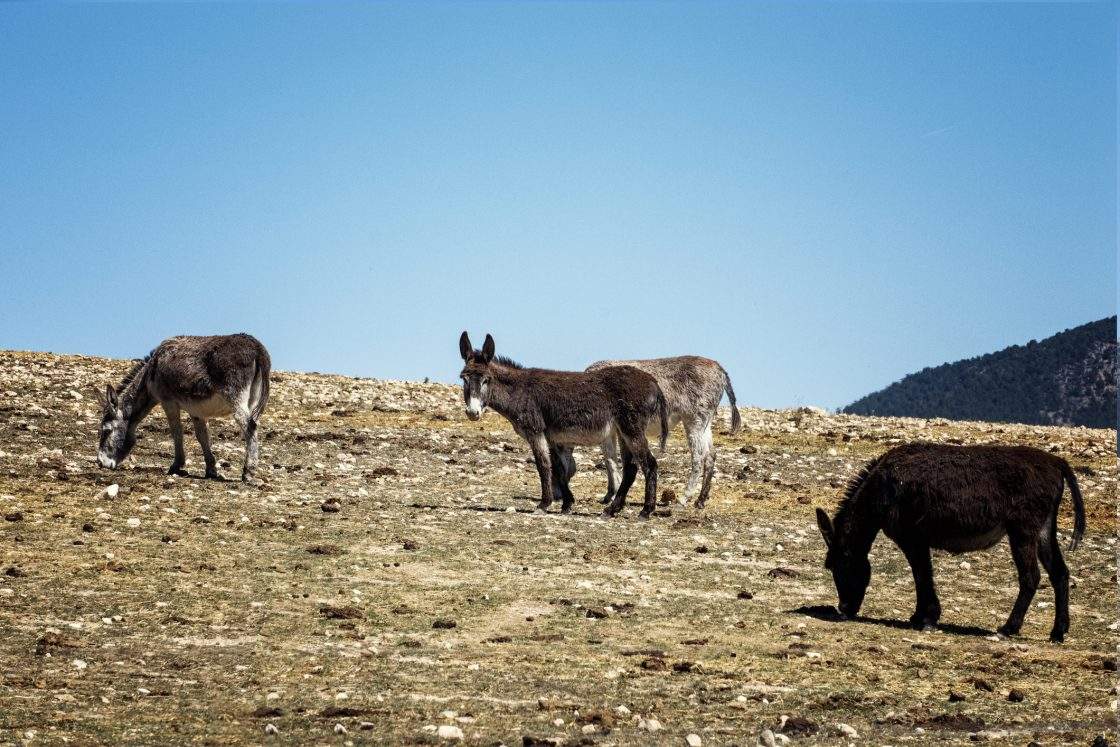
A standard working donkey weighs between 200 and 300 kilograms. Due to a hindgut fermentation digestive system rather than a ruminant four-chambered stomach, donkeys process fibrous material more rapidly. While a goat selectively consumes soft leaf tissue and broadleaf weeds, a donkey consumes coarse, lignified, high-cellulose material—including dry brush, thorny scrub, and fibrous grasses—that ruminants reject. A single adult donkey consumes approximately 2.5% to 3.0% of its body weight in dry matter daily, yielding a volumetric fuel removal rate up to ten times greater by mass than that of standard caprine units.
2. Mechanical Structural Disruption
Fuel continuity is as dangerous as fuel volume. Vertical and horizontal continuity allows fire to spread rapidly. Donkeys exert double the ground pressure of smaller livestock. As they move through dense scrubland, their physical weight snaps dry branches, flattens tall grass stands, and creates trampled micro-firebreaks. This structural disruption breaks the horizontal continuity of the fuel bed, effectively lowering potential flame length even in areas where biomass is not entirely ingested.
3. Terrain Penetration and Low-Impact Logistics
Heavy machinery requires roads, creates soil compaction, and risks sparking fires through metal-on-rock contact during dry months. Donkeys operate with zero spark risk, require no fossil fuels, and navigate slopes exceeding 30 degrees. This allows deployment directly inside sensitive ecosystems—such as Andalusian wetland perimeters or national park buffer zones—where heavy machinery is legally prohibited or operationally non-viable.
The Operational Model: The Doñana Protocol
The empirical benchmark for equine biological fuel reduction is documented in the buffer zones surrounding Spain's Doñana National Park, where an 18-donkey unit managed by the non-profit El Burrito Feliz has operated continuously since 2014.
┌────────────────────────────────────────────────────────────────────────┐
│                        DAILY OPERATIONAL CYCLE                         │
├────────────────────────────────────────────────────────────────────────┤
│ 07:00 ──► Deployment to Grid (Rotational Fencing, 40m x 15m Sector)   │
│ 07:00 - 14:00 ──► Active Grazing & Trampling (20-30L Water / Donkey)   │
│ 14:00 ──► Grid Extraction & Welfare Audit (GPS / Weight Tracking)      │
└────────────────────────────────────────────────────────────────────────┘
The framework utilizes a rotational, high-density, short-duration grazing strategy designed to maximize fuel removal while preventing overgrazing and soil erosion.
- Spatial Allocation: Grazing is restricted using mobile, temporary solar-powered perimeter fencing. The team isolates target sectors measuring approximately 40 meters by 15 meters along designated firebreaks.
- Temporal Duration: Operational hours are strictly limited to early morning windows (typically 07:00 to 14:00) from March through November, avoiding peak midday heat and minimizing stress on the animals.
- Hydration and Metabolic Support: Each working unit requires an operational supply of 20 to 30 liters of water per animal per day. Supplementary minerals are provided to offset deficiencies in dry scrub diets.
- Density Management: A deployment ratio of 18 to 20 donkeys per designated sector ensures that dense understory scrub is reduced to safe thresholds within precise timeframes, converting a volatile fuel source into metabolically processed waste.
The structural impact of this operational model is straightforward: the target perimeter maintained by these units in the Doñana buffer zone experienced zero catastrophic wildfire ignitions or unchecked lateral burn spreads across nine consecutive operational years.
Economic and Scaling Bottlenecks
While biological fuel reduction demonstrates strong efficacy at the localized level, scaling equine grazing frameworks across regional forestry networks exposes clear systemic constraints. The strategy is an optimization tool for strategic zones, not a universal replacement for forestry management.
Capital Allocation vs. Operational Maintenance
The initial cost of acquiring and training rescued or domestic donkeys is negligible compared to purchasing heavy forestry masticators. However, the operational cost curve of livestock management shifts over time:
- Labor Requirements: Machine clearing is capital-intensive but low-labor per hectare once equipment is deployed. Equine grazing is highly labor-intensive, requiring constant human oversight, transport, fence rotation, and veterinary care.
- Yield Scaling: Machine clearing achieves immediate, deterministic results across large areas in short windows. Equine grazing achieves continuous, long-term maintenance but scales linearly with herd size, introducing diminishing marginal returns as herd transportation costs rise across fragmented landscapes.
Ecological Risk Factors
Unmanaged equine grazing introduces ecosystem risks. Overgrazing can destroy native seed banks, promote soil compaction along heavily trafficked tracks, and accelerate the spread of invasive botanical species via digestive endozoochory (seed dispersal through manure). The strategy requires active botanical monitoring to ensure that grazing intensity strictly targets opportunistic fuel vegetation without stripping foundational topsoil cover.
Strategic Implementation Framework
To deploy equine biological fuel reduction effectively within municipal or regional fire management programs, forestry directors must execute a three-stage integration plan:
- Topographical and Fuel Mapping: Identify high-risk interface zones (Wildland-Urban Interfaces, nature reserve boundaries, and steep ravines) where machine access is impossible and ignition probability is high. Exclude areas with protected native flora susceptible to non-selective grazing.
- Hybrid Deployment Scaling: Deploy heavy machinery for primary, high-volume biomass clearing along primary access corridors. Immediately follow with mobile equine units to perform continuous maintenance, preventing the fast-growing understory from re-establishing continuous fuel beds.
- Institutional Labor Integration: Partner with regional animal rescue organizations or pastoral cooperatives to lower capital costs, utilizing municipal forestry budgets to fund herding personnel, mobile fencing infrastructure, and veterinary oversight.
By shifting the strategic view of grazing animals from a traditional rural novelty to an operational asset in public safety infrastructure, regional governments can stabilize fuel management costs, maintain critical firebreaks in inaccessible terrain, and build resilience against increasing seasonal wildfire risks.