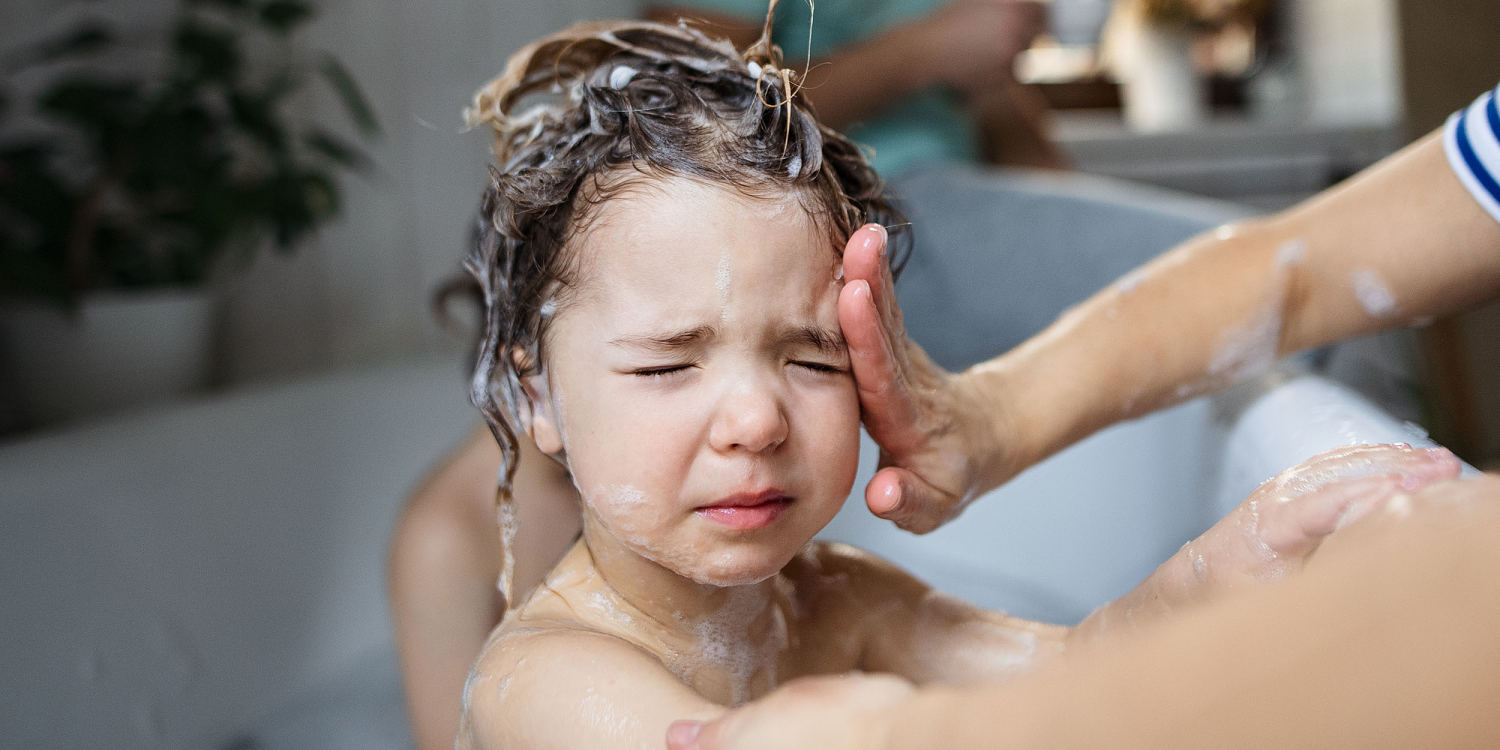
Every "10 Best Shampoos for Kids" list on the internet is reading from the exact same lazy script.
You have seen the formula. A roundup of pastel bottles stamped with cartoon bears, accompanied by glowing promises of "plant-derived gentleness," "tear-free formulas," and "hypoallergenic peace of mind." They tell you to buy a bottle with chamomile extract, pat yourself on the back for avoiding sulfates, and move on. You might also find this connected coverage insightful: The Quiet Exhaustion of Viva México (And What We Build in the Silence).
They are wrong. And if your child still comes out of the tub with a red, flaking scalp, itchy patches behind their ears, or screaming about stinging eyes despite the massive "TEAR-FREE" badge on the front of the bottle, those listicles are the reason why.
I have spent years formulating personal care products and auditing ingredient decks for brands that spend millions convincing parents that "gentle" means "weak." The truth is far less comforting. Most mainstream kids' shampoos are engineered to pass a corporate focus group, not to protect a developing skin barrier. As reported in latest articles by The Spruce, the implications are widespread.
If you want to stop irritating your child's skin and eyes, you do not need another top-ten list of cute bottles. You need to understand the chemistry of how surfactants, pH levels, and preservatives actually interact with pediatric biology.
The "Tear-Free" Lie You Bought Into
Let us dismantle the biggest myth in the baby aisle first.
When a bottle claims to be "tear-free," what do you think that means? Most parents assume the formula is so pure and gentle that it mimics pure water.
In reality, achieving a "tear-free" claim usually requires one of three chemical tricks, and two of them are terrible for sensitive skin.
First, formulators manipulate the pH level. Healthy human skin—including your child's scalp—has an acid mantle with a pH between 4.5 and 5.5. This acidity keeps the skin barrier tight, locks in moisture, and prevents pathogenic bacteria from colonizing. Human tears, however, sit at a neutral pH of roughly 7.0 to 7.4. To stop a shampoo from stinging the eyes, chemists raise the pH of the entire bottle to match human tears.
Think about what happens when you pour a pH 7.4 liquid over a pH 4.8 scalp. You temporarily neutralize the acid mantle. The outer lipid barrier swells, cracks, and loses water. You saved your kid's eyes for thirty seconds, only to give them chronic dry scalp and eczema flare-ups for the next three days.
Second, brands use micelle enlargement. Surfactants are cleansing agents that trap oil and dirt in microscopic spheres called micelles. Tiny micelles penetrate the cornea easily and trigger pain receptors. To prevent this, chemists blend harsh anionic surfactants with amphoteric surfactants (like cocamidopropyl betaine) or large polymers to make the micelles too bulky to penetrate eye tissue. The detergent is still there. It is still stripping lipids from the scalp. It just cannot fit into the eye's nerve endings fast enough to make your kid cry during a quick rinse.
Third—and most egregious—some legacy formulas rely on trace numbing agents or heavy ethoxylated surfactants that dull corneal sensitivity. Your child's eyes are still being irritated; they just cannot feel it happening in real time.
Why "Natural" and "Plant-Derived" Are Usually Worse
Walk down any drugstore aisle and look at the "clean" kids' brands. They love to brag about being sulfate-free, paraben-free, and packed with botanical extracts.
Here is what the American Contact Dermatitis Society and practicing pediatric dermatologists actually see in the clinic: botanical extracts and essential oils are among the leading causes of allergic contact dermatitis in children.
Lavender oil. Chamomile extract. Calendula. Citrus peel oil. Tea tree oil. These sound like ingredients from an apothecary fairy tale, so parents slather them onto compromised skin. In truth, plant extracts are complex mixtures of dozens of volatile organic compounds. Lavender alone contains linalool and limonene, which oxidize upon exposure to air and become potent skin sensitizers.
When you apply essential oils to a child whose skin barrier is already thin—children's epidermis is roughly 20% to 30% thinner than an adult's, with smaller corneocytes and less natural moisturizing factor—you are practically begging their immune system to mount an allergic response.
Even worse is the "preservative-free" or "clean preservative" trap. Water-based shampoos grow bacteria and mold within days without a preservation system. When brands ditch traditional, well-studied preservatives like parabens to appease clean-beauty bloggers, they replace them with alternatives that have terrible track records for irritation.
For years, that replacement was methylisothiazolinone (MI), a compound so fiercely allergenic it was named Allergen of the Year by the American Contact Dermatitis Society in 2013 and subsequently banned or heavily restricted in leave-on products across the globe. Today, many "natural" kids' brands rely on high concentrations of phenoxyethanol, sodium benzoate (which requires a very specific acidic pH to work, often causing stinging), or essential oil blends that trigger immediate contact urticaria.
A synthetic, single-molecule, hypoallergenic formula is vastly safer for a reactive child than a cocktail of twenty organic flower waters. Nature is not benign. Poison ivy is 100% plant-derived.
The Sulfate Scapegoat and the Real Surfactant Culprits
Every competitor article tells you to avoid Sodium Lauryl Sulfate (SLS) and Sodium Laureth Sulfate (SLES). They treat sulfates like toxic waste while praising "gentle coconut-derived cleansers."
This is half-baked chemistry.
Yes, straight SLS is an aggressive irritant. It is literally used in dermatological patch testing as the standard positive control to intentionally induce skin inflammation. No competent chemist puts pure SLS in a modern kids' shampoo anyway.
The problem is what replaced it. When brands slap "Sulfate-Free" on the label, they almost always turn to Cocamidopropyl Betaine (CAPB) as a primary or secondary surfactant. Look at the back of almost every "gentle" kids' shampoo in your bathroom right now. You will see it in the top five ingredients.
CAPB is derived from coconut oil, which lets marketers call it "natural." Yet CAPB was named Contact Allergen of the Year in 2004 because the manufacturing process leaves behind impurities—specifically amidoamine and dimethylaminopropylamine (DMAPA). Unless a brand pays top dollar for ultra-purified, pharmaceutical-grade CAPB, those residual impurities sit in the bottle and cause eyelid dermatitis, scalp redness, and stinging eyes.
If you want true mildness, you do not look for "sulfate-free." You look for acyl glutamates, glucosides (like decyl glucoside or lauryl glucoside, though even these can occasionally trigger reactions in rare cases), or sodium cocoyl isethionate. These surfactants have large molecular weights, minimal protein-denaturing potential, and leave the skin's lipid bilayer intact.
Answering the Questions Parents Are Actually Asking
Let us look at the standard questions parents type into search engines at 11 PM after bath time turns into a disaster, and give you the unvarnished answers the industry avoids.
What is the absolute best shampoo for a kid with sensitive skin and eczema?
Stop shopping in the kids' aisle. Seriously. Walk over to the adult dermatological skincare section—brands like Vanicream, CeraVe (specifically their fragrance-free baby or derm lines), or Mustela Stelatopia. Kids' shampoos are formulated for fragrance appeal, lather, and shelf aesthetics. Dermatological washes are formulated to minimize transepidermal water loss. If a bottle has a cartoon character on it, you are paying for licensing fees and synthetic fruity esters, not barrier repair.
Why do tear-free shampoos still burn my child's eyes?
Because "tear-free" is not a regulated FDA claim. There is no federal standard defining what makes a product tear-free. Brands use internal corporate testing—historically the Draize test on rabbits, now replaced by in vitro corneal tissue models or human panel testing—to decide if a product stings "acceptably little." If your child has dry eyes, allergies, or simply gets a concentrated dollop of shampoo directly onto the cornea before dilution, any surfactant will disrupt the tear film's lipid layer and cause burning.
How often should I actually wash my child's hair?
Far less than the bottle tells you to. Before puberty, children do not have active, androgen-driven sebaceous glands pumping out heavy sebum. Their scalps produce very little oil. Washing a toddler's or seven-year-old's hair every single day with surfactant-based shampoo is completely unnecessary unless they literally rolled in mud or chlorine. Over-washing is the primary driver of pediatric scalp irritation. Once or twice a week with a proper cleanser is plenty; rinse with plain lukewarm water on the other days.
Are tear-free shampoos safe if my kid swallows bathwater?
In trace, diluted amounts, yes—the surfactants will pass through the digestive tract with minimal absorption, though large amounts can cause mild gastrointestinal upset or diarrhea due to osmotic effects. The bigger issue is inhalation of foamy water, which can irritate airways. Still, the presence of synthetic dyes (Red 40, Yellow 5, Blue 1) added strictly to make kids' shampoo look like neon slime serves zero functional purpose and adds unnecessary chemical exposure.
The Contrarian Playbook for Tear-Free, Irritation-Free Bath Time
If you throw out the ten bottles recommended by parenting blogs and adopt a chemist's approach to washing your child's hair, everything changes. Here is how you actually solve the problem.
1. Audit the Ingredient Deck by Order of Concentration
Ingredients are listed in descending order of weight down to the 1% threshold. Everything below 1% can be listed in any order.
- The First Ingredient: Must be Aqua (Water).
- Ingredients 2 through 4: This is the surfactant engine. Look for Sodium Cocoyl Glutamate, Disodium Cocoyl Glutamate, Sodium Lauroyl Methyl Isethionate, or Decyl Glucoside.
- The Red Flags: If you see Parfum/Fragrance, Lavandula Angustifolia, Citrus Limon, or Methylisothiazolinone anywhere on the label, put it back. Even "naturally derived fragrance" is a cocktail of undisclosed allergens.
2. Force a pH Compromise Through Technique
Since a truly skin-healthy shampoo sits around pH 5.0 (which will sting if it gets into a pH 7.4 eye), you cannot rely on the bottle's chemistry to protect the eyes. You have to rely on mechanical dilution and barrier physics.
Before applying shampoo, saturate the hair completely with lukewarm water—never hot water, which strips sebum instantly. Dispense a dime-sized amount of shampoo into your hands and emulsify it with water into a lather before it ever touches your child's head. Pouring raw, concentrated surfactant directly onto the crown of the head creates localized chemical burns on sensitive scalps and guarantees concentrated runoff into the eyes.
3. Use the Visor or the "Look at the Ceiling" Rule—Not Chemical Numbing
Instead of buying a compromised pH 7.4 shampoo that ruins the scalp just to prevent eye sting, use a skin-acidic pH 5.0 cleanser and physically block the eyes. A soft silicone bath visor costs eight dollars and eliminates 100% of eye contact without requiring you to compromise your child's skin barrier with alkaline detergents. Alternatively, keep a dry washcloth immediately within reach so your child can press it over their closed eyes during the ten-second rinse.
4. Ditch the "2-in-1" Shampoo and Conditioner Hybrids
Kids' 2-in-1 products are a formulation nightmare. Shampoo is designed to lift dirt and rinse away; conditioner is designed to deposit cationic polymers (like polyquaterniums or silicones) onto the hair shaft to reduce friction. Combining them forces chemists to use heavy suspending agents and complex polymer networks that leave a film on the scalp. That residue traps sweat, dead skin cells, and environmental pollutants, leading to follicular irritation and "cradle cap" recurrence in older kids. Use a pure, simple cleanser, and if your child has curly or tangle-prone hair, apply a separate, fragrance-free conditioner strictly from the mid-lengths to the ends—never on the scalp.
The Honest Downside of Doing This Right
If you switch to a fragrance-free, pH-balanced, ultra-mild dermatological cleanser, you need to brace yourself for a few trade-offs.
First, it will not lather like a cartoon bubble bath. Big, dense foam is a visual trick created by cheap, aggressive surfactants like SLS and low-grade CAPB. True mild surfactants produce a thin, creamy, low-profile lather. Parents often mistake low foam for low cleaning power and end up using three times as much product, which defeats the purpose. Trust the chemistry; foam does not clean hair—micelles do.
Second, your kid's hair will not smell like synthetic strawberries or ocean breeze. It will smell like nothing. If you associate "clean" with artificial perfume, the transition feels sterile at first. You have to decide whether you care more about your child smelling like a candle or having an intact skin barrier.
Third, if it gets in their eyes, it will hurt. Because you are choosing a formula respected by dermatologists (pH ~5.0) rather than one engineered by marketers (pH ~7.4), you are prioritizing long-term scalp health over momentary corneal comfort. You actually have to pay attention while rinsing.
Stop outsourcing your child's skin health to cartoon packaging and affiliate-link listicles. Read the back of the bottle, respect the acid mantle, ditch the botanical irritants, and wash their hair half as often as you do right now.