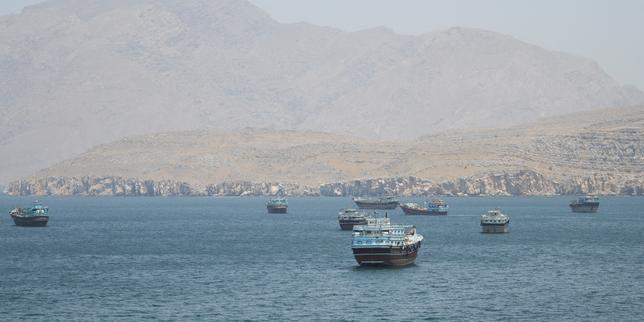
Iran is testing the limits of international law and global patience by claiming the right to filter traffic through the Strait of Hormuz based on a nation’s wartime status. This assertion transforms a vital maritime artery into a political faucet. By declaring that only ships from countries "not at war" with the Islamic Republic may pass, Tehran is not just issuing a naval directive. It is signaling a shift toward a total-pressure strategy designed to force the West into a corner. The immediate result is a spike in insurance premiums and a renewed sense of panic among global energy traders who rely on the twenty million barrels of oil that transit this narrow waterway every single day.
The Strategy of Selective Sovereignty
The Strait of Hormuz is not a private driveway. Under the United Nations Convention on the Law of the Sea (UNCLOS), the right of transit passage is nearly absolute for international shipping. Iran, however, has long maintained a nuanced legal stance, having signed but never ratified the 1982 treaty. They prefer the older 1958 Geneva Convention, which offers more leeway for "innocent passage"—a standard that allows a coastal state to suspend transit if it deems the cargo or the vessel’s intent a threat to its security.
Tehran is now weaponizing this legal ambiguity. By framing the passage of merchant vessels as a conditional privilege rather than a right, they are creating a "gray zone" conflict. This is a classic move from the Iranian playbook. They avoid a direct kinetic confrontation with a superior naval power like the United States Fifth Fleet, instead choosing to squeeze the global economy. Every time a commander in the Islamic Revolutionary Guard Corps (IRGC) mentions closing the Strait or "filtering" ships, the market reacts. It is psychological warfare with a trillion-dollar price tag.
The nuance in the latest statement—focusing on countries "at war" with Iran—is a deliberate provocation directed at Israel and its allies. It attempts to redefine "hostility" to include sanctions or intelligence sharing. If Tehran decides that a nation is functionally at war with them because of economic restrictions, they grant themselves the internal justification to seize tankers or harass destroyers.
The Physical Reality of the Choke Point
Geography is the one thing diplomacy cannot change. At its narrowest, the Strait of Hormuz is only about 21 miles wide. The shipping lanes themselves are even narrower, consisting of two-mile-wide channels for inbound and outbound traffic, separated by a two-mile buffer zone.
Managing this traffic is a logistical nightmare even in peacetime. When you introduce the threat of fast-attack IRGC boats, naval mines, and shore-to-ship missiles, the risk profile becomes untenable for commercial operators.
- Vulnerability of Tankers: A modern Very Large Crude Carrier (VLCC) is a massive, slow-moving target. It cannot maneuver quickly to avoid a swarm of small boats.
- The Mine Threat: Simple, bottom-moored mines are cheap to deploy but incredibly difficult and time-consuming to clear. Even the rumor of a minefield can shut down the Strait for weeks.
- Shore-Based Batteries: Iran has spent decades lining its rugged coastline with mobile missile launchers. These are hidden in hardened silos or caves, making them difficult to eliminate in a single strike.
The Iranians know they do not need to sink a fleet to win. They only need to make the cost of transit high enough that the world’s largest shipping conglomerates—Maersk, MSC, Hapag-Lloyd—decide the route is too dangerous. We have seen this play out in the Red Sea with the Houthi rebels. Iran is now signaling that it can execute the same strategy on a much larger, more devastating scale at the mouth of the Persian Gulf.
The Fragility of the Energy Market
The global energy supply chain is a lean, just-in-time machine. It has very little "slack" for a disruption of this magnitude. Roughly 20% of the world’s liquid petroleum passes through Hormuz. While some pipelines exist through Saudi Arabia and the UAE to bypass the Strait, they lack the capacity to handle the full volume of Gulf exports.
If the IRGC begins stopping ships to "verify" their war status, the delay alone will cause a supply shock. Crude oil prices would likely gap up by $20 to $30 a barrel in a matter of hours. This isn't just about the price at the pump in Los Angeles or London; it’s about the cost of plastic production in China and the heating of homes in the European Union.
Investors often underestimate the "insurance" factor. When a region is declared a war zone, war-risk premiums for shipping vessels skyrocket. These costs are passed directly to the consumer. Even if not a single shot is fired, the mere rhetoric of "selective passage" acts as a shadow tax on the global economy.
The Failure of International Deterrence
For years, the mantra of the international community has been that closing the Strait of Hormuz is a "red line." The United States has repeatedly stated it will take military action to ensure the free flow of commerce. Yet, Iran’s recent boldness suggests they no longer view this threat as an immediate deterrent.
This shift in perception stems from the fragmented nature of modern geopolitics. Tehran is banking on the fact that China, its largest oil customer, will exert pressure on the West to avoid a hot war. By involving China in the economic fallout, Iran creates a shield for itself. They are betting that the U.S. is too distracted by conflicts in Ukraine and the Levant to open a third front in the Gulf.
The Limits of Naval Escorts
One might suggest that the solution is simple: escort every tanker with a destroyer. In reality, the numbers do not add up. There are hundreds of transit movements through the Strait every month. No navy in the world, including the U.S. Navy, has the hull count to provide a permanent "shotgun" for every commercial vessel.
Operation Prosperity Guardian in the Red Sea has already strained Western naval resources. Expanding that model to the Persian Gulf would require a massive redistribution of assets from the Indo-Pacific, a move that Washington is loath to make given the rising tensions in the South China Sea.
The Legal Trap
Iran’s claim is a sophisticated trap. If they stop a ship and the West does nothing, the principle of "freedom of navigation" is effectively dead in the region. If the West intervenes militarily to free a seized vessel, Iran uses that "aggression" to justify a full closure of the Strait, citing self-defense.
They are forcing their adversaries into a binary choice: accept a new Iranian-controlled maritime order or risk a global depression caused by an energy shutdown.
The rhetoric coming out of Tehran is not a slip of the tongue. It is a calculated assessment of the current global power vacuum. They are testing the structural integrity of the post-WWII maritime rules-based order. If the international community continues to respond with strongly worded letters rather than a coherent maritime security strategy, the Strait of Hormuz will cease to be an international waterway and will instead become a tool of Iranian foreign policy.
The "filter" Iran is proposing is a sieve through which only those who bow to their regional hegemony may pass. This is no longer a localized dispute over territory or fishing rights. It is a direct challenge to the fundamental mechanics of global trade. Shipowners are currently looking at their charts and seeing a narrowing window of safety. The longer this posture remains unchallenged, the more permanent the "temporary" restrictions become.
The reality on the water is changing faster than the diplomacy on the land. Those waiting for a formal declaration of war to take this threat seriously are ignoring the fact that, in the minds of the IRGC, the conflict has already begun. The Strait is the frontline, and the cargo is the hostage.