Stand in the snack aisle of any grocery store on a Tuesday evening and hold a foil wrapper up to the fluorescent light. Squint. Turn your head slightly so the glare does not blind you to the six-point font crowded along the back seam. You came in looking for something quick between a late shift and a soccer practice or a gym session, something that promised energy, wellness, or lean muscle on the front of the package. Instead, you are reading chemistry homework. Dipotassium phosphate. Tocopherols. Soy protein isolate. Palm kernel oil.
Exhausting. You might also find this similar story useful: What Happens When Foreign Money Buys an Indian Bank.
I have stood in that exact aisle hundreds of times, my thumb rubbing the crinkle of a wrapper while my stomach grumbled and my patience wore thin. If you have ever felt a quiet spike of frustration—or a cold knot of suspicion—when a "healthy" snack reads like a lab inventory, you already understand half the story of why RXBAR became a six-hundred-million-dollar phenomenon. You do not need an MBA to feel the friction of being marketed to with big promises and tiny, unreadable fine print.
To make sense of how two friends turned a shoestring ten-thousand-dollar start in 2013 into a six-hundred-million-dollar acquisition by Kellogg just four years later in 2017, we have to look past the headline numbers. Six hundred million sounds like an overnight lottery ticket, a neat little rocket ship of startup lore. In reality, it was the payoff of a collision between a broken trust economy and a wrapper bold enough to say the quiet part out loud. As discussed in latest reports by Harvard Business Review, the results are significant.
The Aisle Where Everyone Shouts and Nobody Trusts
Walk down a supermarket aisle and every package is screaming. Keto. Paleo. High-protein. Zero sugar. Pure. Natural. Each word is a megaphone aimed at a tired buyer who just wants to know whether a snack is real food or edible cardboard dressed up in fitness jargon.
For decades, packaged food giants operated on a simple rhythm: engineer shelf stability and palatability in a food lab, dress the front in aspirational health claims, and tuck the actual ingredient list into an out-of-the-way corner where consumers rarely linger. It worked remarkably well until smartphones put search engines in everyone's pocket and skepticism became muscle memory. Shoppers started flipping packages over. They started asking a dangerous question: if this bar is so wholesome, why does it need twenty-two ingredients to hold together?
Consider a hypothetical shopper—let's call her Maya, a physical therapist grabbing a post-clinic snack between appointments. She is not a food scientist. She does not want to spend twelve minutes decoding emulsifiers while her car sits idling in the lot. When she picks up a bar that promises "whole-food nutrition" on the front and lists refined syrups and isolates on the back, she feels tricked. Not robbed of twenty dollars—robbed of time and trust.
That erosion of trust is the invisible stake underneath the RXBAR story. When people feel misled by labels, every brand on the shelf pays a tax in doubt. The company that removes that doubt does not just sell a snack; it hands the buyer back a sense of agency.
Ten Thousand Dollars and a Basement Reality
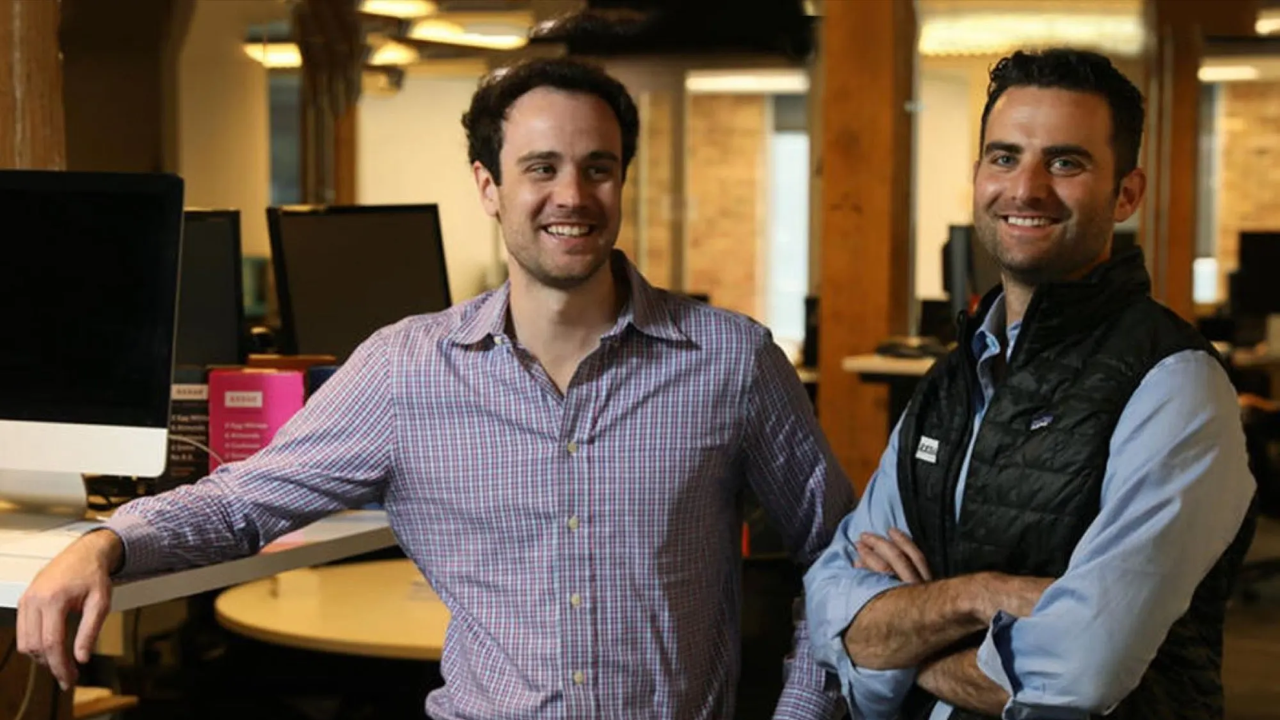
In 2013, Peter Rahal and Jared Smith started RXBAR with roughly ten thousand dollars. Ten thousand dollars in the consumer packaged goods world is a rounding error. Commercial food manufacturing demands minimum order quantities, compliance testing, packaging runs, freight, and retail slotting fees that can swallow ten grand before you even print a clean label.
Operating out of a basement in the early days meant doing everything by hand and improvising around every bottleneck. You learn quickly what matters when cash is tight and margins will not forgive waste. Every dollar spent on a flashy ad campaign is a dollar not spent on almonds, egg whites, dates, or getting a batch safely out the door.
The founders' core insight was almost disarmingly simple: stop hiding behind buzzwords on the front of the wrapper and put the truth right where people look first. Instead of claiming "high protein" or "all natural" in giant type while burying ingredients in microscopic print, RXBAR put a stark, straightforward list of real ingredients front and center. Egg whites. Dates. Almonds. Cashews. Sea salt. No B.S.
Look at how counterintuitive that was in 2013. Conventional marketing wisdom told founders to lead with benefits—what the product would do for you—and treat ingredients as technical details. RXBAR flipped the sequence. It led with what the product actually is, letting the shopper decide if those ingredients matched what their body wanted.
Think of it like a chef walking out of the kitchen with a plate and telling you plainly what is on it, rather than a salesperson handing you a glossy brochure full of adjectives. If you like what is on the plate, you eat. If you don't, you move on without feeling played.
Why Honesty Scales When Hype Stalls
Many startups chase growth by adding complexity: new flavors every month, clever slogans, elaborate origin stories, endless variations until even loyal customers cannot tell one SKU from another. Honesty works differently. When a promise is clear, specific, and verifiable, it travels cleanly by word of mouth.
One friend tells another friend at a running club or a cross-training gym: "Hey, try this bar—it's literally just egg whites, dates, and nuts, and it actually tastes like real food." Notice what happens in that exchange. The recommender does not have to recite a marketing pitch. The ingredient list is the pitch. Every time someone reads the front of the wrapper, the brand speaks in its own plain voice without needing a middleman to translate.
There is also a quieter psychological reward for the buyer. Choosing a product with a short, recognizable ingredient list feels grounded. In a culture where food advice swings wildly from one fad to another—low-fat in one era, high-fat in another, carb-phobic one year and macro-obsessed the next—simple whole ingredients offer a steady anchor. You may not agree with every nutrition trend on the internet, yet almost everyone recognizes almonds, cashews, dates, and egg whites.
Still, simplicity on the label does not mean simplicity behind the scenes. Sourcing quality ingredients consistently, scaling production without losing texture or flavor, and keeping retail shelves stocked across thousands of stores take relentless operational grit. Going from ten thousand dollars and basement hustle to national distribution in four years requires an engine that can handle rapid volume without breaking down.
The Four-Year Sprint to a Six-Hundred-Million-Dollar Exit
By 2017—just four years after starting with ten thousand dollars—Kellogg agreed to acquire RXBAR for six hundred million dollars.
Six hundred million. Say that number slowly and compare it to ten thousand. Four years. One basement start; one legacy food giant stepping in with a massive check.
Why would a titan like Kellogg pay six hundred million dollars for a four-year-old snack bar maker? Legacy conglomerates face a classic dilemma. They have massive distribution networks, supply chain scale, and shelf presence across North America, yet younger shoppers increasingly view traditional packaged brands as legacy relics. Buying a fast-growing, high-trust challenger brand lets a giant acquire authentic momentum and modern consumer connection rather than trying to invent it from scratch inside a corporate committee.
For RXBAR's founders, the deal marked a staggering return on a modest initial stake—a milestone that proved a scrappy, transparent brand could command serious institutional valuation in a short window.
Yet a six-hundred-million-dollar acquisition also introduces a tension that every founder and every loyal customer watches closely. When a fierce, independent challenger joins a massive corporation, the stakes shift from survival to stewardship. Can the straightforward spirit that made the brand magnetic survive inside a giant machine built for efficiency and scale? Will the ingredients stay clean? Will the voice stay sharp?
Those are not abstract questions for buyers. They are the exact questions people ask every time a favorite independent brand gets bought out. A buyout can give a product wider reach and steadier supply, or it can slowly smooth away its sharp edges until it feels like everything else on the shelf.
What This Story Really Means for the Rest of Us
If you only take away "start with ten thousand dollars, sell for six hundred million in four years," you miss the deeper lesson sitting right in front of you. That framing treats the exit as the entire point of the story, reducing four years of hustle and customer trust to a single financial trophy.
The real lesson is about friction and clarity. Modern consumers are tired of being deciphered, nudged, and marketed to with clever half-truths. Whether you are buying a snack bar, choosing a software tool, or building a business of your own, clarity cuts through noise faster than cleverness ever will.
And honestly, it is okay to admit how confusing the modern marketplace can be. Even people who read labels carefully get tripped up by clever phrasing, shifting health claims, and conflicting advice. You do not need to become a nutritionist or a Wall Street analyst to spot when someone is hiding behind jargon—you just have to notice how the offer makes you feel. When a brand respects your intelligence enough to tell you plainly what you are getting, it earns something far more durable than a click or a single impulse buy.
Next time you reach into a bag or stand under those grocery store lights with a snack in your hand, pause for two seconds before tossing it in your cart. Look at what is actually there. Notice what is missing.
Sometimes the boldest move in a crowded room is simply saying what is true, right out loud, where everyone can see it.