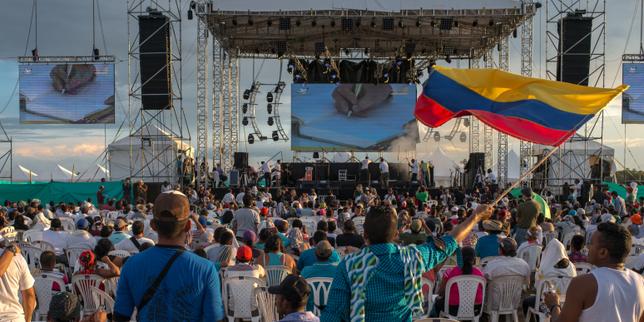
Ten years after the Colombian government and the Revolutionary Armed Forces of Colombia (FARC) signed the 2016 peace accord in Havana, the promised era of rural stability has largely collapsed into a fragmented, violent standoff. While the pact successfully demobilized roughly 13,000 guerrilla fighters and drastically reduced political violence in major urban centers like Bogotá and Medellín, the state failed to fill the power vacuum left behind in the countryside. Today, a volatile patchwork of FARC dissidents, the National Liberation Army (ELN), and heavily armed drug cartels controls vast stretches of territory, leaving millions of rural Colombians trapped in a cycle of extortion, forced displacement, and selective assassination.
The core premise of the 2016 agreement was simple on paper. Guerrillas would lay down their arms, transform into a legitimate political party, and submit to a specialized transitional justice system. In exchange, the Colombian state would invest billions of dollars into neglected rural infrastructure, redistribute land to poor farmers, and replace illicit coca crops with legal agricultural alternatives. Meanwhile, you can read similar developments here: The Operational Architecture of Pentagon Restrictions on Canadian Defense Ties.
It did not work out that way.
To understand why the Colombia peace accord failed to deliver lasting security, you have to look at the mechanics of territorial control in the Andes and the Amazon basin. For over five decades, the FARC functioned as the de facto government in dozens of remote municipalities. They built roads, settled property disputes, taxed local commerce, and regulated the coca economy. When the guerrillas marched into demobilization zones in early 2017, they left behind an administrative and military void. To explore the complete picture, check out the excellent article by Al Jazeera.
Bogotá was supposed to step into that void immediately with soldiers, police, judges, teachers, and agricultural engineers. Instead, the state arrived late, underfunded, or not at all.
The Mechanics of a Vacuum
In criminal economics, nature abhors a vacuum even more violently than physics does. Within months of the FARC’s disarmament, armed competitors moved into the abandoned territories to claim the lucrative coca fields, illegal gold mines, and Pacific smuggling corridors.
This was not a random outbreak of banditry. It was a predictable, structural failure of implementation. Under the administration of President Iván Duque, which took office in 2018 after campaigning heavily against the deal, funding for key pillars of the accord stalled. The Comprehensive Rural Reform—arguably the most critical component of the entire agreement—became bogged down in bureaucratic red tape and political hostility.
Without functioning roads to get legal crops like cacao, coffee, or plantains to market, rural farmers faced a brutal mathematical reality. Transporting a ton of legal produce over mud tracks cost more than the crop was worth at the nearest municipal market. Meanwhile, buyers for cocaine paste arrived directly at the farm gate with cash in hand.
The crop substitution program, known as the PNIS, further eroded trust in the state. Nearly 100,000 peasant families signed up in good faith, uprooting their coca plants in exchange for promised government stipends and technical assistance to transition to legal farming. In thousands of cases, the payments were delayed for months or years, and the technical support never materialized. Left destitute and exposed, many farmers had no choice but to replant coca or abandon their land entirely.
The Rise of the Dissidents and the New War
When the peace deal was signed, a small fraction of FARC commanders refused to demobilize, rejecting the terms of the agreement from day one. Over the past decade, those isolated holdouts have metastasized into powerful, well-funded insurgent armies.
Groups like the Estado Mayor Central (EMC) and the Segunda Marquetalia—the latter led by Iván Márquez, the FARC’s former chief peace negotiator who took up arms again in 2019—now command thousands of fighters. Unlike the old FARC, which maintained a strict ideological hierarchy and centralized command structure, these dissident factions operate much like transnational criminal syndicates. They franchise violence, form tactical alliances with Mexican cartels, and prioritize illicit profit over Marxist-Leninist doctrine.
At the same time, the ELN, Colombia’s last remaining traditional guerrilla army, capitalized on the FARC’s exit to expand its footprint along the Venezuelan border and the Pacific coast. And in the north, the Clan del Golfo—a heavily armed neo-paramilitary cartel descended from right-wing death squads—consolidated control over key trafficking routes to Central America.
For the civilians living in regions like Cauca, Catatumbo, Putumayo, and Arauca, the distinction between these armed actors is largely academic. What matters is that the rules of survival have become exponentially more chaotic. Under the old FARC, locals knew who was in charge and what the rules were, however brutal. Today, multiple armed groups fight block-by-block and valley-by-valley for dominance. A farmer who complies with the extortion demands of one group risks execution by its rival the following week.
The Slaughter of Social Leaders
Perhaps the grimest metric of the accord’s unraveling is the systematic murder of community organizers, Indigenous authorities, environmental defenders, and former FARC combatants. Since November 2016, more than 1,600 social leaders and over 400 demobilized guerrillas have been assassinated.
These killings are rarely random. Armed groups target community leaders specifically because they represent an alternative source of local authority. When a village leader organizes a cooperative to replace coca, defends Indigenous land rights against illegal mining, or lobbies the central government for a local clinic, they directly threaten the criminal economy. Eliminating them decapitates civil society and ensures the population remains compliant.
Despite repeated pledges from Bogotá, protection schemes run by the National Protection Unit (UNP) have proven woefully inadequate. Assigning a bulletproof vest and a cell phone to a community activist in a region without reliable cellular service—and where armed fighters ride past on motorcycles with assault rifles—offers little actual defense. Impunity remains the norm, with the intellectual authors of these assassinations rarely facing trial.
Transitional Justice Under Fire
If there is a bright spot in the ten-year ledger, it is the work of the Special Jurisdiction for Peace (JEP), the transitional tribunal created to investigate war crimes committed by both the FARC and state security forces.
Over the past decade, the JEP has achieved something unprecedented in modern conflict resolution. For the first time, senior FARC commanders have sat face-to-face with their victims in public hearings, admitting to mass kidnappings, forced recruitment of children, and systematic sexual violence. Simultaneously, high-ranking Colombian military officers have confessed to their roles in the false positives scandal—the extrajudicial execution of more than 6,400 innocent civilians who were dressed up as guerrillas to inflate body counts during the height of the war.
Yet even the JEP is struggling under the weight of political polarization and operational limits. Victims’ groups have expressed growing frustration over the slow pace of restorative sentencing. Ten years after the guns were supposed to fall silent, not a single top FARC commander or military general has begun serving the restorative sanctions mandated by the court. Critics on the political right continue to frame the tribunal as a mechanism of impunity that allowed war criminals to walk free and take seats in Congress, while segments of the political left argue the state has used the justice system selectively to target former insurgents while shielding high-level political accomplices.
The Total Peace Gamble
When Gustavo Petro took office in 2022 as Colombia’s first leftist president, he promised to rescue the 2016 accord and expand it into an ambitious policy called Total Peace. The strategy aimed to negotiate simultaneous ceasefires and disarmament deals with every major armed group in the country, from the ELN to the FARC dissidents and the Clan del Golfo.
Four years into that experiment, the results have been sobering. Rather than reducing violence, poorly monitored bilateral ceasefires allowed armed groups to catch their breath, recruit new fighters, and expand their territorial reach without fear of military offensive operations.
In regions like Cauca, the EMC used ceasefire periods to build fortified positions, tax local populations, and attack Indigenous communities, forcing the government to suspend the truce and resume military bombardments. Talks with the ELN have repeatedly stalled over the group’s refusal to abandon kidnapping for ransom and extortion, highlighting a fundamental flaw in the government's approach. You cannot negotiate a political peace with organizations whose primary organizational DNA is criminal revenue extraction.
What the Data Actually Shows
Strip away the diplomatic rhetoric and political spin, and the numbers tell a stark story about Colombia ten years post-accord:
- Coca Cultivation: According to United Nations Office on Drugs and Crime (UNODC) monitoring, coca cultivation in Colombia has reached historic highs, surpassing 250,000 hectares—significantly more than existed when the peace deal was signed in 2016. Improved farming techniques and higher-yield seeds mean potential cocaine production has soared even faster than acreage.
- Forced Displacement: Tens of thousands of people continue to be driven from their homes every year due to clashes between armed groups, alongside widespread "confinements," where entire villages are trapped in place by landmines and threats of violence.
- Land Redistribution: Out of the three million hectares of land promised to landless peasants under the 2016 accord, only a small fraction has actually been titled and delivered. Land inequality remains one of the highest in Latin America, leaving the root socioeconomic driver of the conflict entirely intact.
- Urban vs. Rural Divide: For residents of Bogotá, Cartagena, or Medellín, life is undeniably safer than it was during the dark days of the late 1990s and early 2000s, when car bombs and highway kidnappings were routine. That urban tranquility has created a dangerous political complacency, allowing elites in the capital to treat the ongoing bloodshed in the provinces as a distant, peripheral nuisance rather than an existential national crisis.
The Hard Truth About Ending an Insurgency
The overarching lesson of Colombia’s troubled decade is that signing a peace treaty does not end a war; it merely changes the terrain on which the struggle is fought. The 2016 Havana accord was widely hailed by international diplomats as the most comprehensive, victim-centered peace agreement in modern history. Its architects thought of everything—gender equity, ethnic rights, environmental protection, rural electrification, and transitional justice.
What they underestimated was the capacity—and willingness—of the Colombian state to execute its own promises. A peace deal is only as strong as the institutions tasked with enforcing it. When a government signs a contract with insurgents to transform the countryside, and then starves those programs of funding, political capital, and security guarantees, the result is not peace. It is simply a reorganization of the battlefield.
Until Bogotá builds permanent, accountable state institutions in its forgotten peripheries—providing real roads, functioning courts, and physical protection for rural citizens—the 2016 accord will remain a blueprint for a country that still does not exist.