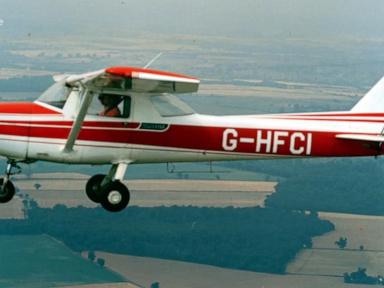
The air at nine thousand feet does not forgive hesitation. Inside the cramped cabin of a light aircraft, the world shrinks to a symphony of mechanical vibrations: the steady thrum of the Lycoming engine, the rhythmic clicking of the altimeter, and the low hiss of the ventilation valves. To a student pilot, these sounds are a comforting barrier against the vast, empty sky. They mean the machine is working. They mean everything is normal.
Then comes the sudden, violent rush of wind.
It takes less than three seconds for a routine training flight to transform into a psychological crucible. Imagine sitting in the left seat, your hands lightly resting on the yoke, waiting for the next instructional critique from the experienced pilot beside you. Instead, you hear the latch of the cabin door snap open. The slipstream roars into the cockpit, scattering charts and ripping the breath from your lungs. Before your brain can process the sheer absurdity of the visual, the right seat is empty.
The door slams shut, or perhaps it stays unlatched, banging against the fuselage like a broken shutter in a storm. The silence that follows is not peaceful. It is heavy, suffocating, and absolute.
Every year, thousands of aspiring aviators take to the sky to master the art of flight. They learn the physics of lift, the geometry of a traffic pattern, and the strict protocols of emergency checklists. But no manual prepares a novice for the sudden disappearance of their lifeline. When an instructor exits an aircraft midair, they leave behind more than an empty seat. They leave a vacuum of authority, forcing a student to bridge the immense gap between a learner and a survivor in a single, terrifying heartbeat.
The Illusion of the Safety Net
We rely inherently on the presence of experts. Whether it is a doctor in an operating room, a captain on a ship, or a flight instructor guiding a Cessna through a steep turn, their presence forms an invisible psychological safety net. When we learn, we operate under the assumption that someone will catch us if we slip. This mental cushion allows the brain to focus on fine motor skills and procedural memory without being paralyzed by the existential dread of the drop below.
Flight training relies entirely on this dynamic. The instructor is the quiet guarantor of survival. They watch the airspace, monitor the gauges, and maintain a hidden hand near the dual controls, ready to nudge the aircraft back into alignment if the student overcorrects.
When that presence vanishes, the psychological shockwave is instantaneous. The brain experiences a profound systemic failure. The immediate instinct is disbelief. The mind rejects the reality of the empty seat because accepting it means acknowledging a terrifying truth: you are entirely, completely on your own.
Consider the mechanical reality of the situation. A light aircraft is highly sensitive to weight distribution. The sudden loss of a passenger causes the plane to roll and pitch unexpectedly as the aerodynamics adjust to the missing mass. The student is thrust into an immediate physical battle to stabilize the aircraft, even as their heart rate spikes and adrenaline floods their bloodstream, narrowing their vision to a frantic blur.
The true danger in these moments is not the mechanical state of the airplane. The airplane wants to fly. Aerodynamic design naturally favors stability. The real enemy is panic. Panic is a cascade of irrational choices, a frantic clawing at the controls that can stall an aircraft or send it into an unrecoverable dive. To survive, the student must execute a brutal act of mental triage. They must compartmentalize the horror of what they just witnessed and focus exclusively on the instruments glowing on the panel before them.
The Longest Distance in the Sky
The radio dial becomes the only connection to the living world. Turning the frequency to the local air traffic control tower is an act of desperation, a reach across the ether for a human voice.
Air traffic controllers are trained for crises, but their monitors display only green blips and altitude readouts. They cannot see the wide eyes of the student, the sweat slicking the yoke, or the empty right seat. When the distress call comes in—a cracking, trembling voice uttering the words "Mayday"—the entire airspace changes. Commercial airliners are held in patterns. Ground traffic stops. The controller’s voice becomes the new anchor, replacing the instructor who was there just moments prior.
But a voice over a radio cannot fly the plane.
The controller can read checklists, cross-reference coordinates, and offer words of steady encouragement, but the physical execution remains entirely in the hands of the novice. The distance between the tower and the cockpit feels like thousands of miles. Every adjustment of the throttle, every degrees of bank, and every trim change must be executed by someone who, perhaps only hours earlier, was still struggling to maintain a consistent altitude during a basic level turn.
The transition from student to commander is usually a celebrated milestone, marked by the traditional cutting of the solo pilot's shirt tail. It is a slow, earned progression. In an emergency of this magnitude, that progression is compressed into milliseconds. There is no time to mourn, no time to wonder why the instructor chose to end their life, and no time to contemplate the physics of the fall. There is only the airspeed indicator, the horizon, and the runway miles ahead.
The Architecture of the Descent
Landing an airplane is an exercise in controlled falling. You are intentionally degrading the aircraft's energy, balancing lift and drag to meet the asphalt at the precise moment the wings can no longer support the weight. Doing this alone for the first time under ideal conditions is nerve-wracking. Doing it while wrestling with acute psychological trauma is an extraordinary feat of human resilience.
As the aircraft aligns with the runway centerline, the world slows down to a series of critical checkpoints.
- Airspeed check: Too fast, and the plane will balloon over the runway, bouncing violently or running out of tarmac. Too slow, and the airflow over the wings detaches, sending the aircraft into a sudden stall.
- Glide path alignment: Evaluating the visual angle of the runway, ensuring the approach is neither too steep nor too shallow.
- Wind correction: Crabwise adjustments to counter the invisible crosswinds pushing the fuselage off course.
The ground rushes up with terrifying velocity. To someone sitting in a cockpit, the runway changes from a distant gray sliver into a massive, concrete wall expanding across the windshield. The natural human instinct is to pull back, to get away from the hard earth. But the pilot must resist this urge, letting the plane settle, holding the nose off the ground until the main gear kisses the surface.
When the tires finally chirp against the asphalt, the crisis does not instantly end. The aircraft is still moving at freeway speeds, a mass of aluminum and fuel that requires careful braking and rudder control to keep from veering into the grass. Only when the throttle is pulled back to idle, the mixture cut, and the propeller spins to a dead stop does the true weight of the event settle into the cabin.
The Silence on the Ground
Emergency vehicles swarm the aircraft, their red and blue lights reflecting off the metal wings. First responders open the door, expecting to find a seasoned aviator or a routine mechanical failure. Instead, they find a student pilot who has just performed the most difficult maneuver in aviation under conditions that would test the resolve of an airline captain with decades of experience.
The physical survival is achieved, but the psychological narrative is just beginning. The empty seat remains a haunting monument to a tragedy that unfolded in the span of a few seconds. The human mind is remarkably adaptable, capable of extraordinary clarity during moments of absolute peril, but the cost of that clarity is paid afterward, in the quiet hours of reflection.
The story of a student pilot left alone in the sky is not merely a sensational headline or a bizarre piece of aviation trivia. It is a profound demonstration of the hidden reserves of human capability. We spend our lives believing we need the safety nets, the mentors, and the experts to guide our hands. We convince ourselves that without them, we will fall.
But when the wind roars, the door flies open, and the expert vanishes, we find out what we are actually made of. The machine keeps flying, the controls still respond, and the runway waits below, proving that even when we are abandoned to the sky, we possess the terrifying, beautiful capacity to bring ourselves home.