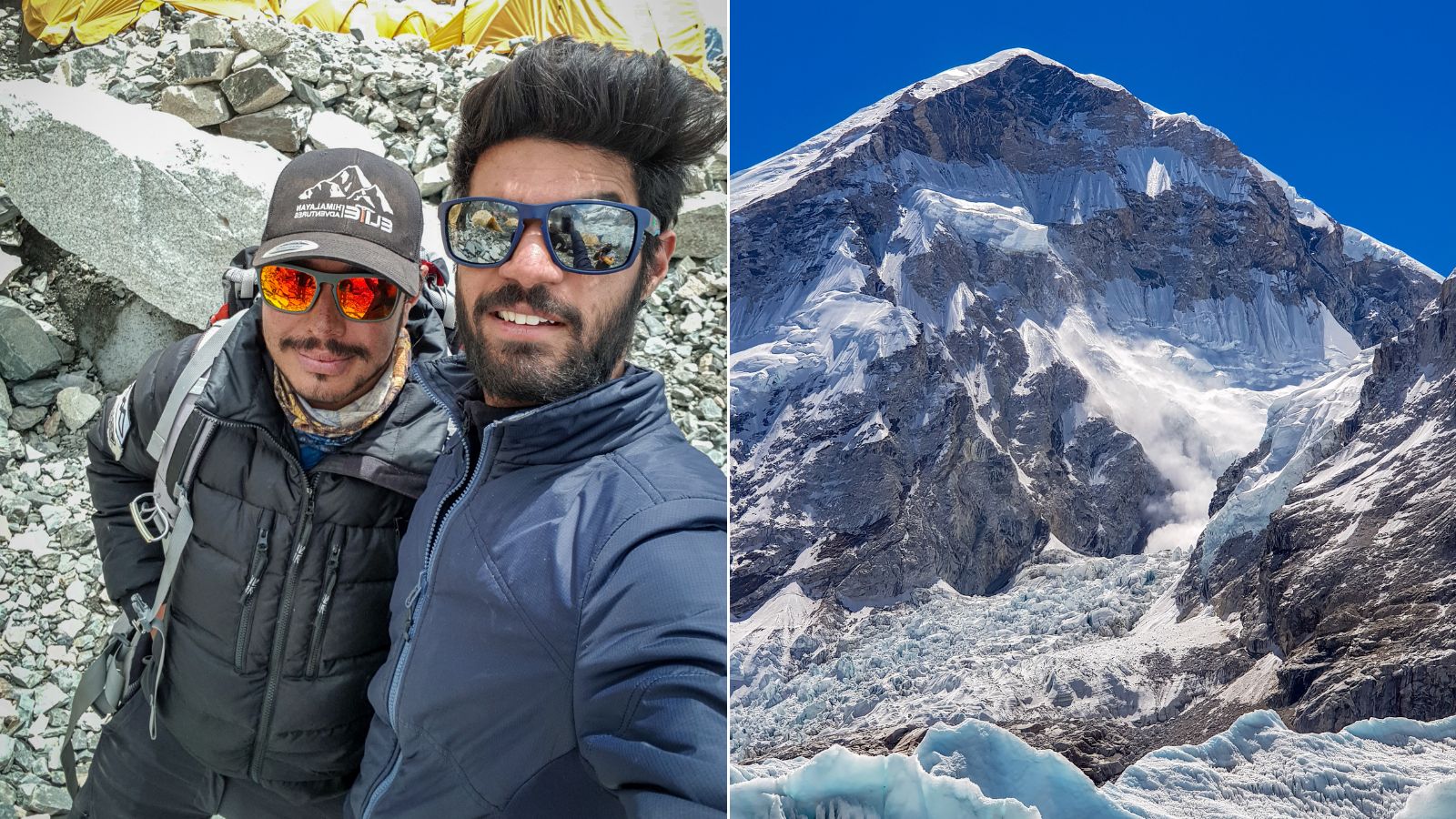
Traditional risk management models for high-altitude mountaineering assume a stationary environment. Historical weather windows, baseline ice stability, and multi-decadal snowpack averages served as reliable constants for expedition planning. That statistical baseline has collapsed. The Third Pole is warming at rates significantly outstripping the global mean, fundamentally altering the mechanical integrity of rock, snow, and ice.
Expedition failure and mortality rates in the Himalayas are no longer dictated primarily by acute human error or physical exhaustion. They are governed by structural environmental degradation. Modern ascension strategies must deconstruct the changing mechanics of high-altitude hazards, moving away from intuition and toward thermodynamic risk assessment.
The Thermodynamic Failure of the Cryosphere
The physical architecture of the high Himalayas relies on sub-zero thermal preservation. When mean ambient temperatures rise, the structural matrix of routes undergoes phase changes that destroy traditional safety margins.
The Mechanics of Hanging Glaciers
Ice masses perched on steep inclines, known as hanging glaciers, lose their basal adhesive friction as liquid water lubricates the bedrock interface. Increased thermal absorption accelerates internal melting, creating hydraulic pressure within crevasses.
- Shear Stress Spikes: Liquid water infiltration reduces the shear strength of underlying firn and ice.
- Calving Velocity: Detachment events become unpredictable, transforming predictable serac barriers into random kinetic hazards.
- Runout Extension: Debris paths now exceed historical boundaries because warmer air offers less resistance to descending mass avalanches.
Snowpack Metamorphism
Lower-altitude warming combined with erratic upper-mountain precipitation shifts seasonal snowpack profiles from dry-slab dynamics to wet-snow instability. Wet snow possesses higher density and lower structural cohesion under thermal stress. Climbers traversing these zones face deep burial hazards where the material property of the snow acts like wet concrete, eliminating air pockets and reducing survival windows post-avalanche.
Structural Breakdown of Vertical Rock Architecture
Climbers often focus on ice risk while ignoring the degradation of the vertical rock substrate. Alpine rock stability depends on permafrost locking jointed metamorphic and sedimentary faces together.
[Ambient Temperature Rise]
       │
       ▼
[Subsurface Permafrost Thaw]
       │
       ▼
[Loss of Inter-Rock Cementation]
       │
       ▼
[Stochastic Rockfall Amplification]
When internal rock temperatures cross the freezing threshold, ice lenses within fractures melt. This process removes the natural cement holding loose faces in place. Standard routes on peaks like Everest, Lhotse, and Annapurna now experience continuous, unseasonal stonefall. Traditional rock-shoe or crampon placements shear out of expanded, destabilized joints. The historical window for safe rock climbing shifts from a fixed calendar month to narrow, highly volatile diurnal cycles where ascents must halt by late morning.
The Hydrological Hazard Feedbacks
Higher temperatures yield accelerated ablation zones, altering the downstream and upstream topography of major climbing corridors.
Glacial Lake Volatility
As valley and hanging glaciers retreat, meltwater pools behind terminal moraines composed of loose rubble and ice cores. These natural dams lack engineered spillways. Seismic activity or sudden calving waves trigger Glacial Lake Outburst Floods, wiping out base camps, trekking infrastructure, and access bridges miles downstream. Expedition logistics chains crossing these valleys face systemic disruption independent of upper-mountain weather.
Unpredictable Weather Coupling
Monsoonal anomalies and lower-latitude cyclonic systems now push further north into the high ranges. Moisture-laden air masses collide with local thermal drafts, producing multi-day precipitation events that drop heavy snow or torrential rain at elevations previously immune to liquid water. This meteorological coupling invalidates historical summit windows, trapping teams in high camps without adequate fuel or shelter.
Re-Engineering Expedition Risk Metrics
Legacy decision-making frameworks rely on lagging indicators: past successful summits, historical route descriptions, and fixed calendar schedules. Operating in a degrading cryosphere requires a shift to leading-indicator logistics.
- Diurnal Compression: Ascents and descents must execute entirely within pre-dawn hours when radiative cooling temporarily stabilizes loose rock and refreezes surface snow.
- Dynamic Route Re-Evaluation: Guide services must abandon fixed-line permanence. Routes requiring days of fixed rope installation expose teams to cumulative stochastic hazard accumulation.
- Thermal Budgeting: Expedition planning must factor in the energy cost of navigating slush, extended post-holing, and unplanned bivouacs caused by degraded trail conditions.
Abandon legacy schedules. Implement real-time thermal monitoring of route profiles, enforce strict turnaround times regardless of proximity to the summit, and treat every vertical rock face below freezing elevation as structurally compromised until proven otherwise.