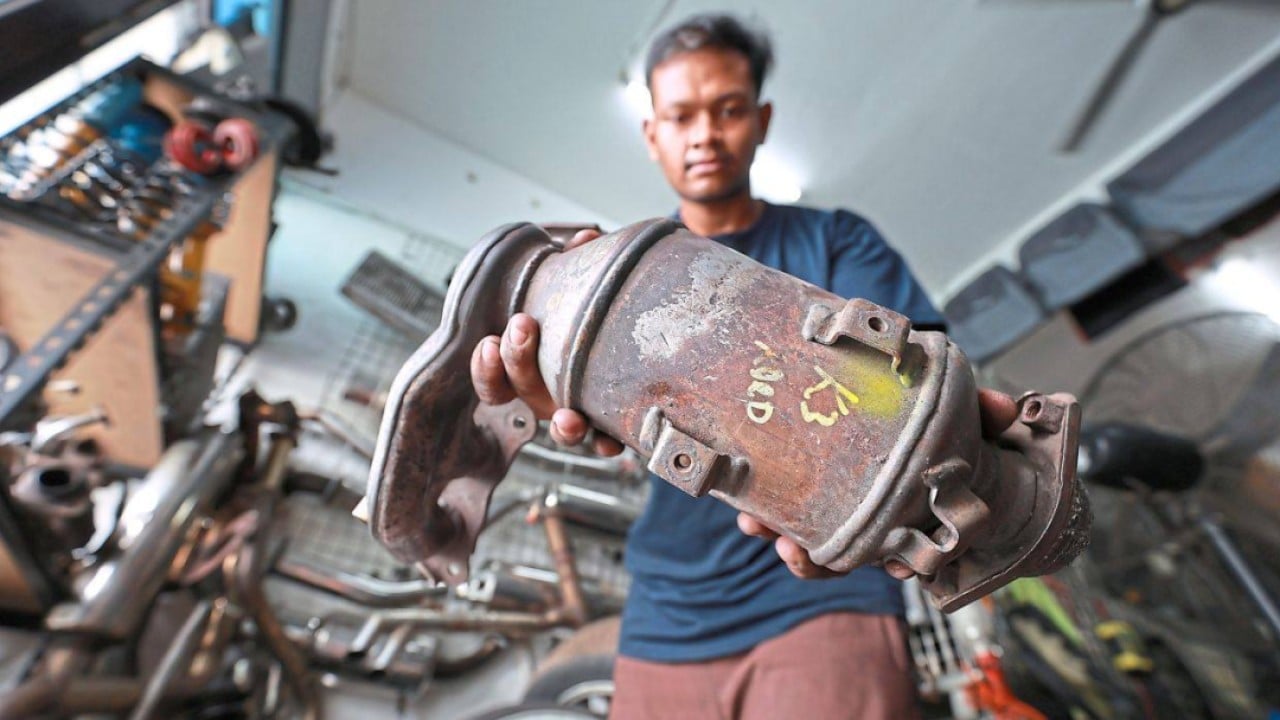
You park your car for a quick dinner in Solaris or leave it overnight in a quiet Subang Jaya driveway, and when you turn the key the next morning, your engine roars like a dying jet engine. That deafening, metallic growl means you've just joined a growing club of frustrated Malaysian car owners. Your catalytic converter is gone. It didn't take an hour to steal. It took less than ninety seconds.
Thieves aren't stealing these parts to sell them back to workshops as spares. They want the dirt inside them. Inside that bulky metal cylinder sits a honeycomb structure coated with precious metals that, gram for gram, are worth significantly more than gold. We're talking about rhodium, palladium, and platinum. As global prices for these elements skyrocket, your humble family sedan has become a literal rolling gold mine for opportunistic syndicates.
The Chemistry of Why Your Car Is a Target
Every modern internal combustion engine produces toxic gases. Carbon monoxide and nitrogen oxides are nasty stuff. To stop your car from puffing out poison, manufacturers use a catalytic converter to trigger a chemical reaction that turns those toxins into less harmful vapors.
To make that reaction happen, you need catalysts. The most effective ones on earth are the Platinum Group Metals (PGMs).
- Rhodium is the big prize. It's incredibly rare and handles nitrogen oxide like nothing else.
- Palladium is used to oxidize carbon monoxide.
- Platinum is the workhorse for diesel and some petrol engines.
In 2021 and 2022, rhodium prices hit insane peaks, sometimes trading at over ten times the price of gold per ounce. While prices fluctuate, the demand from global industries—especially in China and Europe—remains relentless. Scrap yards and illegal processing centers in Malaysia melt these down or ship the honeycombs overseas to be refined. The thief gets a few hundred ringgit, the middleman gets a few thousand, and you get a bill for a replacement that could easily hit RM3,000 or RM5,000 depending on your car model.
Why Malaysia Is Seeing a Surge in Exhaust Theft
It's a low-risk, high-reward crime. Think about it. If a thief steals a whole car, they have to deal with GPS trackers, chassis numbers, and the logistical nightmare of hiding a one-ton object. Stealing a catalytic converter requires a battery-powered reciprocating saw and a jack.
I’ve spoken to mechanics in Klang who say they see at least three or four cases a month now. It used to be unheard of five years ago. Now, it's a specialized industry. These crews often work in pairs. One guy acts as a lookout; the other slides under the car. Zing-zing. Two cuts through the exhaust pipe and they're gone before you’ve even finished your first stick of satay.
Certain cars are targeted more than others. If you drive a Toyota Hilux, a Honda Civic, or even older Perodua models, you're at higher risk. High-clearance vehicles like SUVs and 4x4s are the "low-hanging fruit" because the thief doesn't even need to jack the car up. They just slide under and get to work. Hybrids like the Toyota Prius are also prime targets. Because their petrol engines run less often, the precious metals in their converters don't get used as hard and remain more "pure" and valuable to recyclers.
The Massive Gap Between Scrap Value and Your Replacement Cost
This is the part that really hurts. A thief might sell your stolen part to an unscrupulous scrap dealer for RM400. That dealer then extracts the metals or sells the unit up the chain for RM800.
But when you go to the official service center, you aren't paying scrap prices. You're paying for a precision-engineered part, labor, and the manufacturer's markup. For many older cars in Malaysia, the cost of a new, original catalytic converter can actually exceed the market value of the car itself.
Don't think you can just weld a straight pipe in its place and call it a day. While it's a common "fix" in some local workshops to save money, it's technically illegal under Malaysia's Environmental Quality Act. You’ll fail your Puspakom inspection, your fuel economy will likely tank, and you’ll be contributing significantly more pollution to the air we all breathe. It's a lose-lose situation for everyone except the guy with the saw.
How to Stop the Saw
You can't make your car 100% theft-proof, but you can make it a giant pain in the neck for a thief. They want a fast job. If they see obstacles, they move to the next car.
Anti-theft plates and cages are becoming more common in Malaysia. These are metal shields that bolt over the exhaust system, making it impossible to reach the converter without spending twenty minutes grinding through steel plates. Most thieves won't bother.
Etching your plate number onto the converter is another cheap deterrent. It makes the part "hot." A scrap dealer who buys a part clearly marked with a car registration number is taking a much bigger legal risk than buying a "clean" anonymous tube of metal.
Where you park is your first line of defense. If you're out at night, find a spot that's well-lit and has high foot traffic. If you're at home and don't have a gated compound, try to park so one side of the car is flush against a wall or a high curb. This makes it much harder for someone to slide under the vehicle with a saw.
The Reality of Insurance Claims
Check your insurance policy right now. Most standard comprehensive motor insurance policies in Malaysia cover "theft of parts," but there's a catch. You'll likely face "betterment" costs if your car is more than a few years old.
Insurance companies argue that by putting a brand-new catalytic converter on a seven-year-old car, they're "bettering" the vehicle's condition. You might end up having to pay 15% to 40% of the part's cost out of your own pocket even with a successful claim. It's annoying, it feels unfair, but it's the standard practice in the industry here.
Immediate Steps if You Get Hit
If you start your car and it sounds like a tank, don't keep driving it for long distances. You're venting hot, raw exhaust gases directly under your car, which can melt plastic components or even start a fire if you're unlucky.
- Call your insurance provider before you touch anything. They might require a police report and photos of the car where it was parked.
- File a police report at the nearest station. You need this for the claim, and it helps the PDRM track which neighborhoods are being hit so they can increase patrols.
- Ask your mechanic about a shield. Once you replace the part, you're a target again. Thieves know you just got a shiny new one. Install a protector or have a workshop weld "rebar" cages around the new unit.
The precious metal market isn't cooling down anytime soon. As long as rhodium and palladium stay expensive, the underside of your car remains a target. Stop thinking of your exhaust as just a pipe—treat it like the vault of jewelry it actually is.


