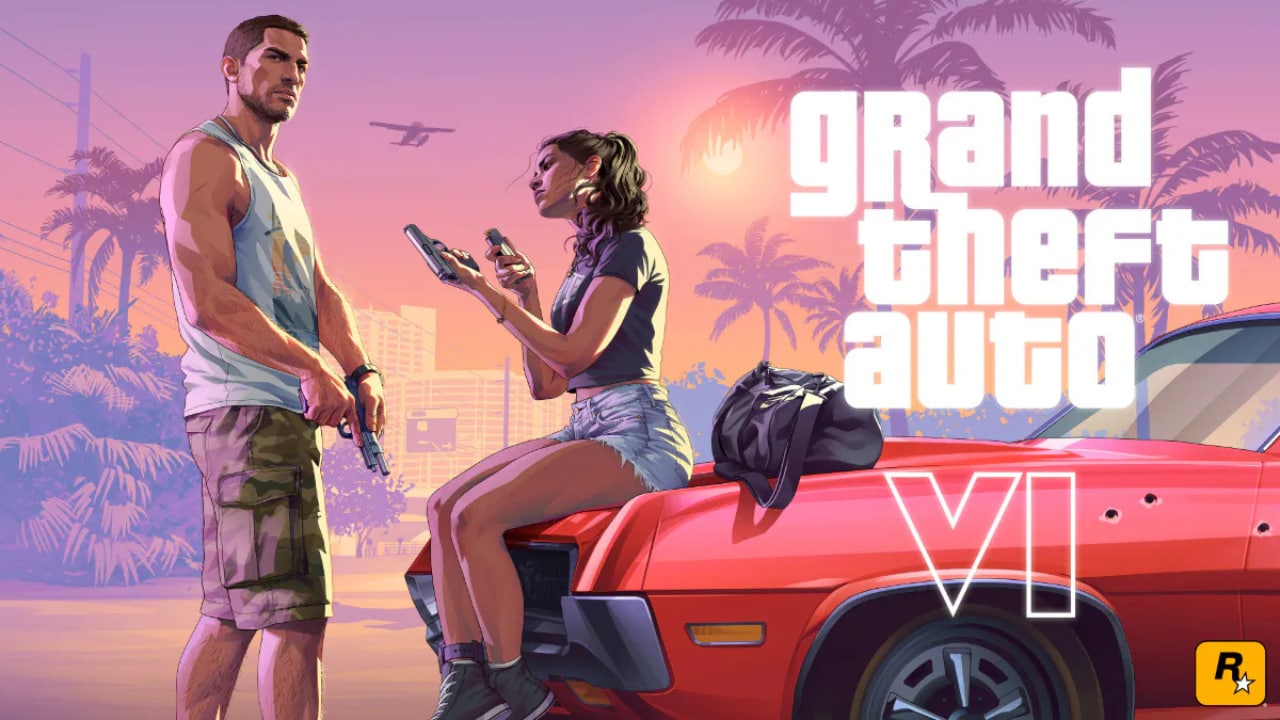
Grand Theft Auto VI has finally arrived after a thirteen year gap since its predecessor, shattering pre-order records across digital storefronts and retail chains alike. The numbers are staggering. Yet treating this launch as a simple victory lap misses the massive financial pressure, structural labor shifts, and shifting economic realities resting on Rockstar Games and its parent company, Take-Two Interactive.
For more than a decade, the video game industry watched a single franchise bend the rules of entertainment economics. Grand Theft Auto V launched in September 2013 on PlayStation 3 and Xbox 360. It crossed three console generations, sold over 200 million copies, and turned an online multiplayer mode into a recurring revenue machine that printed money every single quarter. Most studios release three or four major titles in thirteen years. Rockstar released one Western epic—Red Dead Redemption 2—and spent the rest of its energy building a singular, monstrously expensive sequel.
When pre-orders opened for Grand Theft Auto VI, servers buckled under the weight of pent-up demand. Retailers reported physical allocations vanishing within minutes. Digital storefront queues stretched for hours as millions of players locked in their copies months ahead of release. On paper, it looks like an effortless triumph. In reality, breaking pre-order records was not a pleasant surprise for Take-Two executives; it was a bare minimum requirement for survival.
The Economics Of A Thirteen Year Development Cycle
To understand why this launch carries unprecedented weight, you have to look at the balance sheet. Making a modern blockbuster video game costs more than producing a major Hollywood film, and Grand Theft Auto VI represents the most expensive entertainment project in history.
Between 2013 and today, production budgets across the AAA gaming sector exploded. Teams grew from hundreds of developers to thousands spread across global studios in Edinburgh, New York, San Diego, Bangalore, and beyond. Every blade of grass, every vehicle suspension physics calculation, and every pedestrian AI routine demands thousands of hours of specialized engineering and art direction.
Consider a hypothetical example to grasp the math behind this scale. Imagine a studio employs 2,500 people at an average fully loaded cost—including salaries, benefits, office space, and software licensing—of $150,000 per year. Over a seven-year full-production window, payroll and overhead alone consume $2.625 billion before a single dollar is spent on global marketing, music licensing, or server infrastructure. Even if actual figures sit below or above that hypothetical baseline, the financial gravity remains identical. You cannot recoup a multi-billion-dollar investment with a standard video game launch.
Why Pre Orders Matter More Than Day One Sales
In traditional retail, pre-orders served as a simple metric to gauge how many discs to press and ship to brick-and-mortar stores. Today, digital downloads dominate console sales, eliminating inventory shortages. Yet pre-orders have become even more critical to publicly traded publishers like Take-Two Interactive.
- Cash Flow Stabilization: Digital pre-orders inject immediate liquidity into a publisher's balance sheet ahead of fiscal quarter deadlines, offsetting years of pure capital outflow.
- Tiered Pricing Conversion: Pre-order campaigns aggressively funnel players toward deluxe and collector editions priced well above the base $70 retail standard, dramatically inflating average revenue per user before reviews even publish.
- Platform Leverage: Record-breaking pre-order velocity gives publishers immense negotiating power with platform holders like Sony and Microsoft over storefront placement, promotional co-marketing, and revenue-share agreements.
Wall Street analysts do not judge Grand Theft Auto VI against normal video games. They judge it against its own predecessor, which generated over $8 billion in lifetime revenue. Breaking pre-order records merely clears the first hurdle in a marathon that needs to run for another decade.
The Cultural Vacuum Left By Grand Theft Auto V
A thirteen-year gap between mainline entries does something strange to an audience. In 2013, a teenager playing Grand Theft Auto V on an Xbox 360 was worrying about high school exams. By the time Grand Theft Auto VI arrived, that same player was nearly thirty years old, navigating careers, mortgages, and families. Meanwhile, an entire generation of younger gamers grew up knowing Grand Theft Auto not as a single-player crime satire, but as an endless, chaotic multiplayer sandbox watched on Twitch and YouTube.
Rockstar had to bridge two wildly different expectations. Older fans wanted the sharp, cynical narrative bite and dense, handcrafted world-building that defined the series from Vice City to San Andreas. Younger players expected social frictionlessness, user-generated chaos, and constant live-service updates.
The Trap Of Comparison
Living in the shadow of Grand Theft Auto V created an impossible design challenge. Over thirteen years, modders on PC pushed the 2013 game to visual extremes, adding photorealistic lighting, real-world vehicle physics, and sprawling roleplay servers like NoPixel that turned a crime game into an improvisational theater platform.
Rockstar could not simply release a prettier version of the same formula. The studio had to build systems deep enough to make decade-old community mods feel primitive by comparison. Returning to Leonida—Rockstar's satirical, sun-drenched take on Florida and Vice City—meant constructing an ecosystem where social media virality, dense interior spaces, and hyper-reactive law enforcement operate simultaneously without breaking the illusion.
Inside The Quiet Revolution At Rockstar Games
Behind the flashy trailers and record-breaking sales figures sits a much quieter, far more complicated story about how this game was actually made. For years, Rockstar Games carried a reputation as a ruthless "crunch" factory. During the final months of Red Dead Redemption 2 in 2018, reports surfaced of developers working 80-to-100-hour weeks to finish the game on schedule.
The backlash was severe, forcing an internal reckoning that directly shaped the timeline of Grand Theft Auto VI. Management overhauled studio culture, restructured production pipelines, eliminated mandatory overtime, and brought in new leadership across key departments.
| Production Era | Dominant Studio Model | Primary Bottleneck | Cultural Outcome |
|---|---|---|---|
| 2008 – 2018 | Brute-force crunch culture | Hardware memory limits | Burnout and high senior turnover |
| 2019 – 2026 | Distributed global pipeline | Asset complexity and remote coordination | Longer timelines, delayed release windows |
Fixing a toxic workplace is objectively good for the humans making the art, yet it carries an unavoidable commercial trade-off. When you remove 100-hour workweeks from a project of this magnitude, the calendar stretches. Delays become inevitable. Every extra month of development adds tens of millions of dollars to the budget while testing the patience of shareholders.
Furthermore, the departure of several veteran creative leads—most notably co-founder Dan Houser, who wrote or co-wrote nearly every major title in the company's history—raised uncomfortable questions inside the industry. Without the primary voice behind Rockstar's signature brand of American satire, could the studio still capture the same cultural lightning in a bottle? Early player reactions suggest the writing has evolved rather than collapsed, trading some of the juvenile shock humor of the early 2000s for a sharper, more grounded look at modern desperation and internet-fueled absurdity.
How One Launch Reshaped The Entire Gaming Calendar
You cannot drop an asteroid into an ocean without flooding the coastline. In the video game industry, Grand Theft Auto VI is that asteroid.
For nearly two years leading up to launch, rival publishers operated in a state of paralyzed caution. Nobody wanted to release a $70 open-world action game, a narrative shooter, or a major RPG within six weeks of Rockstar's juggernaut. Marketing executives knew that every podcast, every YouTube algorithm, every storefront banner, and every spare dollar in a consumer's entertainment budget would be sucked into Leonida's orbit.
The Collateral Damage Across The Industry
This gravitational pull distorted release schedules across the entire sector. Mid-sized publishers quietly pushed promising titles into awkward release windows to avoid being crushed. Platform holders timed hardware bundles and subscription promotions around Rockstar's marketing beats rather than their own first-party exclusives.
- Ad Inventory Inflation: Digital advertising rates across gaming media and video platforms spiked dramatically around launch, pricing smaller studios out of basic visibility.
- Retail Shelf Displacement: Physical game sections in major retailers cleared prime end-cap displays exclusively for Grand Theft Auto VI merchandise, consoles, and physical editions.
- Player Time Cannibalization: Live-service games—from battle royales to sports simulators—braced for sharp dips in daily active users as millions of players abandoned their regular routines for weeks at a time.
When a single product commands that level of market share, it stops behaving like a normal competitor and starts acting like a natural disaster that every other business must plan around.
The Online Endgame And The Real Test Ahead
Breaking pre-order records solves Take-Two's immediate accounting questions, but the true financial verdict on Grand Theft Auto VI will not be written during launch week. It will be written over the next five years inside its online mode.
Single-player sales, no matter how historic, have a ceiling. A customer buys the game once, plays through the story, and puts the controller down. Recurring consumer spending—virtual currency, subscription tiers like GTA+, seasonal content drops, and creator economies—is what transformed Take-Two from a cyclical hit-driven publisher into a multi-billion-dollar wall street darling.
Rockstar's acquisition of Cfx.re, the team behind the massive FiveM and RedM roleplay modding frameworks, signaled exactly where the studio is heading. Instead of fighting user-generated servers and custom roleplay communities, Rockstar absorbed them. By integrating official creator tools and monetizable custom experiences directly into the next generation of Grand Theft Auto Online, the company is positioning itself to compete not just with Call of Duty or Fortnite, but with Roblox and social media platforms for daily human attention.
The Risks Nobody Wants To Discuss
Yet even an unstoppable juggernaut faces real vulnerabilities once the launch-week euphoria fades.
- Monetization Fatigue: Players in 2026 are far more cynical about aggressive microtransactions and subscription paywalls than they were in 2013. Pushing virtual currency prices too high or gating basic content behind monthly fees could trigger swift community backlash.
- Technical Stability At Scale: Launching an online ecosystem designed to support millions of concurrent players across complex, physics-heavy environments is an engineering nightmare. Severe server outages or economy-breaking exploits in the first month could stall momentum before it builds.
- The Curse Of Expectations: When people wait thirteen years for anything, they build an idealized version of it in their heads that no piece of software can ever completely match.
Grand Theft Auto VI did not just break pre-order records because gamers missed Vice City; it broke them because an entire industry spent over a decade training audiences to treat one studio's output as a generational cultural event. Now that the boxes are open and the servers are live, Rockstar faces the hardest part of its thirteen-year gamble—proving that a game built for the ages can hold the world's attention without taking another decade to evolve.