Two-fifteen in the morning is when the human mind loses its sense of proportion.
You are sitting on the edge of a cold bathtub in Moncton, or perhaps staring at a ceiling fan in Fredericton, watching the red digits of an alarm clock bleed into the dark. Something in your body feels wrong. Maybe it is a sharp, unfamiliar tightness behind your ribs after a late dinner, or a rash creeping up a toddler’s forearm like spilled ink.
Silence.
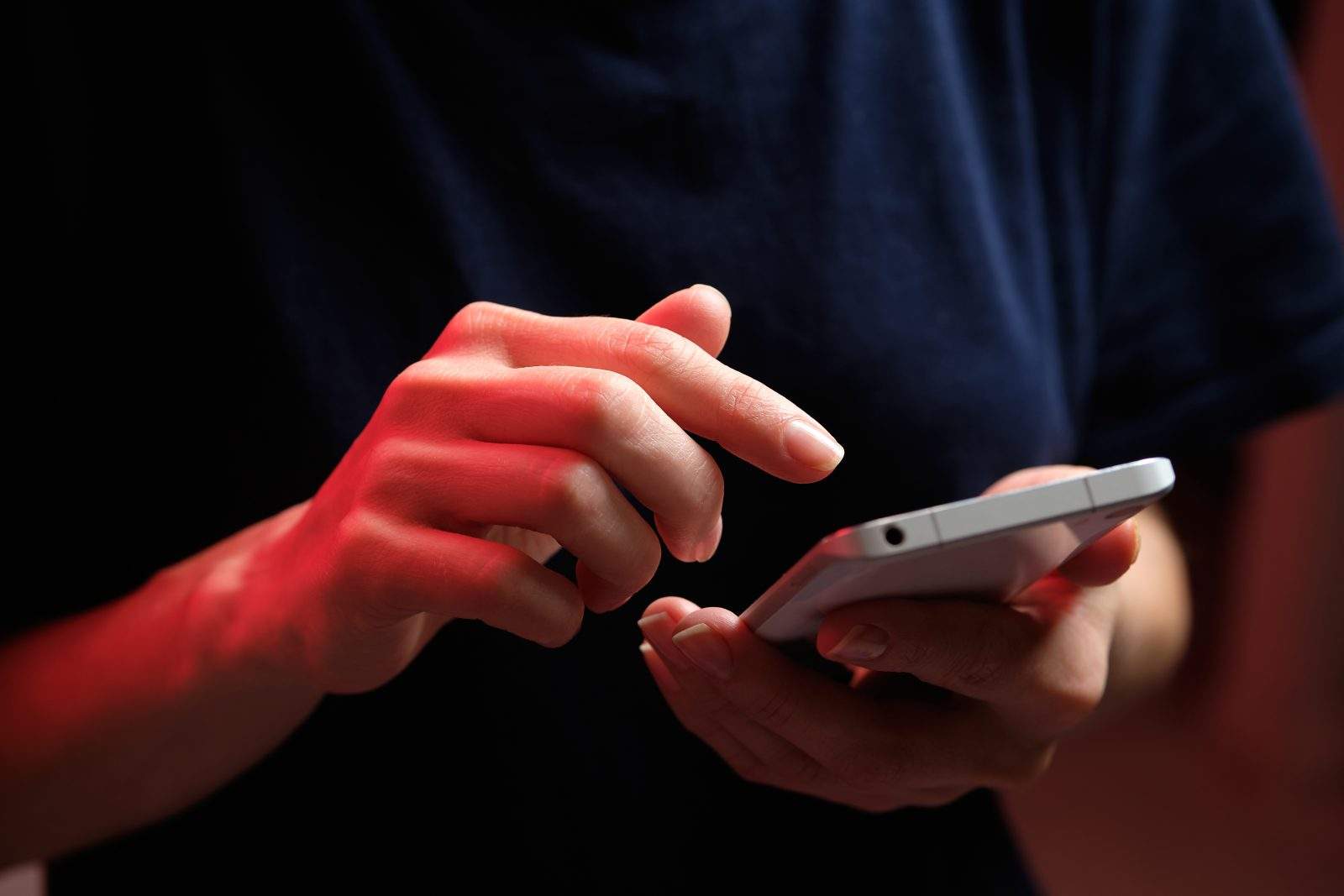
Then the spiral begins. You reach for your phone, the blue glare stinging your eyes, and type five desperate words into a search bar. Within three seconds, an algorithm trained on the worst-case scenarios of the internet informs you that your mild heartburn is an impending cardiac event, or that your child’s heat rash is a rare tropical infection. Your pulse hammers against your throat. You have no family doctor—joining tens of thousands of New Brunswickers on a waitlist that feels less like a queue and more like a geological era—and the nearest emergency room is already packed twelve hours deep with people whose emergencies are visibly bleeding.
So you sit there, trapped between terror and guilt. Do you drive forty minutes in the freezing rain to clog an overwhelmed waiting room over nothing, or do you go back to sleep and risk waking up in an ambulance?
For years, that agonizing limbo has been the quiet, unmeasured tax of healthcare scarcity in Atlantic Canada. Now, New Brunswick is betting that a piece of software can step into that 2:15 a.m. darkness and talk us down from the ledge.
The Architecture of a Modern Panic
To understand why an artificial intelligence tool for patient questions is rolling out across New Brunswick, you first have to understand the sheer weight pressing down on the province's medical infrastructure. Healthcare systems do not collapse all at once; they erode, one unnecessary triage visit and one unanswered phone call at a time.
Consider a hypothetical patient—let’s call her Claire, a sixty-two-year-old retired schoolteacher living just outside Saint John. Claire manages mild hypertension. On a Tuesday evening, she starts a new blood pressure prescription, and by Wednesday afternoon, she develops a persistent, dry tickle in the back of her throat. It is not severe, yet it will not go away.
In a world with abundant primary care, Claire sends a quick message to her family physician’s clinic or gets a same-day nurse callback. The nurse checks her chart, recognizes an ACE-inhibitor cough—a classic, harmless side effect of her specific medication—and reassures her before dinner.
In reality, Claire is one of the roughly 100,000 residents across New Brunswick who have spent years navigating care without a dedicated primary provider. Her options narrow instantly to a punishing trio: spend six hours at an after-hours walk-in clinic that hits capacity twenty minutes after opening, call the provincial 811 telehealth line and wait through hold music while worrying she is taking a nurse away from someone having a stroke, or swallow her anxiety and stop taking her heart medication altogether.
Every single one of those choices carries a hidden cost. When Claire stops her pills out of fear, her blood pressure spikes, turning a minor side effect into a genuine emergency three weeks later. When she goes to the ER, a triage nurse—already running on fumes during a double shift—has to spend twenty minutes assessing a harmless cough while ambulance stretchers line the hallway outside.
This is the bottleneck that provincial health authorities, including Horizon Health Network and Vitalité Health Network alongside the Department of Health, have been staring down. You cannot conjure five hundred new physicians out of thin air overnight. Medical school takes a decade; residency takes years more. If you cannot immediately expand the supply of doctors, you have to change how patients navigate the front door of the system.
Enter the Digital Triage Desk
The new AI-powered symptom and health-question tool entering New Brunswick’s digital health ecosystem—integrated into the broader push toward centralized digital access like eVisitNB and provincial health portals—is built for precisely that moment when a patient asks, Is this normal?
Strip away the technical jargon, and the concept works like a seasoned triage nurse sitting beside your bed, armed with an encyclopedic memory of clinical guidelines and zero fatigue.
Instead of tossing your symptoms into the wild west of an open search engine—where unverified forum posts from 2011 rank right beside peer-reviewed medical journals—the tool conducts a structured, conversational interview. You tell it what hurts, when it started, and what makes it worse. It asks clarifying questions in plain English. Does the pain radiate to your left arm? Are you short of breath? Have you started any new medications recently?
Think of a standard search engine as a megaphone shouting every possible explanation at once, loudest at the extremes. A clinically validated AI triage tool acts more like a funnel. It uses natural language processing and medical decision-tree logic to filter out the noise, cross-referencing your specific inputs against established clinical protocols to sort urgency from reassurance.
If Claire types her dry cough into this system, it doesn't show her terrifying articles about lung pathology. It asks about her prescriptions, flags the high probability of a medication side effect, advises her not to stop taking her pills without consulting a pharmacist or clinician, and directs her to book a routine virtual follow-up rather than rushing to the emergency department.
Conversely, if a forty-eight-year-old warehouse worker in Edmundston enters chest pressure accompanied by sweating and nausea, the software does not waste time offering home remedies. It recognizes the red-flag cluster immediately, cuts through the hesitation, and tells him to call 911 or get to an emergency room without delay.
What the Algorithm Actually Knows—And Where It Stops
Whenever the words artificial intelligence and medicine share a sentence, a healthy skepticism should immediately pull up a chair. We have all seen generative chatbots hallucinate legal citations or confidently invent historical dates. If a machine can get a movie trivia question wrong, trusting it with a fever or a fluttering heartbeat feels like a dangerous leap of faith.
That fear is valid, and ignoring it would be reckless. I remember the first time I tested an early-generation automated symptom checker during a bout of severe abdominal pain years ago; the interface felt cold, mechanical, and oddly evasive, spitting out a legal disclaimer so aggressive it practically yelled at me to go to the hospital for a stomach ache.
The distinction between a general-purpose chatbot and a clinical patient-navigation tool lies in the guardrails. Open-ended AI models predict the next plausible word based on billions of internet pages; medical triage engines are constrained by strict clinical governance, curated medical knowledge bases, and continuous oversight by physicians and nurses. They are not designed to diagnose you. No algorithm on earth can palpate your abdomen, listen to the subtle crackle in your lower left lung through a stethoscope, or read the grey pallor of exhaustion in your face.
Instead, the tool’s job is risk stratification and navigation. It answers three vital questions:
- How urgent is this? Does this require an ambulance right now, an urgent care visit within twenty-four hours, a routine appointment next week, or simple self-care at home?
- Where should I go? In a province where healthcare services are fragmented across bilingual networks, pharmacies with expanded prescribing powers, virtual care platforms, and regional hospitals, knowing which door to knock on saves hours of wasted travel.
- What should I watch for? Clear, concrete "return precautions"—the exact warning signs that mean a harmless symptom has crossed the line into something requiring immediate human eyes.
In New Brunswick, where pharmacists have increasingly stepped up to assess and prescribe for minor ailments like urinary tract infections, shingles, and uncomplicated tick bites, an intelligent front door becomes exponentially more valuable. Most residents still do not realize their local pharmacist can treat dozens of everyday conditions without a doctor’s note. When an AI navigator points a patient directly to a neighbourhood pharmacy instead of an ER waiting room, everybody wins—the patient gets treated in twenty minutes, the pharmacist practices at the top of their license, and the emergency room keeps a bed open for a trauma patient.
The Bilingual Reality and the Rural Divide
Rollouts like this rarely fail in boardrooms; they succeed or stumble on kitchen tables in places like Miramichi, Bathurst, and St. Stephen.
New Brunswick carries a demographic reality that makes digital health both harder and more urgent than in almost any other Canadian province. It is officially bilingual, deeply rural, and home to one of the oldest populations in the country. A tool that works brilliantly for a twenty-nine-year-old software developer in downtown Fredericton is useless if a seventy-eight-year-old retired fisherman in Caraquet cannot navigate it in French, or if the interface requires five layers of passwords before answering a simple question.
Language in medicine is never merely cosmetic. When you are frightened and in pain, translating your symptoms into a second language introduces friction and error. Describing a pain as sourde versus aiguë—dull versus sharp—changes the clinical picture entirely. For New Brunswick’s rollout to earn genuine trust across both anglophone and francophone communities, the conversational empathy and clinical precision have to hold up equally in both official languages, without sounding like a clumsy machine translation.
Then there is the question of human warmth. Medicine has always been half science, half presence. When a doctor sits across from you, leans forward, and says, I see this every week, you are going to be fine, your nervous system physically downshifts. Cortisol drops. Breathing slows.
Can a glowing screen replicate that relief? Not entirely. A line of text on a smartphone will never replace the steady hand of a nurse or the continuity of a physician who has known your family for twenty years. Pretending otherwise insults both patients and the clinicians who care for them.
Yet consider the alternative we have been living with. Right now, the substitute for a family doctor at two in the morning is not a compassionate human being—it is an unmoderated search engine fueled by advertising clicks and worst-case anxieties. Between an algorithmic panic machine and a clinically governed guide built to connect you with real provincial care pathways, the difference is night and day.
The Quiet Shift in Power
Watch closely what happens when patients stop guessing in the dark.
Imagine a young father in Campbellton whose three-year-old wakes up barking like a seal with a croupy cough at midnight. In the old reality, panic dictates the night. He bundles the crying toddler into a freezing car, drives through the dark to the regional hospital, and sits under harsh fluorescent lights for four hours—only for the cold night air on the drive over to have already eased the child's airway swelling before a doctor even walks into the room.
Now trace that same midnight through the new workflow. The father opens the provincial tool on his phone, answers six calm, targeted questions about the child’s breathing rate, fever, and skin colour, and learns immediately how to assess for dangerous chest retractions. The system confirms there are no emergency red flags, walks him through twenty minutes of steam and cool air management, and automatically schedules a morning check-in call if the cough persists. By 12:30 a.m., the toddler is breathing smoothly and asleep again. Nobody drove on icy roads. No emergency room bed was occupied.
Multiply that single quiet night by ten thousand households across a winter flu season.
That is how healthcare systems actually begin to heal—not through a single silver bullet, and certainly not by replacing doctors with code, but by stripping away the preventable terror that drives people into crisis care when all they really needed was a trustworthy answer.
The clock on the nightstand still reads 2:15 a.m., and the dark outside the window hasn't changed, yet for the first time in years, the silence on the other end of the line is finally starting to talk back.