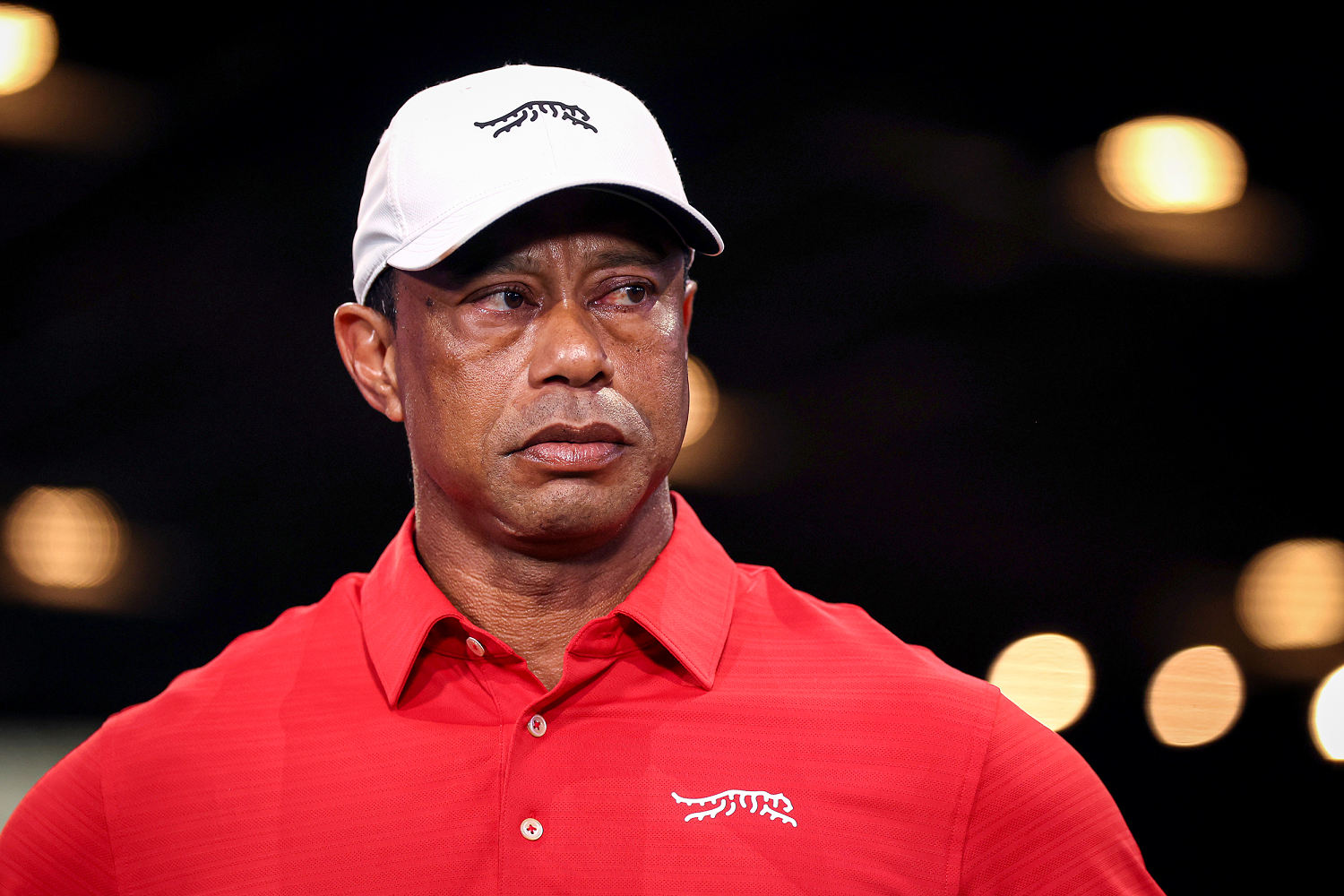
Tiger Woods isn't just a golfer. He’s a walking case study in the crushing weight of public expectation and the messy, non-linear path of human struggle. When news broke that he was seeking professional help to manage medications following his DUI arrest in Jupiter, Florida, the world reacted with a mix of shock and "I told you so." But if you look past the mugshot that launched a thousand memes, there’s a much grittier story about physical pain, the trap of elite performance, and the terrifying difficulty of admitting you’ve lost the lead.
The arrest happened on a quiet stretch of Military Trail. Police found him asleep at the wheel of his Mercedes-Benz, the engine running, a blinker flashing. He wasn't drunk. He was over-medicated. He’d recently undergone a massive spinal fusion surgery—his fourth back operation—and was trying to manage a level of physical agony most people can’t fathom. He admitted he was dealing with an "unintended reaction" to several prescriptions, including Vicodin and Xanax. That admission was the first crack in the armor of a man who spent decades convincing us he was invincible.
The Physical Price of the Perfect Swing
We often forget that the same torque and power that made Tiger the greatest to ever play the game also systematically dismantled his body. The golf swing is a violent motion. Doing it millions of times at a world-class speed is a recipe for long-term disaster. By the time of his 2017 arrest, his back was basically a disaster zone.
Imagine living in a body that won't stop screaming. Chronic pain changes how your brain functions. It makes you desperate. When you're Tiger Woods, the pressure to return to "normal" isn't just internal; it's a global demand. The temptation to use chemical shortcuts to get back to the tee box is immense. This wasn't about a guy partying too hard. It was about a man trying to survive his own skeletal system.
He didn't just decide to "take a break." He realized the spiral was getting too fast. Seeking treatment for medication management is a specific, difficult hurdle. It requires acknowledging that the tools meant to help you heal have become the things holding you under.
Why We Struggle to Forgive Elite Failure
There’s a weird schadenfreude that happens when a superstar hits rock bottom. People like to see the mighty fall because it makes their own lives feel more manageable. But Tiger’s situation highlights a massive gap in how we talk about athletes and addiction. We treat them like machines until the gears grind to a halt, then we’re surprised there’s smoke.
Most people don't understand that recovery for an athlete isn't just about stopping a substance. It's about rebuilding an entire identity. Tiger's identity was built on control. He controlled the ball, the course, his image, and his competitors. Waking up in a police station is the ultimate loss of control. It’s a public stripping of the one thing he valued most.
His decision to step away wasn't a PR move. It was a survival tactic. He saw the cliff and finally decided to stop walking toward the edge. That takes more balls than hitting a 2-iron over water at Augusta.
The Myth of the Quick Fix in Recovery
The public wants a redemption arc that fits into a thirty-minute news cycle. We want the "I’m sorry" speech followed immediately by a trophy presentation. Real life doesn't work that way. Recovery from prescription dependency and chronic pain management is a grueling, daily grind that happens in the dark.
Tiger had to learn how to live in a body that no longer did what he told it to do. He had to learn how to manage pain without the heavy-duty narcotics that led to that night in Jupiter. This process involves doctors, therapists, and a lot of uncomfortable self-reflection. It's boring. It's painful. It’s the opposite of the Sunday roar on the 18th green.
The lesson here isn't about the dangers of driving under the influence—though that’s obviously a huge part of it. The real lesson is about the limits of human endurance. Even the strongest person you know has a breaking point. Tiger’s breaking point just happened to have a dashcam recording it.
Lessons from the Woods Recovery Path
If you're dealing with chronic pain or find yourself relying too heavily on the "tools" meant to help you, Tiger's story should be a massive red flag. Don't wait for a mugshot to make a change.
- Audit your medicine cabinet. If you’re taking multiple scripts for pain and sleep, they’re likely fighting each other. Talk to a specialist about interactions.
- Be honest about your pain levels. Stoicism is a lie that kills. If the pain is driving your life decisions, you’re not in control anymore.
- Identify your triggers. For Tiger, it was the desperation to compete. For you, it might be the stress of a job or a failing relationship.
- Find a support system that doesn't care about your "brand." You need people who will tell you the truth, even when it sucks to hear.
Tiger’s return to winning later in his career was nothing short of a miracle, but it started with the humility to admit he was broken. You don't have to be a billionaire or a golf legend to apply that kind of radical honesty to your own life. Stop trying to power through a situation that requires a total rebuild. Put the keys down, step away from the noise, and do the work that happens when no one is watching.